One of the first public holidays on Australian calendar in the new year is Australia Day public holiday.
In this blog, we are giving you a quick guide about Australia Day in Australia.
What is Australia Day?
Australia Day is celebrated on 26th January each year.
Its historical background dates back to 1788 as a commemoration of the arrival of the First Fleet of 11 British convict ships at Port Jackson NSW.
Now a days, it is celebrated as a day where we reflect on the history, its highs and its lows.
There are many ceremonies, parades, cultural events, citizenship ceremonies takes place on this day.
Why is Australia Day also called “Invasion Day”?
Many international students wonder why Australia Day is also called as an “Invasion Day”.
Australia’s indigenous people also known as First Nations People consider Australia Day celebrations as a celebration of Invasion, genocide of aboriginal people.
They consider it as a day of mourning as it marks the beginning of colonisation of their country and the loss of their land and culture.
There is a campaign to change the date to another day in the year as it is marked as an Invasion Day for the aboriginal culture in Australia.
You can learn more about this perspective by seeking out and attending events that acknowledge the history and celebrate Indigenous culture.
Many universities and other workplaces in Australia have started giving an option to their employees to work on 26th January instead of taking a day off. They are offering alternative day off to those staff members who decide to work on 26th January.
Few activities you can do on Australia Day public holiday
Many Australians these days consider Australia Day as just another public holiday. Here are some of the activities, students can do on their day off on this public holiday.
1. Attend marches and local activities
You can attend marches and events that explain about the pain and hurt of the aboriginal culture for this day. Some local governments organise activities like morning breakfast, concert, local tour and parties. Check the local council website to see what’s happening in your local area.
2. Go to beach
Australians love going to the beach and one of the favourite activity for many Australians is heading toward the beach to catch some cool waves and enjoy with friends.
3. Have a Barbie
Invite some friends over and organise a typical Australian style BBQ or barbecue. If you are vegan or vegetarian, you can also enjoy a meat-free BBQ as well. You can head to a local park or do it in your own backyard. Want to know some BBQ etiquette? Check our popular article on that here.
4. Play cricket
Summer means Cricket in Australia. Even if you are not familiar with this sport, you can join to play it with locals and they will be happy to explain the rules. Don’t be shy in asking to join if you see locals playing it. Common places to play includes beach, backyard & local parks on the day.
5. Try Aussie treats
Have you heard about Pavalova, Lamingtons, Vanilla slice, Tim Tams? No! Try them out. Treat yourself to some Aussie deserts. And if you are person, who like to stay indoors, then catching up on some Aussie flicks like The Castle, Mad Mex, Crocodile Dundee and Muriel’s Wedding is a must.
6. Buy the merchandise
You can buy plenty of True Blue merchandise from local businesses. You can even head to local supermarket to pick some merchandise as well. Want to go extreme with it? Get your face tattooed.
7. See fireworks
Local governments also organise fireworks for the residents during the evening on Australia Day. Check your local state or territories planned fireworks and make bookings, if required. Keep in mind, there are different restrictions at the moment in many states and territories.
Whatever you plan to do this Australia Day, we suggest that you to understand and be respectful about the cultural significance of this day.
International Students and other temporary visa holders are allowed to return back to Australia from 15th December 2021 without needing to apply for travel exemption.
Finally! Yay!!
But there are many requirements you need to meet in order to arrive in Australia. In this article, we are going to talk about requirements for entering Australia and other states and territories as well.
Let’s go!
Basic requirements for entering Australia as an international student
In order to enter Australia, you will need to meet these basic requirements. Here are the requirements you must meet:
hold a valid visa to enter Australia
be a visa holder that is eligible to arrive in Australia without needing to apply for travel exemption
have a negative report of COVID-19 PCR test 72 hours before flight
Requirements for entering each state and territory in Australia
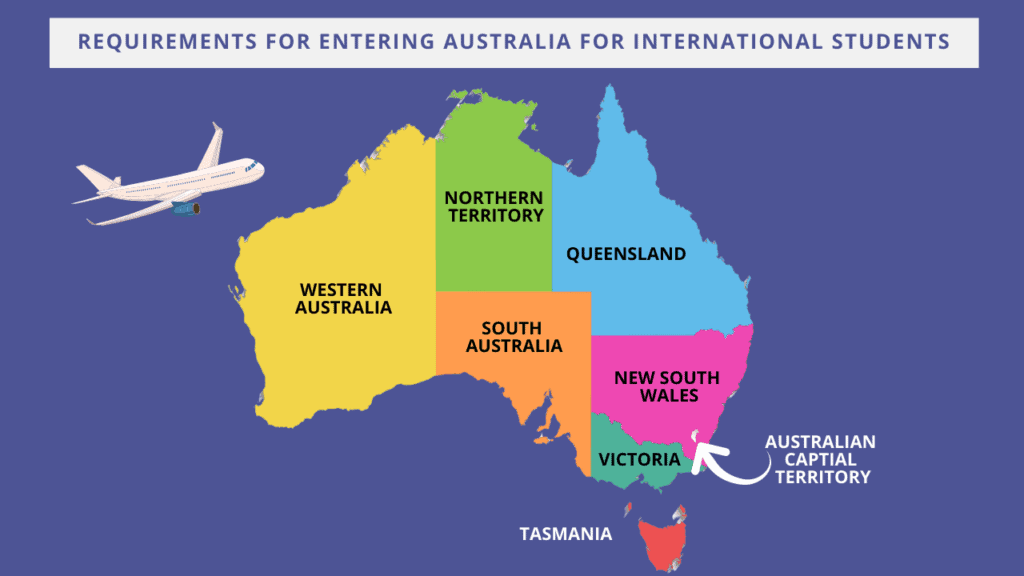
Each state and territories has different requirements for entry, quarantine and testing.
You will need to make sure that you have sufficient arrangement for your isolation or quarantine before leaving your home country. It is important you complete any specific border permits for the state or territory you are entering.
In the document below, we are sharing all the requirements for each state and territory you need to meet. (Scroll through to get all the information).
Please note that this document gets updated regularly but as the situation regarding COVID-19 changes quickly we suggest you to click on the link for each state and territory to get up to date information.
We would love to hear from you which state or territory are you studying in 2022?
Let’s be honest life as a student is pretty challenging juggling between study work life and family can be tough at times and especially online study these days can add up to that challenge as well.
The good news is that there are free apps and tools available that can make your life somewhat easier.
In this article, we are going to talk about 10 free apps and tools that you need to use as a student to make your life easy.
Canva
The first tool is actually created by an Australian company, Canva.
As a student you probably have to create a lot of presentations and reports.
While you can design these reports and presentations in powerpoints or word documents but if you really want to level up your game then canva is a great graphic design tool and solution for that.
You can create amazing looking presentations and reports within this tool and their free template library contains plenty of options for reports and for presentations as well.
Apart from reports and presentations if you want to design anything else like resume, cover letter, this is a great tool to have in your armory
It is one of our personal favorite tools as well and their free plan is pretty generous, so try it out yourself.
Small PDF
Pdf is one of the best thing that happened to humanity. Period.
But as good as pdfs are sometimes we would like to see these pdf documents in a word document or other format
Some of you may know that it can be bit of pain to go and convert these documents as such
so there’s a solution for this problem as well and this tool is known as Small PDF.
Basically this is the solution for all your pdf problems.
If you want to convert a pdf into a word document or an image or PowerPoints or to convert any other document into pdf or other way around then small pdf is your friend.
You don’t need to necessarily download any softwares for this it’s a free online tool.
Grammarly
If english is your second language and you want someone else to have a look on your documents whether it’s a report, resume or assessment that you’re creating for your homework then grammarly is your friend.
This amazing tool check your grammar, punctuation, spelling, vocabulary and any other issues with your writing.
They also have apps available for all the mobile devices or you can use their chrome extension to make your life really easy.
Another tool that we personally use all the time to check our grammar and spelling mistakes.
Although they have a different paid plans available but their free plan also does a pretty good job so if you haven’t already signed up, then we highly recommend you to use this tool.
Loom
While taking screenshot can be a good way of capturing information and sending it to your friends or your teachers.
But if you have any questions especially if you’re studying online it will be even better if you can video record your screen and send it to the person you need to.
If you want to send a video recording of your screen then this tool is for you.
It is known as loom.
To use this tool, all you need to do is sign up and download their chrome extension and then you can video record the screen.
If you want you can also record yourself in the screen and after recording it will generate a link that you can send to anyone for watching this video recording.
A great tool for recording your presentations as well.
It is fairly easy tool to use but another life saving tool for students.
Quillbot
Quillbot ia an amazing tool for paraphrasing the text.
It is an artificial intelligence based paraphrasing tool that can help you to paraphrase up to 400 words for free.
Another great tool to help you with your research for your assessments.
Just a quick warning though, we don’t want you to use this tool as a copy paste solution for your assessments.
But it can be a good tool to help you paraphrasing some of the text and get to learn new words and improve vocabulary.
Resoomer
This tool helps to summarize the text.
So, for an example, if you have a long text or long article to read, put this article text into this tool, then press that resoomer button, and it will summarise the whole text into short paragraphs.
This is another time saving tool that will help you to save time as it can summarise all the articles you are reading for your study or research purposes.
So rather than spending lots of time reading all the articles put those articles into the resumer that will help you to summarize the text of those articles.
Zoom
We are pretty sure you have heard about the name this tool before.
After all it is Zoom.
Since the start of pandemic, everyone who is studying online pretty much have either used it or heard about this tool.
In the past zoom was used basically for meetings and online conferences but it has been the life-saving tool for many of us during this pandemic.
Especially if you are studying online and you might have to do your online presentations to record your presentations, zoom can be one of the easiest solution for most of the classes running online.
Google office suite
Buying a yearly subscription for microsoft can be an expensive affair. especially if you are a student.
So, there are lots of free alternatives available for microsoft office these days and one of our favorite tool is provided by google.
Google docs google slides and google sheet (part of google office suite) are free replacement for microsoft office.
The best part of this tool is that you don’t need to save these documents in your computer or you might lose it because you haven’t saved it properly
All your documents gets saved into cloud automatically.
All you need to access this service is have a gmail account and access to internet.
If you don’t google products, then you can also check some other free office alternatives.
Google Drive
Another free provided by Google.
Google drive is a solution to all your cloud storage problems.
Once you sign up with your email you get 15 gb of free cloud storage and all your google docs google sheets and slides are usually ger saved in this cloud storage.
So it’s quite easy to access those documents and that is one of the reason why we like using those softwares as well.
Notion
Now last but not the least is our personal favorite tool.
Notion is a lifesaver. (Say it after us).
Notion is a project management, productivity, to-do list, notes, collaboration and anything you can imagine in one tool. (Yes, you can see our love for this tool).
We use this tool for taking notes, creating our content (just like this article) creating to-do list and when working with other team members, then we use it as a project management software as well.
Rhere’s so many uses of this tool that it is hard to put into this short video.
So, we highly recommend you to check this tool and if you haven’t i recommend you to download this tool as well.
Their new free plan is really amazing you can download this tool on your desktop laptops and their app in your mobile devices as well.
If you sign up with the same email in all your devices. It will sync all your data together (as long as you have internet connection).
Bonus: Overseas Students Australia
If you are an international student who is either studying in australia or planning to study in australia then we highly recommend ourselves. No jokes.
Overseas students australia is an online platform for international students and we cover range of information regarding studying, working and life in australia
We also have lots of free resources like guides, resume, cover letter templates, checklists and everything pretty much you need as an international student.
So make sure to include that too in your list of tools as well, especially if you are planning to study or are currently studying in Australia..
Now, it’s your turn.
We would like to hear from you, which other tools do you use to make your life as a student easy?
Let us know youtr thoughts in the comment section below.
Many international students are unaware of the hidden job market in Australia.
Most of our audience on Instagram had never heard of this term when we asked them.
So in this article, we are going to give a comprehensive guide on hidden jobs in Australia, where to find them and some key tips to take away when applying for these jobs.
What is a Hidden Job Market?🕵️♂️
While most people will turn to online portals like seek, indeed, Adzuna in hope of a job in Australia, there are many jobs that are not advertised on these portals or anywhere at all.
It is believed that around 70% of the jobs that are never advertised anywhere in Australia.
So, the jobs that are not available online or in print media or in other published sources are known as hidden jobs.
How it works? 🔍
If you work in company and they need to fill a job opening, they might ask you (internal staff) first if they can refer someone to the job opening.
Once referred, this person will go through resume check, reference check and interview process as normally.
And if they are hired, then they fill up a position without business ever needing to advertise this job anywhere.
Benefit of these hidden jobs 🎉
So what are the benefits of not advertising these jobs and keeping them hidden?
For businesses:
Saves time and effort – The whole recruitment process including advertising, selecting and interviewing takes heaps of time and effort for a business. Without needing to go through this whole process with many candidates, it saves a ton of time and effort.
Money – And time means money in business. So businesses end up saving money as well. There is a cost of posting ads on the platforms and cost of recruiters etc. that can be saved by the business when hiring people through these methods.
Reliable candidate – Most of the time business will end up getting a reliable candidate as the existing staff will refer the right candidates. You wouldn’t want to refer wring people for the job (you know that you might be risking your jobs doing that).
For staff:
Referral bonus – Some businesses do have referral bonuses for staff who refer the right candidates. So, they can score some cash while referring their friends and family.
Working with friends – Also, the staff can get to work with their friends and family members, which can be fun.
For candidates:
Less hassle – People who get the jobs via these hidden channels usually have to worry less than traditional job applications as the employers already have some info about them through existing staff.
More chances to get a job – There is a very good chance that you will end up getting a job if you are reffered by someone who is already working there.
How to Find these Hidden Jobs 🤷♂️
There are different approaches or ways you can take to find these hidden jobs. Here are our top picks:
🤝 Networking
You might have heard about this word somewhere else also.
Networking is all about building relationships, interacting with others, and exchanging information. It can be done in face to face meetings or in a virtual environment (online) as well.
As most of these hidden jobs are referrals by existing staff of the business, so it is vital for you to know these staff members in order to score these jobs. The way you get to know these people is through your network.
So the question is where can I meet these people and network?
Here are some common places where you can network with others:
Industry associations events
Student associations events
Local councils events
University Alumni networks
Facebook groups
💌 Cold calling or messaging
You should try to send an email or message to the key recruiting team members of the businesses you are interested to work for. This could be regarding a coffee catch up or reaching out to sew if there are possible opportunities for job openings in the business.
🌐 Social media
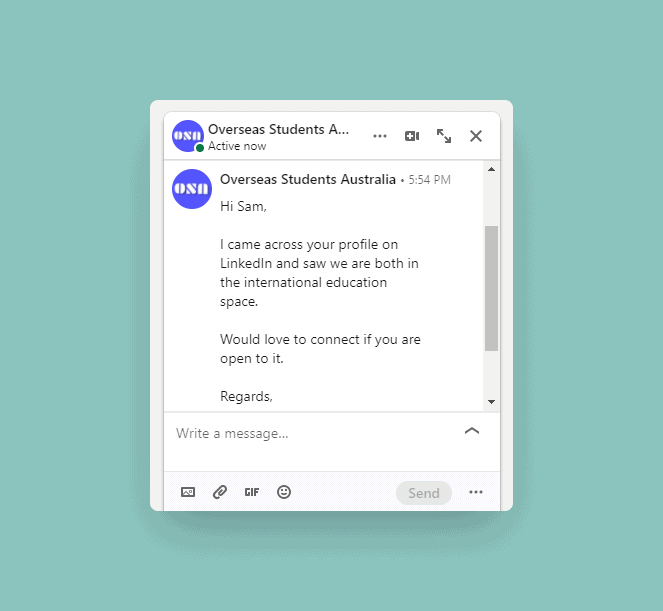
LinkedIn is the most important social network when it comes to professional networking. You should connect with people in your industry on the platform. Here is a quick tip: when sending a connection request on LinkedIn, send a personalised message asking for a possible coffee catch up. (See example below)
💪 Volunteering
You can do some good deeds by helping others in need when doing volunteering, but it will be even better for your career. You can build your network and work experience as well while volunteering.
📬 Sign up for company newsletters
If you want to work for a company, we suggest you to sign up for their newsletter. Some of these businesses actually send job openings in these newsletters. You will also get to know the other updates in these businesses as well.
How to send a personalised message when sending a connection request on LinkedIn
Tips on finding these hidden jobs 🔑
Here are some tips you can take away from this article:
Network effectively – Start learning how to network effectively with others. You should be trying to build your network in Australia. Going out, meeting new people and building new relationships can help you score these jobs.
Work on a LinkedIn Profile – A LinkedIn Profile is a must if you are serious about getting jobs in Australia. You need to polish it up making sure you cover all the details are up-to-date and have the right profile picture.
Research effectively on companies you want to work for – Go to the company’s website, research about them on their social media and ASX website, if the company is listed there. You need to get as much information about the company and its people working there. Luckily, most of this research these days can be done from the comfort of your couch.
Work on your communication – While still looking for jobs, the key thing you want to do is work on your communication. It will also help you to build your confidence as well. You can do this by taking some short courses on websites like Udemy and some of them are available for Free on YouTube as well.
Be presentable – You can work on yourself to be more presentable with your clothes and body language. We know your physical appearance will not be part of any recruitment process, but it is a good idea to come across more professional in your approach. And as the saying goes, the first impression is the last impression.
If you are unsure about what type of emails you should be sending for networking and interview follow-ups, we have got the templates for that. Click here to get those templates.
Since the news arrived that Australia could be starting the international travel before the end of the year, everyone is talking about vaccine passports.
So in this article, we are going to cover everything we know so far about these vaccination passports and how they might work in Australia.
What is a Vaccine Passport?
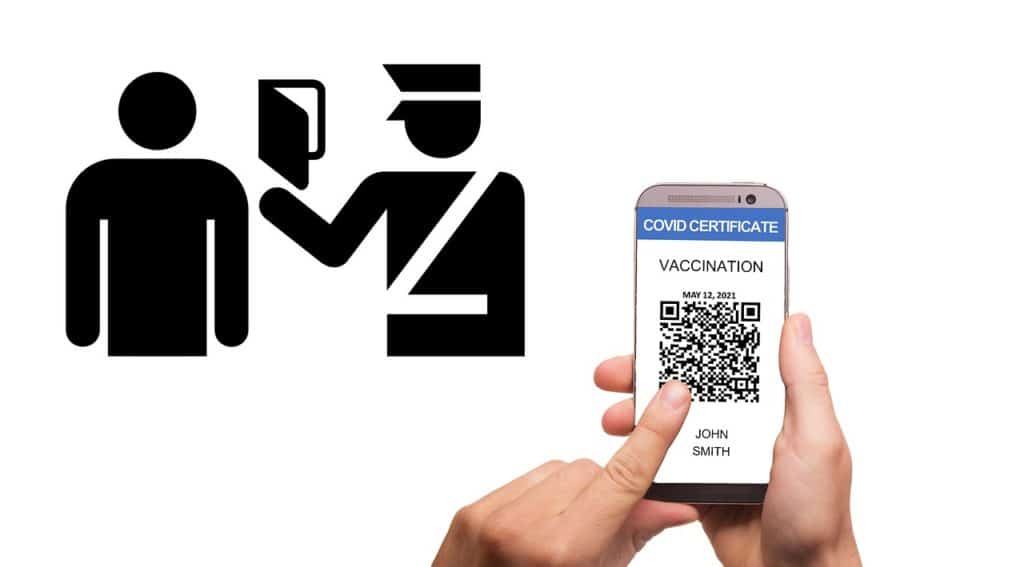
Vaccine passport is basically a proof that you have been vaccinated against COVID-19 with approved vaccinations.
You can carry around this vaccine passport with you and if required you can show it around to the places you might visit that could include your workplace, a restaurant, a gym, a bar or could be when catching a flight
From October onwards Australian government will be rolling out these vaccination passports in Australia.
It will be available both in a digital format and in a physical printed format as well.
Benefits of Vaccine Passport
Traveling without restrictions: One of the benefit is traveling without much restrictions. At the moment if you are coming to Australia you need to do a 2 week hotel quarantine which obviously is done in order to control the spread of COVID-19. So those quarantine arrangements could change with vaccine passports as there might be an option for home quarantining instead of doing it in a hotel.
Visiting local venues: If you have been issued a vaccine passport you could visit different places like pubs restaurants bars and obviously
Work related travel: Vaccinated people will be able to travel around easily for work purposes.
Concerns of Vaccine Passport
Discrimination: One of the biggest concern is regarding discrimination especially against the people who are not vaccinated yet. Unvaccinated people might feel that they are getting discriminated because they can’t visit some of these premises or businesses.
Privacy: People feel that they will have to show these vaccine passport every place they visit that intrudes into their privacy
Scams: Lots of scammers are obviously watching out this as an opportunity to make money and to scam people.
How will they work in Australia?
To understand how these vaccines passports might work in Australia, we will divide this section into 2 parts:
For local travel and life in Australia
For international travel
For local travel and life in Australia
Australia is considering the use of vaccine passports within Australia.
New south wales government will be the first in the country to trial the vaccination passports especially when visiting local venues like bars, restaurants and pubs.
The trial will run for a couple of weeks in October and if it’s successful more freedoms will be given to the people who are already vaccinated and could be rolled out to other parts of Australia.
For international Travel
At the moment Australian government is in talk with other countries to work out which vaccines will be recognised for international travel once they start opening up their borders.
Obviously, there are lots of vaccinations available at the moment against COVID-19 and some of these ones are already been recognised and approved for use in Australia.
There is no official update on which vaccines will be approved apart from the ones that are already been approved in Australia
Australia is also trialling a home quarantine system as well this is being trialled at the moment in South Australia and if successful, this could be implemented for local and international traveller in Australia.
With vaccine passports, Australians could soon be able to travel overseas and Australians who are stuck overseas can come in larger numbers.
What does this means for international students?
Although the introduction of vaccine passports might be a great news for international travel especially for Australians but it obviously brings us hope that there is a possibility that international students and other visa holders could start coming back to Australia.
Tourism minister Dan Tehan has mentioned that once Australia reached that 70 and 80 percent vaccination rate, Australians will be able to travel overseas again and Australians will be able to return home in larger numbers and he also added that “We will also be able to start welcoming international students and those who want to come to work and ultimately tourists as well”.
With more Australian coming back home quicker and doing home quarantine will also free up space for quarantine facilities for other economic visa holders like international students as well.
When is Australia officially opening its border for international students?
It is important to remember at the moment there are no fixed dates for international travel in Australia as yet.
And as soon as we hear any update we’ll make sure we keep you posted with that so make sure to subscribe to our YouTube channel and our email newsletter.
If you’re moving to Australia to study, it’s a good idea to be prepared for your first week in the country. It’s natural that you’re going to be a little disoriented in a brand-new city not knowing what you need to do or worse, how to do it.
That’s why we’ve put together a student checklist to get you started and organised during your first week in Australia. And whilst you’ve probably organised a lot of your move, like your accommodation and OSHC (Overseas Student Health Cover) before you get on your flight, there are some things you won’t be able to do until you land.
After you’ve gone through immigration and customs at the airport, there will be some things you need to organise, and it’s better to get them done in your first week so you’re ready and settle in before university starts.
Not everything in this guide might apply to you, however we hope it helps if you’re feeling overwhelmed and anxious about moving to study in Australia.
Check into your accommodation
First things first, it’s time to stop carrying your luggage around!
If you’re not staying with family or friends then ideally, you’ll have booked your accommodation prior to landing in Australia, so all you need to do is check into your new home.
If you’ve booked privately, you’ll likely have been in contact with your student accommodation provider who will know when you’re arriving. So all you need to do is turn up with a form of identification (ideally your passport) to check in and be shown to your new room.
Tip: It’s a good idea to have the address of your accommodation written down in case you don’t have any phone signal or cannot remember its exact location. You can then give it to your driver or transport officer in case you get lost.
Haven’t booked your student accommodation?
If you haven’t booked your accommodation prior to entering Australia, it’s often easy to find a hotel or hostel for a few days. Or you can contact private student accommodation providers, like The Switch, who take short term bookings. You can then easily extend your stay if they have a room available.
Ensure your visa details are correct (VEVO)
A lot of students who have just arrived in Australia feel anxious about their student visa and its validity. But with the Government app VEVO, you don’t need to worry.
Once you get through immigration and customs, simply download the VEVO app on your phone. It’ll ask you for your visa grant number and once entered will let you know that you’ve activated your student visa and are onshore.
Ticking this off your student checklist isn’t a must, but it definitely provides peace of mind for a lot of international students!
Purchase a transport card
One of the most important things to do in your first week in Australia is to get yourself a transport card so you can use public transport with ease.
In Australia, each city has a different system, so which card you get depends on where you live and study. Take a look below to find out which card you need and where to top yours up:
Sydney
If you’re moving to Australia to study in Sydney, and you wish to use public transport, you’ll need to get an Opal card. You’ll find these at local newsagents or Woolworths supermarkets and can top up there and then.
Once you’ve got your card, you can also download the Opal app which can be used to top up your card, plan your trips and track any transport cancellations.
Although in Sydney you can also tap on and off with your bank card using paywave, a lot of Sydneysiders still use their Opal card to track their travel and get perks such as the $50 weekly cap and student prices.
Perth
In Perth, you’ll be looking out for a SmartRider card. Using much the same concept, you need a SmartRider card to ‘tag’ on and off when you use trains, buses and other public transport.
To get a SmartRider card, simply visit a Transperth Infocentre or most small Newsagents. Here you can get your card and top up.
Much the same as in Sydney, you can top up online or at the machines located at most stops.
Adelaide
In Adelaide, you’ll travel on public transport using a metroCARD. Alternatively you can also use your debit or credit card to tap on and off the city’s trams.
You can purchase and top up your card online or through retailers located around the city.
Melbourne
Any ideas of the name of Melbourne’s transport card?
It’s myki.
With your myki card, you’ll be able to travel on Melbourne’s trams, buses and trains using either your physical or digital card. If you want to buy a physical myki card, you can do so at all 7-Eleven stores or some station ticket offices. But really, the best way to start hopping on and off public transport is getting a digital card using your phone.
Tip: Follow the relevant pages to find out if you’re eligible for a student card in your city. This will make your trips on public transport around Australia cheaper. Score!
Set up your bank account (or pick up your bank card)
Depending on what bank you’ve chosen to set up your account with, you may have already set up your bank account whilst outside Australia. In which case, all you’ll need to do in your first week is pick it up from your nominated bank.
If you aren’t quite that organised, it’s likely that you’ll have to set up your bank account in your first week in Australia.
Your first decision is which bank to go with. Lots of people go with Australia’s big banks such as ANZ, Commonwealth or Westpac, however there are many options, so do your research and pick the one that fits your situation best. Believe it or not, there’s also a great selection of ethical banks if you’re keen on keeping your money a little cleaner.
In the meantime, make sure you bring some cash or an international credit card with you until you receive your new one.
What do I need to set up a bank account?
70 points worth of identification. This usually consists of your birth certificate, passport, another card with your name on it and your driver’s licence if you have one. However it’s best to check with your bank.
Your postal address
Tax File Number (if you’ve got one – if not, read on!)
Set up your phone
This might be of high priority if your phone provider doesn’t allow international roaming. Whilst there’s a lot of free wifi on offer at the airport and across Australia, buying a new sim card for use in Australia is a must do when you land.
There are so many options when it comes to mobile providers, but Telstra and Optus are two of the most popular that allow for the most coverage across Australia.
The most important things to explore when searching for a new phone plan are:
Choosing a pre-paid vs post-paid plan
Which provider to choose
Price
Inclusions (data, calls, texts)
Purchasing a sim card is the easy bit. You can either order your sim card online, head to a local phone store or pop into your local Coles, Woolworths, Officeworks or Post Office branch to pick one up. You’ll then be able to follow the instructions to activate and top up monthly.
Apply for a Tax File Number
What’s a TFN?
A TFN, or Tax File Number, is a number you legally need to work in Australia. So if you’re looking to work part-time whilst on your student visa, you’ll need to apply before you can get a job and get paid.
Your TFN helps the Australian Government determine how much you should be taxed. If you’re on a student visa you’ll pay an average of 15.5% tax on your earnings which you’ll see when you do your tax return, however this is subject to change.
Setting it up is easy. Simply visit the ATO website and fill out the form. Your TFN will then be sent via post to you and should arrive within a week or two.
Get ready for O Week
Once all the admin is out of the way, it’s time to prepare for what you came for! It’s likely that you’ll have received communication from your university regarding Orientation Day and the rest of the activities happening during ‘O Week’. A week of markets, parties, games, tours and activities that occur the week before university officially starts.
This is a great way to meet people on your course, make new friends and get to know your campus and city before you start the semester.
Make sure you know when orientation day is, you’ve signed up for activities you want to take part in, research university societies you’d like to be a part of and organise your timetable for the week. This way, you won’t be overwhelmed when you’re being pulled in all directions!
Decorate your room
This is the fun bit! During your first week, make yourself feel at home by decorating your room to make it a little more ‘you’.
Before you leave, print some photos out, collect some keepsakes or your favourite pieces from your own bedroom to bring along. By decorating your room, it’ll feel cosy from the moment you move in.
Stuck for decoration ideas? Head to your local Kmart or Target for cheap homewares that fit perfectly with any student’s budget.
Explore your new home
Aaaand breathe. All the hard stuff is done. All you need to do now is get out there and explore all that your new city has to offer!
Take public transport, hire a bike or simply get your walking shoes on and take a look around at where you’ll be sipping coffee before your 9am lecture, where you’ll be hanging out with your new friends, your route to university and places you’d love to explore in the coming months.
By getting to know your surroundings, your next few weeks in Australia will be much easier and you’ll feel much more at home.