When you’re planning to enroll in any course in Australia, you’ll need three documents, which include:
Application form
Letter of Offer
Confirmation of Enrollment.
In this article, we’re going to be discussing the difference between Application Form, Offer Letter and Confirmation of Enrolment (COE), the purpose of each one of them, and the process involved in using these three documents.
So let’s kick it off.
What’s An Application Form?
This is the first document you’re required to complete when you’re planning to apply for any course in Australia.
You can find this document on the website of the institute or university that you’re planning to study at.
You can either complete these documents by yourself or get help in completing them through an education agent.
What’s included in the Application Form?
This application form varies according to the different schools or universities‘ policies and procedures, but most of them will ask you similar kinds of questions in the application form.
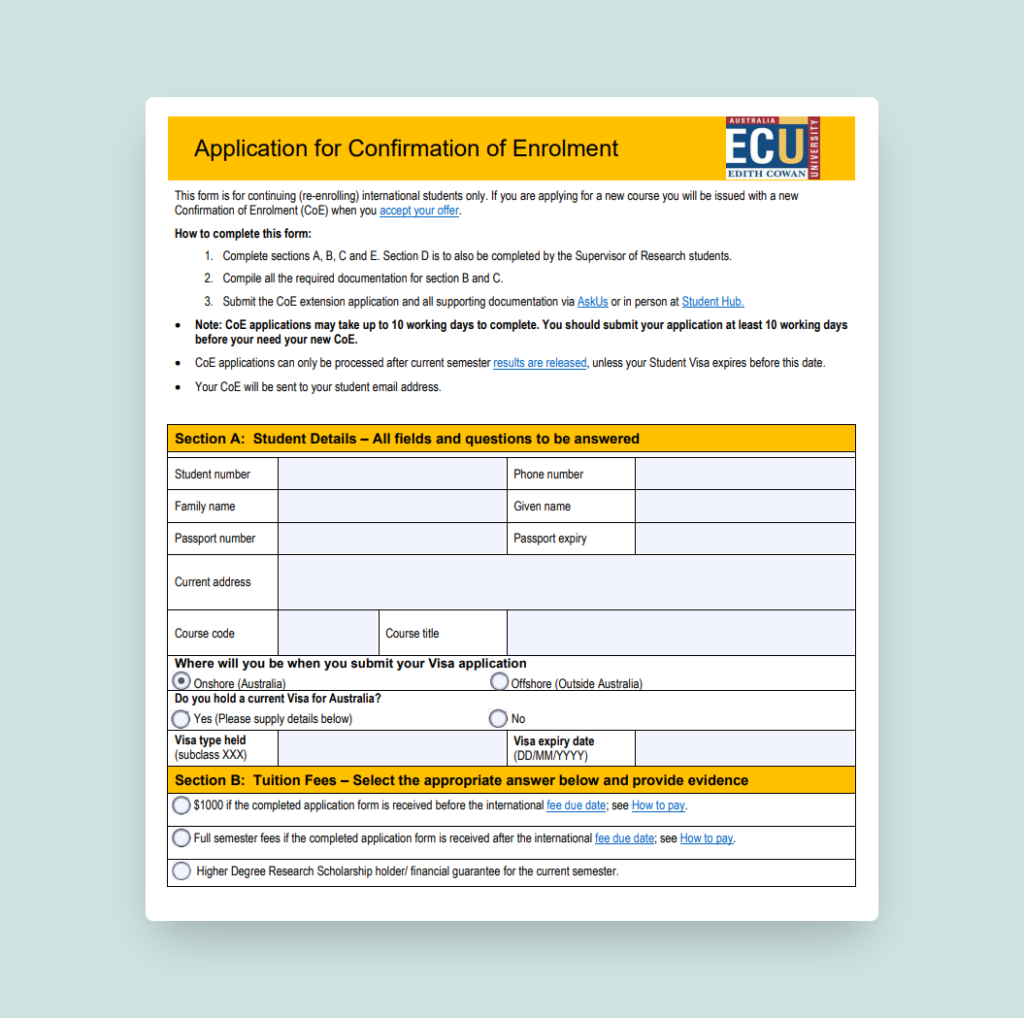
Some of the things you need to complete in the application form include:
1. Personal Information
Personal information includes your name, date of birth, passport details and some other personal details.
2. Contact Details
They may ask you for your address in your home country, your email address, and your phone number.
3. Academic Background
This includes any of your previous qualifications and what you have studied so far.
4. Your Course Selection
The course you would like to study at that particular institute or university.
5. Visa Details (if applicable)
If you are renewing your visa and applying for a course from Australia, then they may ask you about your visa details.
6. Student’s Statement
This is your acceptance of the terms and conditions of the university or institute that you’re applying to.
They may require more information in the application form. And they might also have a different kind of format, depending on the school, university, or institute that you’re applying to.
Here is a sample of the application form from one of the Australian institution:
What Documents Do You Need To Submit Alongside The Application Form?
You will be required to submit the following documents along with the application form to get your offer letter:
Passport
Academic evidence like your certificates, marksheet etc.
Proof of English Level Proficiency (IELTS, PTE or other English test results)
Depending on the institute or university you’re applying to, they may ask you for additional documents as well.
Once you’ve completed this application form and sent it to the institute or university you’re applying to, they’ll review and access your application, and that’s where the second document comes in, the letter of offer.
What’s a Offer Letter or Letter of Offer?
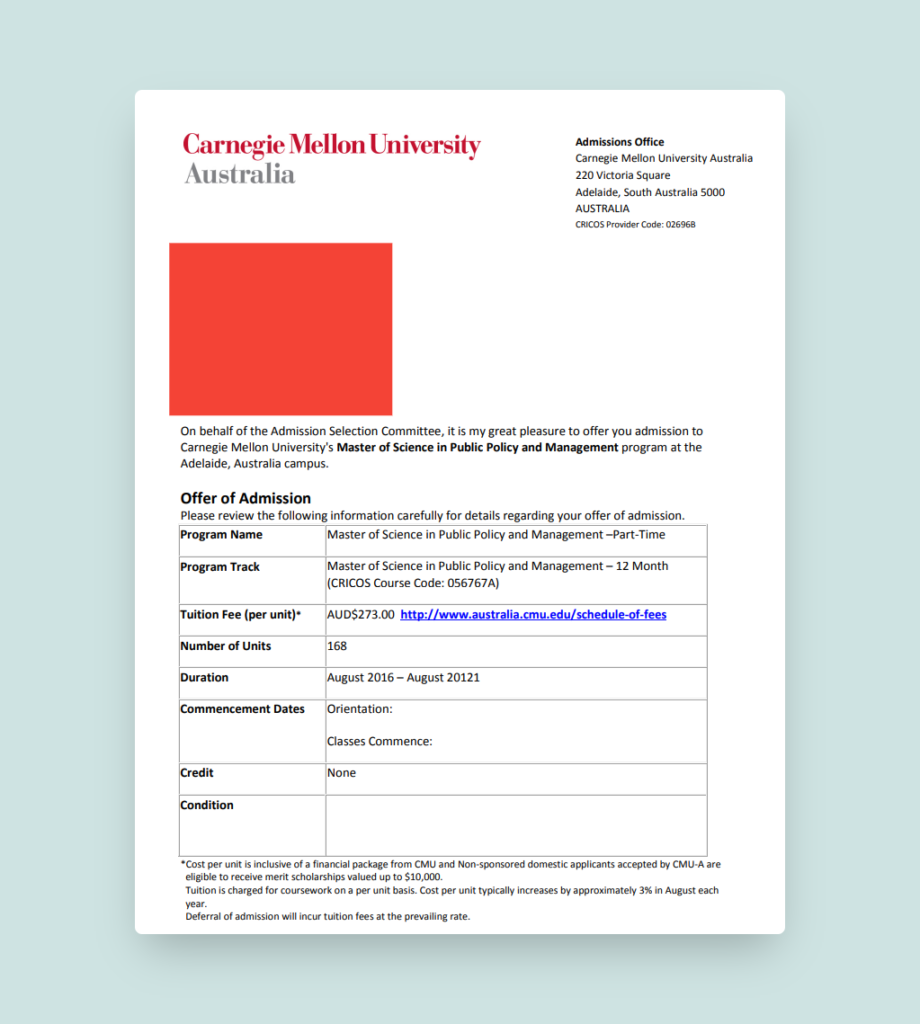
If the university or institute you’re applying to is satisfied with your application, they’ll issue you a document called a “Letter of Offer”, which means you’ve met the entry requirements of that institution and that specific course and have been formally offered a place to study.
A letter of offer can be an Unconditional, Conditional, or Package offer.
1. Unconditional Letter
This means that there are no conditions that you need to meet to apply for this course.
2. Conditional Letter
This means you’ve been granted a place in that specific institution and for the specific course, but you’ll need to meet the conditions as stated in your offer letter. So you need to make sure you meet them before signing your letter of offer.
3. Package Offer Letter
If you’ve applied for more than one program or qualification in the institute, or you’re required to complete an English Language program before starting your actual course, that’s when you get a package offer letter. So, it’s a package or combo of two or more courses.
What’s Included In The Letter of Offer?
Name of the course that you’ve been accepted into.
Duration of the course
Start and end dates of the course
Fees you need to pay for the course
Total deposit fee
Overseas Student Health Cover (OSHC) Fee
Once you’ve received the Letter of Offer, make sure you read the terms and conditions carefully as it usually has information regarding suspension, academic misconduct, and many other policies and processes that you should be mindful of.
If you’re happy with the terms and conditions, then you’ll sign the Letter of Offer and send it back to the university or institute you’re applying to.
You also need to pay your deposit fee as well. You can pay by credit card or telegraphic transfer.
And once the institute has received the payment, they’ll issue you a Confirmation of Enrollment (COE) or eCOE, which stands for Electronic Confirmation of Enrollment.
What is Confirmation of Enrolment (COE) or eCOE?
A Confirmation of Enrolment (COE) is an official document issued by your school or university.
COE is proof that you have a place secured in a registered Australian education institution.
You’ll need this document when applying for your student visa, your Overseas Student Health Cover (OSHC), and some other administrative purposes.
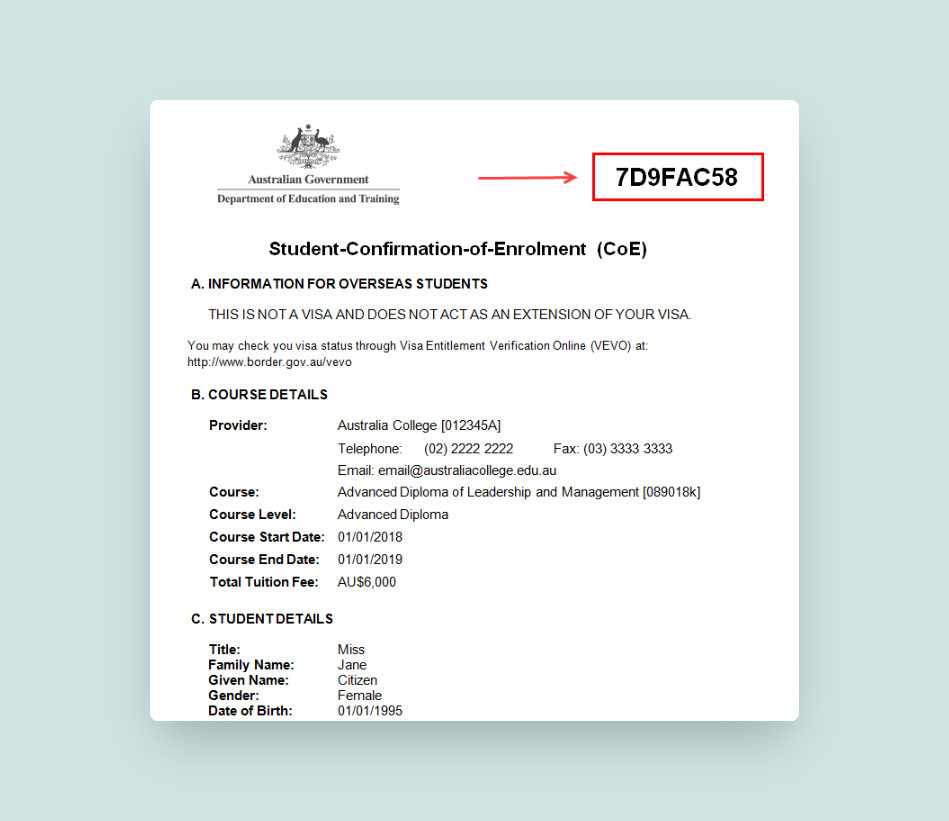
Each COE will have a unique code (highlighted in red below)
You will receive confirmation of enrolment via email or through your education agent.
What’s Included In COE?
The following information is usually included in a COE:
Name of the course you’re studying
Duration of the course
Start and end dates of the course
Total amount paid as a deposit
The total fee amount left to be paid
It’s important that you’ve a valid COE for the entire time you’re going to stay with your student visa in Australia.
How Long Does it Take to Get a COE (Confirmation of Enrolment)?
It depends on the institute, but usually it takes a few days to a couple of weeks to get a COE after your acceptance of the payment agreement and offer letter.
And that’s how the whole process works with these documents.
If you would like to know how you can apply to study in Australia in a step-by-step guide, then check out our YouTube video. https://youtu.be/uQld8cqc7mQ
Many students get confused about the assignment system in Australia.
Some common confusions include: what types of assignments are there and how to do assignments correctly and can I use information from the internet?
So in this article, we are going to talk about everything you need to know about assignments in Australia including some tips that you should know as an international student.
What is an assignment?
Assignments can be considered homework or a task allocated to you by your educational institute to be completed in a defined timeframe.
Many universities and vocational courses use assignments in Australia to assess your performance in your studies.
Some students get surprised that there are no exams or very few exams in their studies in Australia.
But it’s a common thing. So don’t be surprised!
Even if you have exams in certain subjects, you’ll still likely to have assignments for the subject.
So as an example, your one subject’s overall weighted scores (or we call it unit in Australia) might look like this:
Subject name: Business Studies
Total weighted score: 100%
Attendance: 10%
Class Quiz: 10%
Assignments: 60%
Exam: 20%
Different types of assignments in Australia
There could be different types of assignments you might be required to during your studies here in Australia
Some popular type of assignments are:
Writing an essay or a report
In both cases you’ve to do a thorough research, and then you may have to write a certain word limit report or essay depending upon the requirements of the subject.
Case Study
You might be required to go through a case study and answer some questions based on that case study.
Quiz
There could be quizzes as well where you may have to do a multiple choice or a true and false quiz at times.
Group work
You might be required to do research projects in a group setting.
Presentation
There could be some visual or verbal presentations involved in your studies.
Demonstrations
In certain subjects, you might’ve some practical components and you’ll need to provide some demonstrations of the tasks.
Portfolio
In some courses, you might be required to submit a portfolio of your work like your designs or actual work completed.
There could be other types of assignments also but the above-mentioned ones are some of the most common ones you’ll come across in Australia.
Where to find your assignments?
When you enroll in any course at University or vocational education program, you are likely to be given access to an online platform.
Many of the universities in Australia use ‘Moodle’ as their preferred platform, but there could be another type of platform that you might’ve access to.
Inside that platform, you’ll be given information about all the subjects that you’re studying, study resources, timetables and information about your assessments as well.
Usually, at the start of a new term, you will also get a term outline which will explain your weekly schedule of the term.
In this outline, they will give information on what topic will be covered during each week, what tasks to be completed and when they need to be submitted.
If they don’t give you access to any online portal, then they’ll give you a physical printout of your assignments that you will be required to complete.
Most of the study terms in Australia could go anywhere from 10 weeks to 12 weeks. And during the year, you can have multiple terms.
We have covered some of the most common intakes in Australia including the best and the worst in Australia here. Check it out.
How to do assignments in Australia?
Now the most important question is how to do assignments. What’s the method or system that you need to follow?
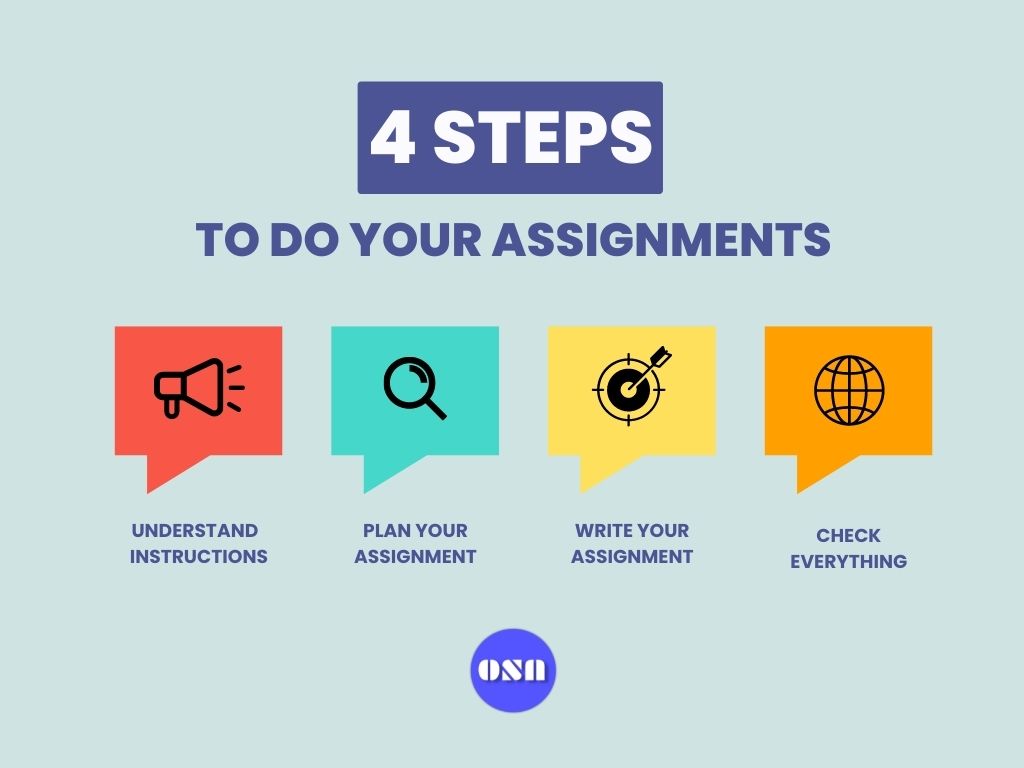
There are four main steps you can take in order to do your assignments in Australia:
1. Understand the instructions
Before you even attempt any question, understand the instructions of the assignments and what you are required to do in that assessment task.
It’s very important to read those instructions carefully because sometimes you get some key ideas from those instructions themselves.
If you don’t understand something from those instructions, then you’re welcome to go out and seek help from your trainer or your tutor.
2. Start planning
Once you’ve understood the assignment, the next thing is to start planning.
The planning phase is where you start looking for some information and start doing research on how you’re going to write your assessment task.
3. Writing
Then comes the actual writing part where you will start typing your answers. This is the part where you will be writing the answer to those questions in your assignment.
It is a good idea to create an outline of the assignment before you start typing it in more details.
4. Check your assessments
Make sure to proofread your assignments before submitting them. If possible, check it for plagiarism scores as well.
A lot of times, students submit wrong documentation, and they end up paying the fines or the penalties.
So make sure to check each and every element of your assignment before your final submission.
Deadlines for assignments in Australia
Every assignment will have a specific timeframe you need to complete it by.
If you don’t submit within those time frames, you will be getting a penalty.
It could be a penalty for your scores or that you may need to resubmit again, or you may have to pay a late submission fee depending upon the Institute.
Each institute in Australia may have a different policy in regard to late submissions, so check your institute’s late submission policy.
Penalties can be quite high (in terms of dollars) so it is important that you pay attention to these deadlines.
Plagiarism
Plagiarism basically means copying others’ work.
Most universities or institutes in Australia use a software called Turnitin
This plagiarism software can easily pick up the sources of the information where the students are getting the information from.
It can provide a very detailed report to the tutors who are going to check your assignments.
A high plagiarism score could mean that you could be failing the subject. It can ultimately mean that you could be repeating the subject again. Obviously it costs a lot of money, time and don’t even start talking about the stress it causes.
How to Avoid Plagiarism in your assignments in Australia?
Ideally, if you’re going to use any internet resource or any source out there available and relevant to your assignment, then you can shouldn’t copy from it directly.
Instead, you can read it, get some ideas and then you use your own words to explain it.
Again, you are allowed to do research from any resource available out there but you should explain them in your own words.
No copying and pasting here!
Referencing
If you do use any resource to conduct your research, it is important that you provide a reference to that specific resource.
It is expected by most Australian educational institutes that you provide a reference list for your assignments in Australia.
Now there are multiple types of referencing systems available in the world. And depending on the university, they could be using a different system.
The most popular referencing system in Australia is Harvard referencing.
Please, refer to your University or institute’s referencing policy on what type of referencing system is expected by them.
There could be additional requirements like having footnotes as part of your referencing sas well.
We highly recommend you attend sessions offered by your University or Institute on how to do referencing for your assignments.
They usually provide these sessions as a part of the orientation session. So don’t skip it.
Want to learn more about orientation in Australia? Check our detailed article here.
Support systems available for assignments in Australia
Let’s discuss some support systems available in the Australian education system for students who don’t understand assignments in Australia.
Your first point of contact for assignment support
Thankfully, most of the lecturers and tutors are quite friendly in Australia.
So you can easily walk up to them and ask for help in regards to your assignments. We suggest you arrange a meeting with them through email or email them about your questions.
Do it a few days ahead of time so that they can meet up, or they can explain to you about your assignments.
Academic Study Support
Most of the universities will have some academic support systems available for students to help them with your assignments.
Help from peers
If you have a friend or other peers doing the same course, then you can ask them any questions about the assignment as well.
But we highly encourage you not to ask or share your assignments with any of your friends or peers.
It can lead to a lot of trouble for your academic career if you decide to share it with your friends and then submit the same assignment.
So, never share your assignment with anyone.
Apply for special consideration
If you’re struggling to do your assignments in Australia, then there is usually a provision for special consideration by your University or Institute.
Please, communicate your difficulties with the assignments to your teacher or the support systems available at your university as soon as possible so that they can assist you with it.
In special consideration, they can give you some additional time to complete assignments, or provide you with some additional academic support as well.
Don’t use online academic cheating services
If you’re thinking of getting your assignment done from these assignment cheating services, think again because cheating and getting the assignment done from someone else is illegal in Australia.
It can have devastating consequences for your career if you get caught.
If you can’t do your assignment, seek help from your University sources or from your trainers or tutors, but do not engage in any cheating services for your studies.
Additional tips about assignments in Australia
Here are a few additional tips from our team in regard to assignments in Australia:
Attend your classes regularly because in those classes your lecturers, tutors or your trainers will give you some instructions on how to complete your assignments.
Not only attend but pay attention to your classes as well, the lecture notes and any additional material provided by your trainers or tutors.
As some assignments require lots of work, we suggest you try to complete assignments on a weekly basis rather than doing it all at the end.
If at any time you feel that you can’t do your assignment, please seek help quickly from your institute’s academic department.
Please don’t wait till the last day of your assignment to ask for help, ask for it nice and early.
So that’s all in regard to the assignments in Australia. We wish you all the best for your studies and assignments in Australia.
If you are considering to study abroad in 2023, then Australia should be on top of you list. And no, we are not just saying it in a cliché, but there are 9 important reasons behind it.
So, in this article, we are talking about the Top 9 reasons to study in Australia in 2023 and what it means for the international students.
Let’s discuss them!
1. Unlimited work hours
International students are currently allowed to work unlimited work hours in Australia.
There are no restrictions on the amount of hours you can do while studying until 30th June 2023.
After 30th June 2023, the work restrictions for international students will come back into force. Which students could be once again limited to 40 hours per fortnight work limit.
But while the option is available, why not take full advantage of those work hours. It’s very rare that this sort of opportunity comes. No other country has unrestricted work hours for international students.
We compared Australia with top destinations for international students: Canada, UK, USA for work hours; check the difference among all of them here.
2. Increase in post-study work visa timeframes
The Australian government will increase the post-study work visa for international students studying in the areas of verified skill shortages.
Currently, international students doing a Bachelor’s degree get a Post Study work visa for 2 years, Masters students 3 years and PhD students 4 years respectively.
But as per the update, it will increase from two years to four years for select Bachelor’s degrees, from three years to five years for select Master’s degrees and from four years to six years for select PhDs.
We are expecting more details on this increase in timeframes soon.
3. Increase in skilled migration cap
The Australian Government has increased the skilled migration cap for the financial year 2022-23.
Previously it was 160,000 places, but it has been increased to 195,000 for this financial year.
It means more visa holders who are eligible under the skilled migration program can apply for permanent residence.
4. Low unemployment rate
Australia has recorded one of the lowest unemployment rates even during the dark days of the pandemic.
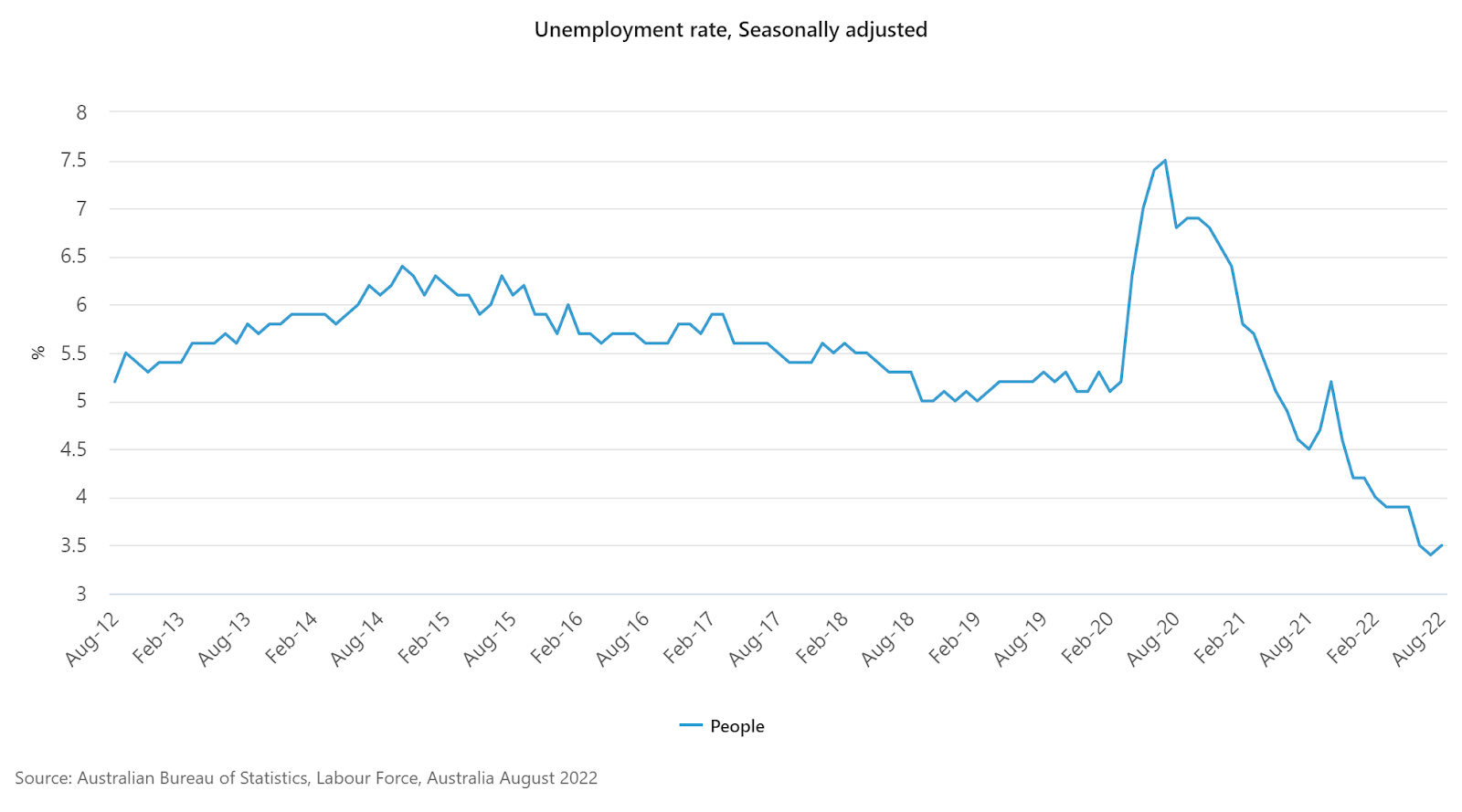
Currently, the unemployment rate is at 3.5% (August 2022), one of the lowest in recent history.
Low unemployment in the country is significant for international students as it means they can easily find part-time jobs in Australia while studying.
5. High wages
Australia has the highest minimum wages in the world (Graph below: Minimum Wages (Source: Statista)
From the 1st July 2022, it is $21.38 per hour.
And the recent study also shows that Australians are the richest people in the world. (See the graph below)
So, what it means for international students is that they can earn decent wages even doing part-time jobs in Australia.
Another huge plus with the low unemployment rate.
6. New government focus on longer term migration
New Labour government (which was elected in May 2022 during the federal election) is focused on long term migration rather than short term migration. More details here.
As mentioned by the Education minister, only 16% of international students stay back in Australia after their studies compared to 27% in Canada.
That means the Australian Government is keen to change that and make more students stay longer in the country.
And provide pathways for workers on temporary visas to stay longer, or transition to permanent visas and international students are likely to benefit from it.
7. Fully Funded Scholarships
Many Australian institutions and the government are offering fully-funded scholarships to international students.
Some of the popular ones include
Australia Awards,
Deakin Vice Chancellor’s International Scholarship
Monash International Leadership Scholarship
UTS Vice-Chancellor’s International Undergraduate Scholarship
Vice-Chancellor’s Social Champion Scholarship
You can check more fully-funded scholarships on our website here.
8. Government incentives
Some states governments like Western Australia are also giving incentives to international students to entice international students to study with them.
These incentives will provide
$1,500 for up to 2,500 eligible students to offset accommodation expenses while studying full-time in WA in Semester 2, 2022; and
ISEB – $1,500 for up to 2,000 eligible international students to offset fees when undertaking an approved ELICOS course in Western Australia.
And if you are willing to study in a regional Western Australia with Tafe Western Australian, then you can get $5000 for studying, working and living there. More details here.
9. Most Liveable and Best Student Cities
Many Australian cities usually ranks well in the Global Liveability Index.
As per the Global Liveability Index 2022, many Australian cities make it to the Top 50 liveable cities in the world.
Here is a quick list of the most liveable cities in Australia with their world ranks in 2022:
Melbourne – 10th
Brisbane – 27th
Adelaide – 30th
Perth – 32nd
Also, as per the QS Best Student Cities for 2023, many Australian cities ranks in the Top 100. Here Australian cities with their ranks:
Melbourne – 5th
Sydney – 9th
Brisbane – 24th
Adelaide – 31st
Perth – 34th
Canberra – 35th
Gold Coast – 93rd
So, these are our Top 9 reasons to study in Australia 2023. What’s yours? Leave a comment or reach us via DM here.
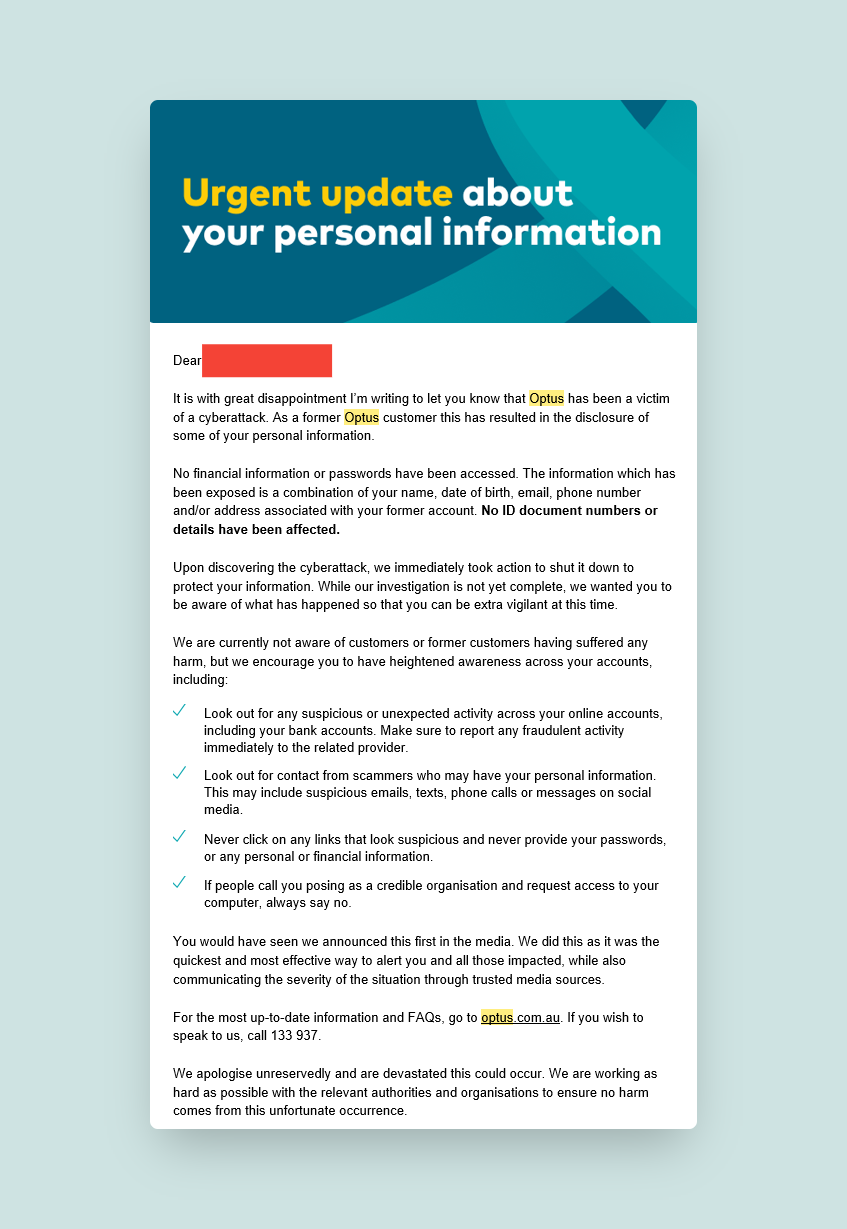
Some of you might have received the email that looks something like this from Optus:
Or else you must have heard about the recent news about Optus data breach and might be wondering what that is and how it affects you as an international student.
And more importantly, what can you do about it?
So in this article, we are going to give insights into what is the whole saga about Optus Data Breach, and what does Optus Data Breach mean for international students?
What is Optus Data Breach?
On 22nd September 2022, Optus revealed that they have been subject to a massive data breach with exposing personal data of nearly 10 million customers.
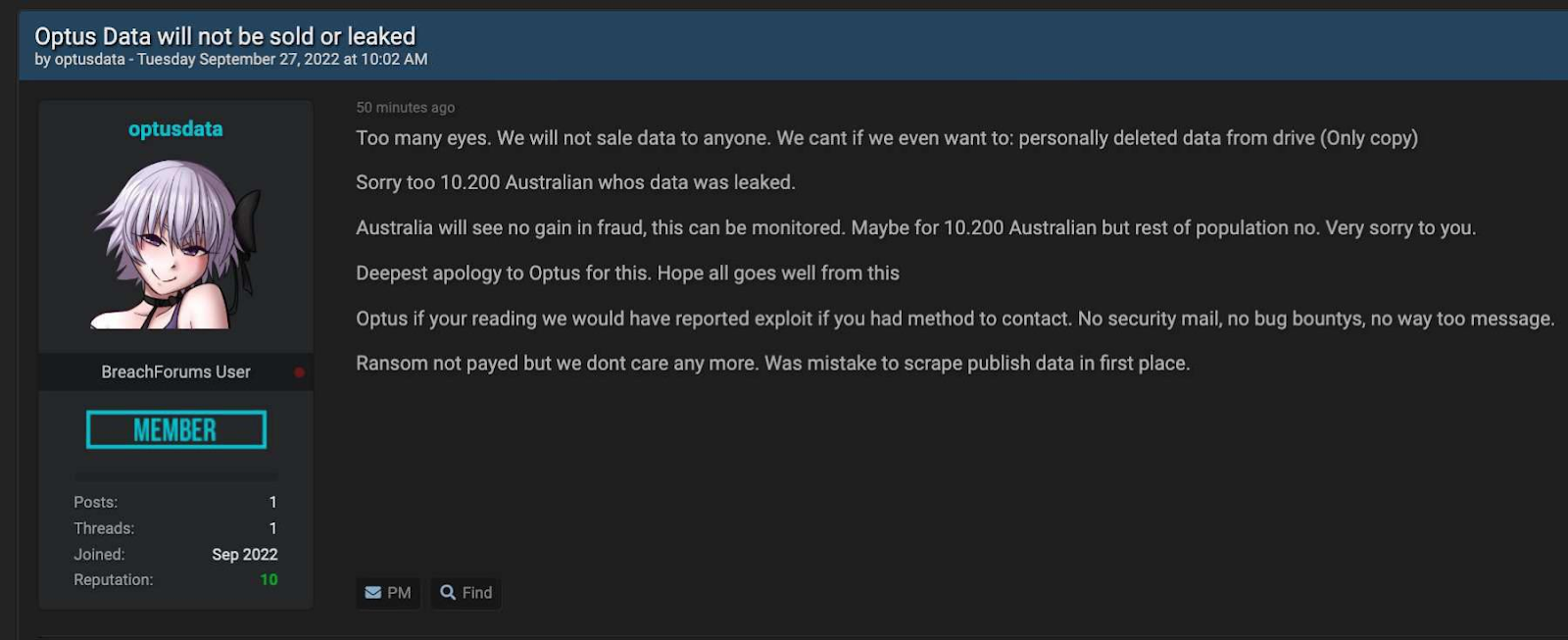
The attacker who identified himself as “Optusdata” in an online forum asked for $1 million in cryptocurrencies in ransom or else threatening to release the data on the dark web.
But later this attacker seems to have a “change of heart”, and apologies for the trouble it caused to Optus and its customers.
This was not before he claimed to have released the data of 10,000 customers on the dark web already.
What data is believed to be stolen?
Some of the data that has been stolen include:
Name of the customers
Their Date of Birth
Their Phone Numbers
Their Email address
Their Home Addresses
Many customers are believed to have their ID details stolen as well including:
Passport Details
Driving License Details
Medicare Details
It is obviously very concerning for everyone as so much personal data has been relieved that it can be used for multiple crimes and other illegal activities like terrorism, identity theft, frauds etc.
Imagine a whole amount of loan taken under your name when you are not even aware of it. And this is just one scenario.
Steps international students can take?
Here are a few things that you can do to help protect yourself from this data breach:
Immediately change your email passwords and use double authentication, if available.
Notify any financial institution like banks or lenders about it if data has been breached. Change your bank account details. Ask for a new card. Change PIN.
Report to the relevant providers if something suspicious happens on your account.
Ask to put extra measures like putting a special secret code with other important institutions like your insurance company, telco providers etc.
Notify your university about the data breach as well, so they can assist and know if anyone tries to use your personal information.
Don’t click on emails that look suspicious or spammy, especially if it seems to be coming from Optus. Make sure to check the email address before clicking or replying.
If you are getting calls from some organisations to pay bills or fines, don’t reply and disconnect immediately. You can call back the organisation to confirm if they are really after a payment from you
If your ID has been revealed during the breach, then you can apply to renew the ID document. (We explain that below)
What assistance is available from Optus and the Australian and State governments?
Optus would have emailed you by now if your data has been breached. We suggest you check your inbox (or spam folder) just to confirm it.
The email would have notified you if your data has been breached and if your personal ID like passport details or driving license number has been compromised.
Optus has also announced that it will give access to a 12-month subscription to the Equifax Protect, credit monitoring and identity protection service.
Assistance for your Driving License change
As it is likely that you might have given a Driving License as your ID when signing up for Optus and if that’s compromised, then you should apply to get a new one.
Many states have come to help with issuing new licenses to the affected customers whose Driving License might have been compromised and providing free replacement to all those whose license was compromised.
You can check the details on how you can change it from each of these states here:
You can check more details about it on the Optus website as well.
Assistance for your Passport change
It has also been announced that Optus will pay the fee for the renewal of any Australian passport holders.
But it won’t help international students as they don’t carry Australian passports and most of them might have given their Passport as their ID to Optus.
In that case, you might need to speak to your local consulate office in Australia from your home country and discuss how you can replace the passport.
We also suggest you reach out to Optus to reimburse any costs involved in changing the passport.
Assistance for your Medicare change
Some students who might have access to Medicare and got their Medicare accessed in the breach, can apply to renew the medicare card through mygov account.
Complaints
If your data has been breached, and you wish to raise a complaint about privacy, then you can make it with Optus.
You can also lodge a complaint with the Telecommunication Ombudsman if you can’t resolve the issue with Optus here.
Many international students are usually aware of the work restrictions on a student visa when studying in Australia.
But there are still some common questions about work restrictions like
“How many hours can an international student work in Australia?”
“Can a student work unlimited hours in Australia on a student visa?”
“Until when international students are allowed to work unlimited hours in Australia?”
So, in this article, we are going to discuss everything about work hours restrictions for international students in Australia.
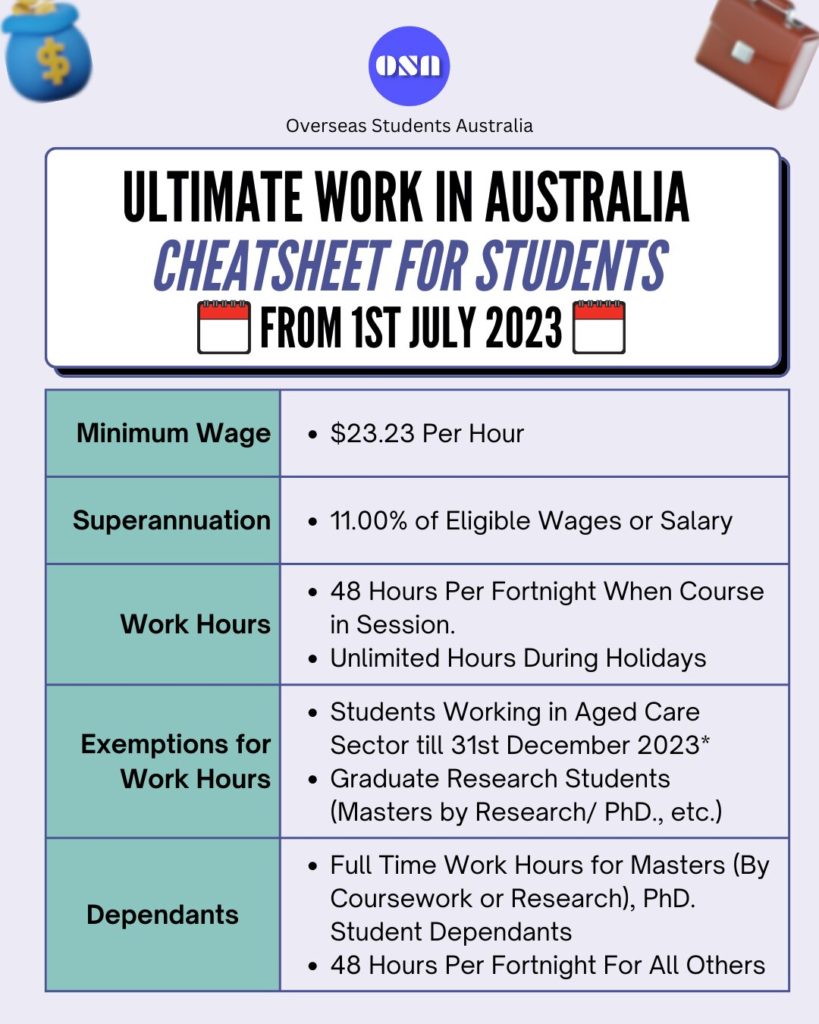
Before we get started, here is a quick cheat sheet of the changes that are coming into effect from 1st July 2023.
Can International Students Work Along with Their Studies in Australia?
The cost of studying abroad is significant. The benefits of working while studying are numerous, and international students studying in Australia are usually permitted to work on their student visas.
During the academic year, students with a valid student visa are permitted to work 40 48 hours fortnight (every two weeks), and they are allowed to work an unlimited number of hours during breaks.
This is done to guarantee that students may maximise their earnings while they are not in school while still focusing on their academics when their study is in progress.
How Many Hours Can Students Work During Their Study in Australia?
In the past, International Students could only work up to 40 hours per fortnight (every 2 weeks) when their study is in progress.
But since the new update from the Department of Education, international students can work up to 48 hours per fortnight from 1st July 2023. There is exception to this as students working in aged care sector can continue working unlimited hours until 31st December 2023.
There are many international students that might think they have unlimited work hours. But, this is not completely true. Usually, students can only work unlimited hours during their official study vacations.
International students studying Masters by research and Doctorate programs can work unlimited hours even when their study is in progress.
Students studying with the Australia Awards scholarship or Defence students are also required to follow the 48 hours per fortnight work limitations during their studies and unlimited work hours during their official school holidays.
But the Australian government has offered a temporary easing of working hours due to worker shortages. As a result, students are now permitted to work more than 48 hours every two weeks until 30th June 2023.
Can Students Work Unlimited Hours In Australia?
From 1st July 2023, with a valid student visa, international students in Australia are allowed to work up to 48 hours per fortnight (or 24 hours every week) while courses are in session. There are no limitations on how many hours they can work during officially recognised school breaks.
However, as per the new update in the budget 2023 announced on May 9th 2023, international students already working in the aged care sector on 9th May 2023 can continue to work unrestricted hours until 31st December 2023.
To avoid confusion about the work week, in Australia, the work week starts from Monday and ends on the next Sunday.
But currently, these work restrictions have been lifted which means students can continue to work unlimited hours until 30th June 2023.
Until When International Students Can Work Unlimited Hours In Australia?
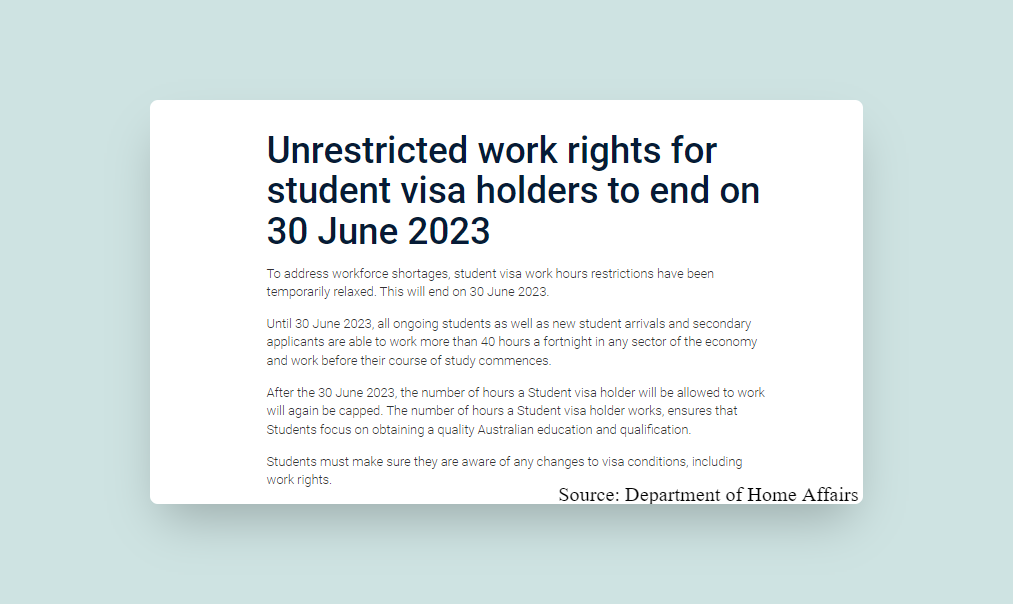
To help with the labour shortages, the restrictions on student work hours on visa have been temporarily relaxed. These relaxed rules for unlimited work hours will expire on June 30, 2023.
All current students, new student arrivals, and secondary candidates (arriving along with students) are permitted to work over 40 hours per week in any industry until June 30, 2023.
A student visa holder’s ability to work will be limited to a 48 hours per fortnight after June 30, 2023 (except students working in the aged care sector, as noted above) as the Australian government wants students to prioritise getting a high-quality Australian education and credential.
International students must ensure that they are informed of any changes to visa requirements, including work restrictions and hours.
Can International Students Come And Work In Australia Before Their Course Commencement?
Australian government relaxed rules regarding students commencing work before their course commencement during the pandemic period. Students were allowed to come before the start of their course and start working even before the course commencement.
But since last update from the Department of Home Affairs, there is no mention regarding this on their website and students are advised to confirm this change regarding starting work before course commencement with their university, agent or the department.
Students can check their visa conditions also to see if they can or can’t commence work before the course commencement.
But after 30th June 2023, as the restrictions on work hours will be back, students can only commence work after the start of their official study period.
In the past, students were not allowed to begin working until after their studies had begun, and they were allowed to arrive in Australia up to 90 days prior to the commencement of their degree.
Can Students Work After Completing Their Studies in Australia?
Students who are studying in the major city areas, i.e. Brisbane, Sydney or Melbourne, can get up to two-year post-study visa work.
Students studying in regional areas can obtain a three to four year post-study work visa, allowing them to remain in Australia after their graduation.
But the new suggested changes by the government mean there will be additional time for post study work visas for international students studying in the areas of verified skills shortages.
Students completing eligible qualifications and in high demand occupations will be able to apply for additional 2 years of post study work visas. You can read more details about these eligible qualifications here.
Apart from that, you can also keep an eye on the website of the Department of Home Affairs for further details on this.
How Many Hours Can My Dependent Family Member Work on My Student Visa in Australia?
Currently, the dependent family members of the student visa holders (subclass 500) can work unlimited hours until 30th June 2023.
Usually, the dependents of some student visa holders are required to follow the work hours restrictions as well.
However, if you are studying a Master’s degree (by coursework or research) or Doctorate degree in Australia, then your dependents are allowed to work unlimited hours even when your study is in session.
Dependents of the students studying other courses (than the listed above) will need to abide by 48 hours per fortnight work restrictions after 30th June 2023.
Can International Students Work Unlimited Hours During Holidays?
Yes, international students are allowed to work unlimited hours during their official holiday or term break.
Sometimes employers may ask you to provide a letter regarding your official term break while studying on a student visa.
In that case, you can ask your university or school to provide you with a letter or certificate for official school term break.
How Many Hours Can International Students Work in Australia After 30th June 2023?
As per the latest news update from the Department of Home Affairs, international students can only work 48 hours per fortnight after 30th June 2023 (except students working in the aged care sector, as noted above).
It means the work restrictions for new and existing student visa holders will restart from 1st July 2023.
International students visa holders are expected to abide by these work restrictions during their study period.
What Happens if Students Work More Than 48 Hours per Fortnight After 30th June 2023?
International students (except students working in the aged care sector, as noted above) will be required to follow the 48 hours per fortnight work limits after 30th June 2023.
Any students working more than the work restrictions will be in a breach of their student visa conditions. It can also lead to the cancellation of the visa.
So, we recommend that you always abide by the student visa work restrictions.
Can International Students Work 40 Hours?
Until 30th June 2023, international students can work more than 40 hours per week on a student visa in Australia.
After 1st July 2023, if international students work 40 hours in a week, then they must ensure that they are not in breach of their 48 hours per fortnight work restrictions in the fortnight.
It is a student’s duty to keep regular account for how many hours they are working in a fortnight.
Why Australian Government is Bringing Back the Work Restriction For International Students?
In January 2022, Australian government announced unlimited work hours for international students in Australia to address the labour shortages due to pandemic.
Since then the slow economic growth and opening of Australia’s international borders has helped to reduce the labour market shortages. And government wants to also make sure that student focus on getting a quality Australian education and qualifications.
While student visa holders can work during their study and holiday period, the main aim of the student visa is to get a high quality education.
So Australian government has decided to bring the work limitation of 48 hours per fortnight for international studenyts from 1st July 2023.
Comparing Work Hours For International Students in Australia, Canada, UK And USA
Now let’s look at the comparison of work hours for international students in some of the most popular study abroad destinations.
Australia
While classes remain on, international students in Australia with a valid student visa are permitted to work up to 40 hours per fortnight, with no restrictions on how many hours they can work during officially recognised school holidays.
There are no such restrictions on the level of study when it comes to work hours for international students in Australia. The student visa holder dependents can also have work rights as mentioned above.
Students can also work as a self-employed person like Uber Eats in Australia.
United Kingdom (UK)
In the UK, during the academic year, you are permitted to work a maximum of 20 hours per week with a student visa for full-time degree-level study. There is a weekly cap of 20 hours for any work—whether it is paid or unpaid—done for one or more organisations.
If you are studying qualifications below degree level, then you can work only 10 hours per week during study term.
There are also restrictions on type of work like you can’t be self-employed or engage in any business activity and many others.
Canada
International students in Canada can work 20 hours a week during their study term. During scheduled study breaks, students are allowed to work more than 20 hours per week. Although students in Canada are allowed to work as self-employed people.
If you work more than that, then you are in breach of the terms of your study permit. If you do this, you risk losing your student status and risk having future requests for a study or work visa denied. You could even be asked to leave the nation.
United States of America (USA)
International students who are enrolled for full-time studies and holding F-1 status in the USA, are allowed to work up to 20 hours per week during study period and up to 40 hours during vacations.
Students who hold a valid F-1 status cannot be employed off-campus without meeting eligibility requirements and obtaining official authorisation. International students also need to agree that the position they are taking on campus doesn’t replace a job for the US resident.
There are more terms and conditions on what students can and can’t do in the US when they are on their student visa. You can read more details here.
Overall Summary of Work Hours in Australia
Here is a quick summary of work hours for international students in Australia before and after 1st July 2023:
Timeframes
When The Course Is In Session
When The Course Isn’t In Session
Until 30th June 2023
Unlimited work hours
Unlimited work hours
After 1st July 2023
48 hours per fortnight
Unlimited work hours
So, this is what you need to know about student work hours in Australia. If you want to know more about work in Australia for international students, then you should check this guide here.
Let’s be honest, studying abroad can be an expensive affair.
But thankfully, there are fully funded scholarships in Australia that can help you cover all of your tuition fee expenses. And some of them even go beyond that and cover your living expenses, health insurance, travel airfares as well.
So, if this sounds interesting, then read on as we are covering Top fully funded scholarships in Australia for international students
1. Australia Awards
Australia Awards is the Australian government’s prestigious fully-funded scholarship that is offered to exceptional students from developing nations to study in Australia.
Australia Awards scholarship covers not only the tuition fee, but it also covers airfares, living costs, Overseas Students Health Cover and any allied expenses related to the studies.
In order to be eligible for this scholarship, students must have an exceptional academic background, should be a citizen of the participating country and return to their home country after completing the course. To learn about the other eligibility criteria and application process, check the link below.
🏫 Organisation offering – Australian Government
📖 Study Levels – All (Certificates to PhD level)
💰 What’s covered:
Tuition Fee – 100%
Airfares
Living costs
OSHC
Allied Expenses
✅ Eligible Countries: Participating countries only
Research Training Program (RTP) is another Australian government fully-funded scholarship that students can apply to study in Australia.
As the name suggests, this scholarship is for research-based training programs and is limited to research-oriented Masters and Doctorate programs only.
RTP scholarship provides a tuition fee offset for the course, and it matches the fee charged by the institution. In addition to that, OSHC expenses are covered and provide living stipends as well for the successful applicants.
🏫 Organisation offering – Australian Government
📖 Study Levels – Postgraduate (research based only) – 2 years Masters and 3 years PhD
💰 What’s covered:
Tuition fee offset
Overseas Students Health Cover
Living Stipends
Allowances related to the ancillary cost of research degrees.
3. Deakin Vice-Chancellor’s International Scholarship
Deakin University’s Vice-Chancellor’s International Scholarship covers up to 100% of the tuition fee for international students.
International students who are planning to apply for this scholarship should meet the eligibility criteria of at least 85% average score in the previous studies along with meeting other requirements to study at Deakin University.
Those students who successfully get this scholarship will be required to participate in the Vice-Chancellor’s Professional Excellence Program.
🏫 Organisation offering – Deakin University
📖 Study Levels – Undergraduate & Postgraduate coursework
💰 What’s covered:
Tuition Fee – Up to 100%
Priority on-campus accommodation (at student’s own expense)
Another Deakin Universities’s scholarship that is fully funded for the international students who are coming from India only.
This scholarship covers 100% of the tuition fee for Indian students who are based in Indian and planning to study at Deakin University.
Applicants for this scholarship must be Indian citizens with a valid Indian Passport residing in India at the time of application and also meet the academic eligibility criteria (i.e. 85% overall in Year 12 scores of CBSE / ICSE / State Board; OR 80% in Undergraduate Degree).
Again, the successful applicants will be required to participate in the Vice-Chancellor’s Professional Excellence Program.
🏫 Organisation offering – Deakin University
📖 Study Levels – Undergraduate & Postgraduate coursework
💰 What’s covered:
Tuition Fee – 100%
Priority on-campus accommodation (at student’s own expense)
5. International Vice-Chancellor’s Scholarship – 100%
This 100% scholarship from Deakin University provides students from certain South Asian countries with the opportunity to study the undergraduate or postgraduate course in university.
Students are expected to meet the eligibility criteria, including academic requirements like 85% scores in Year 12 or 80% scores in the undergraduate degree and other criteria for studying at Deakin University.
Successful students will be required to participate in the Vice-Chancellor’s Professional Excellence Program.
🏫 Organisation offering – Deakin University
📖 Study Levels – Undergraduate & Postgraduate coursework
💰 What’s covered:
Tuition Fee – 100%
Priority on-campus accommodation (at student’s own expense)
Also known as Sir John Monash Fee Scholarship, this scholarship from Monash University covers 100% of the tuition fee for the successful students.
International students from any country are eligible to apply, and the applicants will be selected on the basis of high academic achievements, an application statement and their potential of becoming Monash ambassador.
🏫 Organisation offering – Monash University
📖 Study Levels – Undergraduate & Postgraduate coursework
8. Monash International Tuition Scholarship (MITS)
Another fully funded scholarship offered by the Monash University that covers the tuition fee and single Overseas Student Health Cover policy.
This scholarship is only available for students undertaking research-based Masters and Doctorate degrees at the university.
International students from anywhere around the globe are encouraged to apply for this scholarship, with students expected to meet Monash university’s selection criteria and minimum English language requirements.
🏫 Organisation offering – Monash University
📖 Study Levels – Research Doctorate & Research Masters degrees
9. UTS Vice-Chancellor’s International Undergraduate Scholarship
University of Technology, Sydney is offering 100% scholarship to the students enrolling their undergraduate programs in Sydney.
This scholarship is covering 100% of the tuition fees for the duration of the course for prospective undergraduate students.
Like most other fully funded scholarships in Australia, this scholarship is also offered to international students with excellent academic backgrounds.
🏫 Organisation offering – University of Technology Sydney (UTS)
The University of Melbourne has a fully funded scholarship for the high-achieving students undertaking graduate research at the university.
The scholarship is only available for students of Master by Research and Research oriented Doctorate degrees.
This scholarship does not only remit 100% tuition fee but covers general living cost, living expenses and single Overseas Students Health Cover as well.
🏫 Organisation offering – The University of Melbourne
11. JCU Vice Chancellor’s International Student Scholarship
James Cook University’s Vice Chancellor’s International Student Scholarship provides international students up to $40,000 per year for the minimum course duration.
In effect, this could possibly cover all the tuition fees as the fees for some courses like MBA are less than $40,000 per year.
Application for this scholarship is through invitation only to students who are applying to study for eligible courses at the university with at least an 85% score in previous studies.
🏫 Organisation offering – James Cook University
📖 Study Levels – Undergraduate & Postgraduate coursework
University of Canberra is providing an opportunity to international students who don’t have the resources to study overseas and demonstrate a commitment to social engagement, sustainability and reducing inequalities with a fully funded scholarships.
Applications are encouraged from the students:
live in Latin America, Southeast Asia, Africa and South Asia.
don’t otherwise have the resources to finance international study.
do not have access to other significant scholarships e.g. Australia Awards
This scholarship provides up to $50,000 per year to the successful applicants which covers your tuition fee for the course and other expenses.
The applications are assessed by the university based on research potential and academic merit.
🏫 Organisation offering – University of Canberra
📖 Study Levels – Undergraduate and Postgraduate courses
Australian National University Research Scholarships are available for high achieving local and international students who are conducting research in line with university’s strategic direction. As this scholarship is merit based, students must have achieved H1 or H2 equivalent in their previous studies.
🏫 Organisation offering – Australian National University
📖 Study Levels – Research Master’s degree or Doctoral degree
If you are not eligible to get the above 100% scholarships, don’t lose heart as there are plenty of other scholarships available for international students. Some of the other popular ones are: