Are you keen on becoming a real estate agent in Australia? Do you have good social and persuasive skills? Are you willing to gain expertise in the industry to close multiple deals and earn endless commissions?
If you answered Yes to all the questions above, then a career in real estate would be the right fit for you.
Read on for detailed guide on how to become a real estate agent in Australia.
What does a real estate agent do?
Real estate agents are licensed professionals who help customers in buying, selling, or renting the properties.
The main role of the real estate agent is to act as an intermediary between buyers and sellers, helping them to negotiate transactions and ensure that all parties are satisfied with the outcome.
Size of the Industry
There are over 92,000 real estate agents in the Australian workforce currently.
Statistics show a projected strong growth of 9.5% by 2026, making this profession a reliable and stable career choice to explore.
Popular Locations
About 63% of real estate agents live in the capital cities of Australia.
New South Wales has the largest share of situated real estate agents amongst other regions.
Here below is the percentage of real estate agents in different areas of Australia by state and territory:
New South Wales 32.6%
Queensland 25.2%
Victoria 22.8%
Western Australia 10.5%
South Australia 5.3%
Australian Capital Territory 1.4%
Tasmania 1.5%
Northern Territory 0.7%
If you are unsure how to choose a city to study in Australia, then consider checking this article here.
Industries Where Real Estate Agents Work
Rental, Hiring and Real Estate Services industry employs up to 87.3% of the real estate agents workforce, which is the largest share of all their employers.
Other industries account for the remaining 12.7% of the real estate agent workforce in Australia. The industries include:
Public administration and safety 2.9%
Accommodation and food services 1.9%
Construction 1.6%
Other Industries 6.2%
Hours of work
In Australia, around 80% of all employed real estate agents work full-time hours.
Full-time workers work an average of 46 hours per week in their primary job. This is similar to the working hours average for all jobs in Australia (44 hours per week).
Age
The average age of real estate agents in the Australian workforce is 44 years, which is higher than the all-jobs average of 40 years.
A large share of workers (22.6%) is within the age bracket of (25 to 34) years.
Gender
With over 92,000 real estate agents in Australia, females account for 50% of the entire workforce, while males account for the other half 50%; this is 2% above the all-jobs average for both females and males.
What are some of the skills required to become a real estate agent in Australia?
Here are some important skills necessary for you to become a successful real estate agent in Australia:
Financial literacy skills
Great communication skills
Negotiation skills
Teamwork and Collaboration skills
Marketing and sales skills
Interpersonal skills
Time management and organisational skills
Knowledge of real estate law and regulations
Strong work ethic and motivation
Customer service skills
Adaptability and flexibility
Technology skills
Research skills
What are the tasks and duties of a Real Estate Agent in Australia?
Here are some of the duties, tasks and roles of a real estate agent in Australia:
Property listings: Real estate agents are in charge of creating and managing property listings for their clients. This involves help in taking photos, videos, writing descriptions and uploading adequate information onto various real estate platforms as regards their clients’ properties.
Property valuations: Real estate agents must be able to determine the market value of properties accurately, using their knowledge of the local real estate market.
Prospecting and lead generation: Real estate agents must continuously prospect and scan for new clients, generate leads, and follow up with potential buyers and sellers.
Open house inspections: Real estate agents organise and conduct open house inspections for their prospective buyers and conduct private inspections for interested buyers.
Negotiation: Real estate agents must be able to negotiate effectively on behalf of their clients to ensure they receive the best possible deal on interested properties.
Sales and leasing: Agents must be able to facilitate the sale or lease of properties by coordinating with buyers, sellers, and other parties involved in the transaction.
Contract preparation: Agents must be able to prepare and review contracts of sale or lease agreements, ensuring they meet all legal requirements.
Property management: Some agents may also manage rental properties on behalf of landlords, including finding and screening tenants, collecting rent, and handling maintenance issues.
How much money does a Real Estate Agent earn in Australia?
Real estate agents’ salaries vary depending on their skill sets, the region where they work, and the level of experience they have in the industry.
However, average full-time earnings are $1,250 per week. The average hourly pay is $32, which is an average of $65,000 per year.
Keep in mind that many real estate agents earn significant commissions (usually between 1.5% to 4%) on the sale of each of their listed properties.
Essential steps to become a Real Estate Agent in Australia
Real estate agents specialise in helping people buy, sell, or rent properties.
In Australia, there are certain qualifications and skill sets you must have to be qualified as a licensed agent.
The good news is that you do not need a degree in order to become a real estate agent in Australia.
Here is the step-by-step guide to help you enter the real estate industry in Australia.
Step 1: Complete an Accredited Real Estate Course
To become a real estate agent in Australia, you must complete an accredited course.
These courses vary by state and territory, so make sure to take the course for your region. Here are the courses available for you to undertake:
Certificate IV in Real Estate Practice
The Certificate IV in Real Estate Practice is a nationally recognised qualification in Australia and is typically delivered through via online and/or face-to-face learning.
This qualification is designed to provide a comprehensive understanding of the legal and ethical requirements of the real estate industry, as well as the practical skills required to carry out real estate transactions.
Upon completion of this course, you will become an eligible real estate agent who can work as a property manager, sales consultant and auctioneer.
This course is designed to be completed in a year and the average cost of getting a Certificate IV in Real Estate Practice ranges from $1,000 to $10,000.
The fees of the course vary depending on your residence status and the education providers.
Diploma of Property Services (Agency Management)
If you are considering setting up your own real estate agency, you should definitely consider completing a Diploma of Property Services (Agency Management) course.
This diploma is a vocational qualification that provides you with the knowledge and skills required to work as a licensed real estate agent or agency manager in Australia.
This qualification builds on the foundational knowledge gained in Certificate IV in Real Estate Practice and goes deeper into the complexities of real estate agency management.
This course is designed to be completed in 12 months and the average cost of getting a Certificate IV in Real Estate Practice ranges from $3,000 to $12,000.
Step 2: Apply for a Real Estate Agent License
The process for applying for a Real Estate Agent License may vary slightly by state or territory in Australia and usually takes up to a month on average for processing time.
Here are the conditions and requirements needed to obtain a license:
Meet eligibility requirements: To be eligible for a Real Estate Agent License, you must be at least 18 years of age. You would also need to meet any other requirements predetermined by your state or territory’s licensing authority.
Complete required training: Before applying for a Real Estate Agent License, you must have completed the required training or education programs. These training programs include Certificate IV in Real Estate Practice and a Diploma of Property Services.
Suitability: Before you can move forward with applying for a license, you must have passed the suitability tests. The suitability tests are:
You must not be insolvent.
You must not have been convicted of any serious offense within the past 5 years.
You must be allowed to work in Australia.
Complete background checks: As part of the licensing process, you may be required to undergo background checks, such as a National Police Check and Criminal history check.
Obtain professional indemnity insurance: As a licensed real estate agent, you will need to obtain professional indemnity insurance to protect yourself against any claims made against you in the course of your work.
Proof of Identification: You need to have certain means of identification available such as a driver’s license, birth certificate, passport and citizenship certificate.
Complete necessary work experience: Most states and territories in Australia require real estate agents to work under licensed experts in the industry for a 12 to 24 months before you can apply for a license.
Once you have met the eligibility requirements and completed any required training and work experience, you can apply for a Real Estate Agent License with your state or territory’s licensing authority.
This may involve filling out an application form, submitting supporting documentation (such as a police clearance certificate), and paying any associated fees.
These are the registration sites for each regions in Australia:
Future growth of Real Estate Agents career in Australia
As mentioned in the earlier parts, careers in Real estate are projected to grow up to 9.5% by 2026 making it a very stable career choice.
Also, the earnings are virtually limitless as real estate agents can earn commission on every deal they close. It is totally up to your level of skill, experience and ability to get clients to increase your potential to earn higher income.
We hope you enjoyed this career guide. We have plenty of other career guides on the website, so feel free to filter down these careers via the Career Guide section of the website.
Australia is a beautiful country with diverse geography and climate.
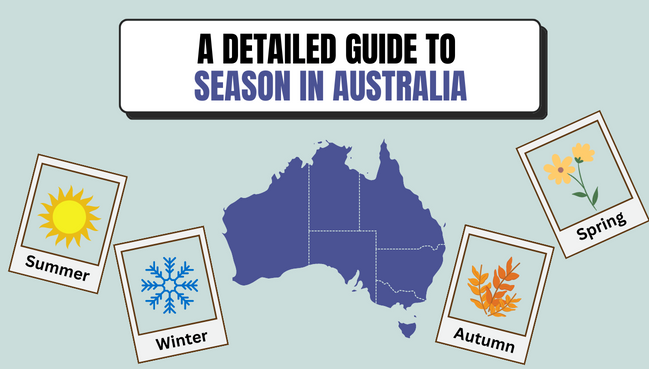
Australia is located in the Southern Hemisphere, which means its seasons are reversed than the countries in the Northern Hemisphere.
In Australia, you can experience all the four seasons (Well, in most parts) – Summer, Autumn, Winter, and Spring.
The good news is that Australia’s climate is generally pleasant throughout the year.
But weather patterns and temperatures can vary widely across the country due to its vast size and different geographical regions.
This article will provide detailed information about the different seasons in Australia.
Climate Zones In Australia
Now before we discuss about the seasons in Australia, it is important to understand different climate zones.
Climate zones are regions or areas with distinct climate characteristics.
Australia, being a large country with diverse nature, has a wide range of climate zones.
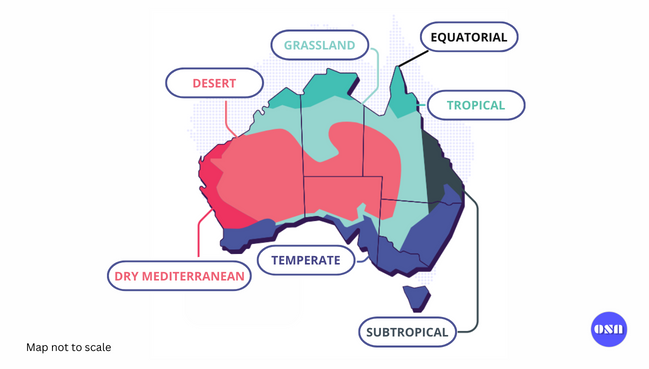
The main climate zones in Australia are equatorial, tropical, subtropical, desert, grassland, temperate and mediterranean.
The two seasons patterns in Australia include:
Dry and Wet patterns
Typical four season patterns
We will explain about these patterns in the next section.
But first, let’s check the climate zones.
The image below gives you a better understanding of the climate zones in Australia:
Equatorial: The equatorial climate zone is located in the extreme north of Australia. The region is characterised by hot and humid weather conditions throughout the year. The average temperature in this region is about 30°C, and the rainfall is heavy, averaging between 2,000-3,000 mm annually.
Tropical: The tropical climate zone is located in the northern part of Australia, just south of the equatorial climate zone, including the northern parts of Western Australia, Northern Territory and Queensland. This region is characterized by hot and humid weather conditions, with an average temperature of about 25°C. The vegetation in the tropical climate zone is mainly savanna woodland and this region is also home to a wide range of wildlife, including crocodiles, kangaroos, and wallabies.
Sub-Tropical: The subtropical zone includes parts of Queensland, New South Wales and Western Australia. This climate zone is charactersied by mild climates with low rainfall in winter and decent rainfall in summers. The average temperature is below 30°C for most parts of the year.
Grassland: The area covering Grassland is around central parts of Australia. These areas are characterised by large open spaces with grass cover rather than tress or shrub cover. The area typically receives a rainfall of between 25 to 75 cm.
Desert: Desert covers much of the interior and is located in the central part of Australia, covering almost 70% of the country, including parts of Western Australia, South Australia, New South Wales, The Northern Territory and Queensland. This region is characterized by low rainfall, high temperatures, and arid vegetation. The average temperature in the arid climate zone is about 35°C, and the region receives less than 250mm of rainfall annually.
Temperate Climate Zone: The temperate climate zone is located in the southern part of Australia, covering most of the eastern and southeastern coasts, including parts of New South Wales, Victoria, South Australia and Tasmania. This region is characterised by mild temperatures, moderate rainfall, and a variety of vegetation. The average temperature in the temperate climate zone is about 20°C, and the region receives an average of 700-1,500 mm of rainfall annually.
Mediterranean: The Mediterranean climate zone is known for its mild, wet winters and hot, dry summers. This climate zone is typically found along the parts of the western and southern coasts of Australia, including in areas such as Perth etc.
What Months Are Summers In Australia?
In Australia, Summer usually runs from December to February, with some regional variations.
As Australia is located in the Southern Hemisphere, its seasons are completely opposite to those in the Northern Hemisphere. This means that while countries in the Northern Hemisphere are experiencing winter, Australia is in the summer season.
Summer in Australia is usually known for hot temperatures and sunny days, with temperatures often reaching well above 30 °C.
And that’s why it is the perfect time for outdoor activities such as swimming, surfing, and barbecue.
Summers are also a popular time for tourists to visit Australia. (And that’s why you are probably reading this article too, isn’t it 😉
It is important to note that Australia is a vast country, and the climate can vary greatly between different regions.
As mentioned earlier, there are 2 main season patterns we observe in Australia, including: Dry and Wet patterns and four season patterns.
The northern parts of the country typically have wet and dry seasons. The dry season runs from May to October and the wet season usually runs from November to April.
The temperatures are quite hot during wet season and regular rainfall during this season can also cause flash flooding.
Dry season is typically less warm with clear skies and average temperature around 20 °C.
However, southern parts of the country, including New South Wales, Victoria, Tasmania, South Australia and parts of Queensland and Western Australia, experience four seasons in a year.
Therefore, it is always important to check the local weather before planning any activities or travel during summer.
What Months Are Spring In Australia?
In Australia, spring typically falls between the months of September to November.
During this time, the weather starts to warm up, and the days begin to get longer.
Spring is known for its pleasant weather, with mild temperatures and occasional rainfall.
The flowers begin to bloom, and the countryside becomes covered in colourful wildflowers.
It’s also a time for many birds and animals to start their breeding season, adding to the vibrancy of the natural environment.
Spring in Australia is a popular time for outdoor activities like picnic, hiking, and camping.
It is also the time when many festivals and events take place such as The Melbourne Cup, The Spring Racing Carnival and many more, celebrating the season and the new growth it brings.
What Months Are Winter In Australia?
In Australia, winter typically falls between the months of June to August.
Weather in winter season in Australia can vary greatly across different regions,
Some areas can experience cool, crisp temperatures and occasional snowfall, while others remain relatively mild.
Winter in Australia is a popular time for skiing and snowboarding. There are many ski resorts located in the alpine regions of New South Wales and Victoria.
As a tourist or student, you can attend many winter festivals and events that are held across the country.
What Months Are Autumn In Australia?
In Australia, autumn generally falls between the months of March to May.
During this time, the weather starts to cool down, and the leaves on the trees change colour, creating a beautiful natural display of reds, oranges, and yellows.
The autumn months in Australia are known for their mild temperatures and clear skies, making it an ideal time for outdoor activities such as hiking, camping, and sightseeing.
In many parts of Australia, autumn is also the season for harvest festivals and agricultural shows, featuring festivals and events, such as the Melbourne Food and Wine Festival and the Canberra Balloon Spectacular.
What Is The Best Season To Travel To Australia?
Australia is a huge country, with six distinct regions, each with its unique climate and natural beauty.
As such, the best season to travel to Australia can vary depending on the region or areas you plan to visit.
We will make it easier for you to understand the best season to travel across all the regions in Australia.
Western Australia
The best time to visit Western Australia is between September to November and March to May.
This is the ideal time to explore Perth, Margaret River, and Broome as the weather is mild, and there is minimal rainfall.
Northern Territory
The ideal time to visit Northern Territory is from May to October as they are considered dry season.
This is the perfect time to explore the rugged landscapes of the Outback and visit the iconic Uluru as the weather is dry, and the temperatures are mild.
Other half of the year known as “wet season” is not ideal due to the rainfalls.
Queensland
For Queensland, the best time to visit is from June to November.
This is a good time to explore the Great Barrier Reef and the Whitsunday Islands as the weather is dry, and the temperatures are pleasant.
New South Wales
New South Wales is best visited from September to November and from March to May.
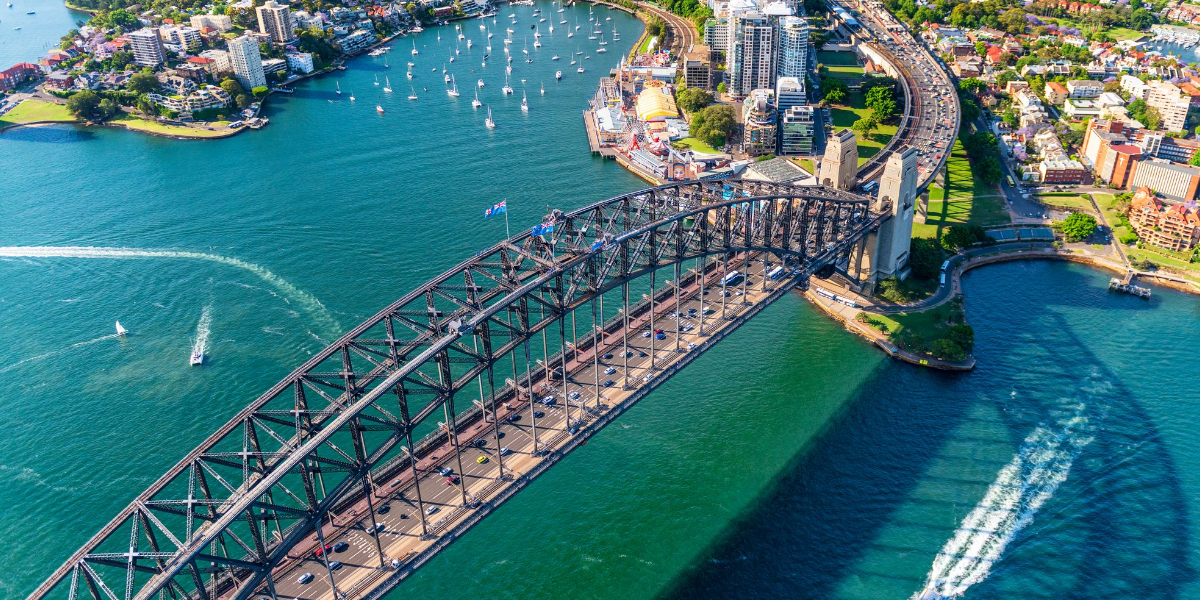
During these months, the weather is mild, and there is minimal rainfall, making it the perfect time to explore Sydney, the Blue Mountains, and the Hunter Valley.
Victoria
For Victoria, the best time to visit is from September to November and from March to May.
This is the ideal time to explore Melbourne, the Great Ocean Road, and the Yarra Valley as the weather is mild, and there is minimal rainfall.
Tasmania
Tasmania is best visited from December to February.
During these months, the weather is mild, and it is the perfect time to explore the natural beauty of the island, including the stunning Cradle Mountain and Wineglass Bay.
Overall, the best time to travel to Australia will depend on your preferences, interests, and the region(s) you plan to visit.
It is important that you do some research and plan accordingly to make the most out of your trip to Australia.
Facts About Climate In Australia
Here are some interesting facts about climate in Australia:
Australia is known for its unpredictable weather patterns, with everything from extreme heatwaves to sudden rainfalls.
Australia is the driest inhabited continent in the world.
Australia is home to some of the world’s unique and diverse landscapes, from tropical rainforests to vast deserts.
The country’s capital city, Canberra, has one of the largest temperature ranges in the world, with temperatures often dropping below freezing in winter.
The Australian Alps receive more snowfall than the Swiss Alps, making it a popular destination for skiing and snowboarding.
Australia is home to the world’s largest coral reef system, the Great Barrier Reef.
The city of Melbourne is famous for experiencing four seasons in one day, with rapidly changing weather patterns.
The Nullarbor Plain (located in South Australia) is the world’s largest single piece of limestone and experiences some of the most extreme temperature fluctuations in Australia.
Australia is home to some of the world’s unique and fascinating wildlife.
Drought is a frequent occurrence in many parts of Australia, leading to water shortages and challenges for farmers and communities.
The Southern Ocean is home to the world’s largest marine reserve.
The Australian government has set targets to reduce greenhouse gas emissions and transition to a more sustainable future.
Australia has one of the highest rates of skin cancer in the world due to the exposure to strong UV radiations.
Australia is prone to natural disasters such as bushfires, floods, and cyclones.
Australia is home to over 500 national parks and over 2,700 conservation areas.
Conclusion
When it comes to seasons in Australia, there is no one size fits all theory.
The season varies from region to region. But to give you an overall summary, here is what the various seasons in Australia look like:
Summer – December, January and February
Autumn – March, April and May
Winter – June, July and August
Spring – September, October and November
So, that’s all about seasons in Australia. Hope you find the guide useful.
Australia is a popular study destination among female international students with the country offering a range of courses and career opportunities.
In this article, we are going to look at some of the courses for female international students in Australia with a focus on female dominant industries.
But before we get started, here is something very important to keep in mind before reading this article.
While the purpose of this article is to provide ideas on courses based on female-dominated industries, this doesn’t mean that these are the only course options available for females.
Females are welcome to study in male-dominated industries (and so they should) and likewise males are welcome to study these courses.
Our main aim is to highlight the key industries and courses that are popular among women in Australia, so female international students can get a clearer picture of that.
At the end of the day, it is important to choose a course based on your career goals and passion regardless of the gender ratio in the industry.
Now, let’s begin!
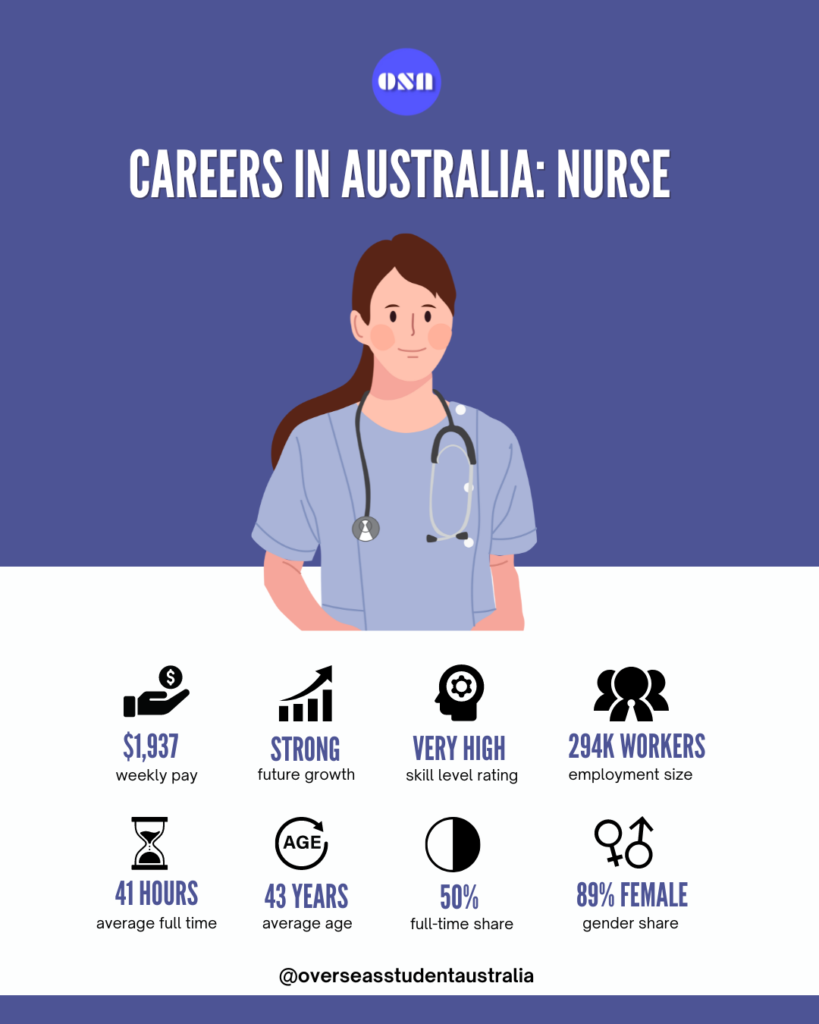
Nursing
Australia has one of the finest healthcare system and Registered Nurses in Australia are in high demand in the country.
As a nurse you are work in various fields including hospital, nursing homes, education, clinics, child care etc.
It is one of the fast growing occupation that is expected to grow by 13.9% till 2026.
Some of the popular courses in Nursing for international students include:
Diploma of Nursing
Bachelor of Nursing
Master of Nursing
Want to know how to become a nurse in Australia, check our complete guide here.
Social Work
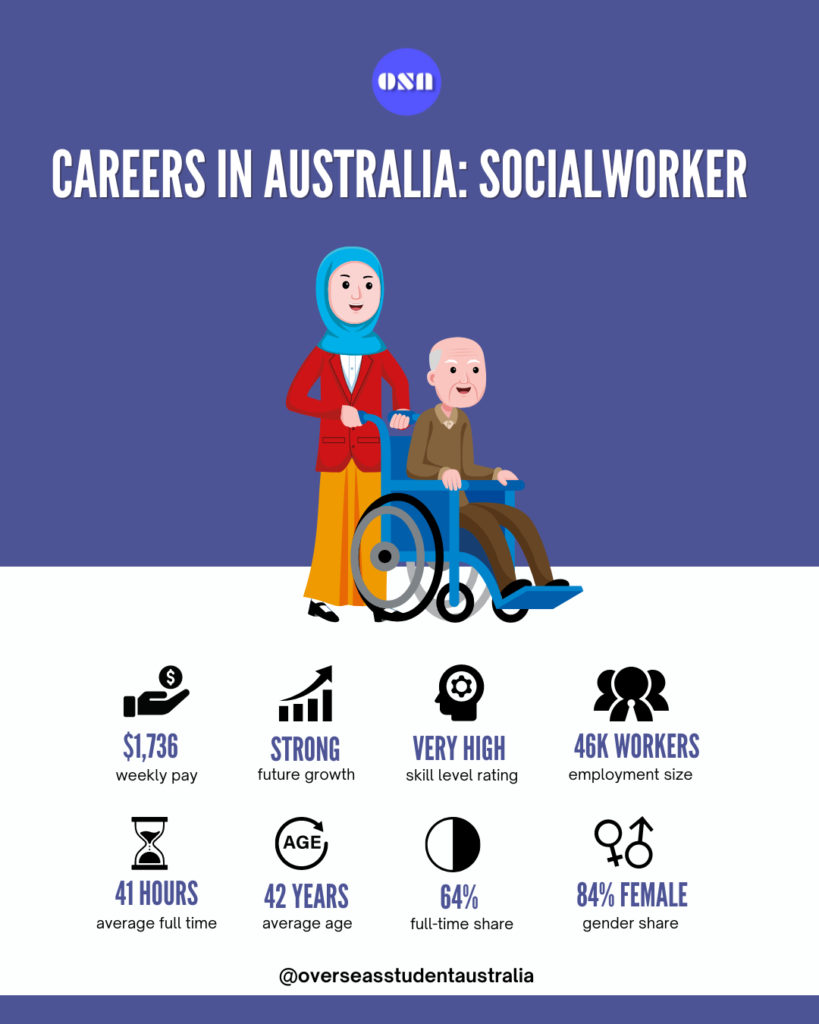
Social workers is another female dominated industry in Australia with 84% of the workforce being females.
Social workers are usually responsible for helping people in crisis and needing support. The jobs includes counselling, providing information, referrals and other aspects to help people in need.
The average weekly salary of the social workers is $1736 and the future expected growth rate is 23.2%.
The popular courses to become a social worker includes:
Bachelor of Social Work
Master of Social Work
We have a detailed guide on how to become a social worker in Australia on the website. You can check it over here.
Accounting
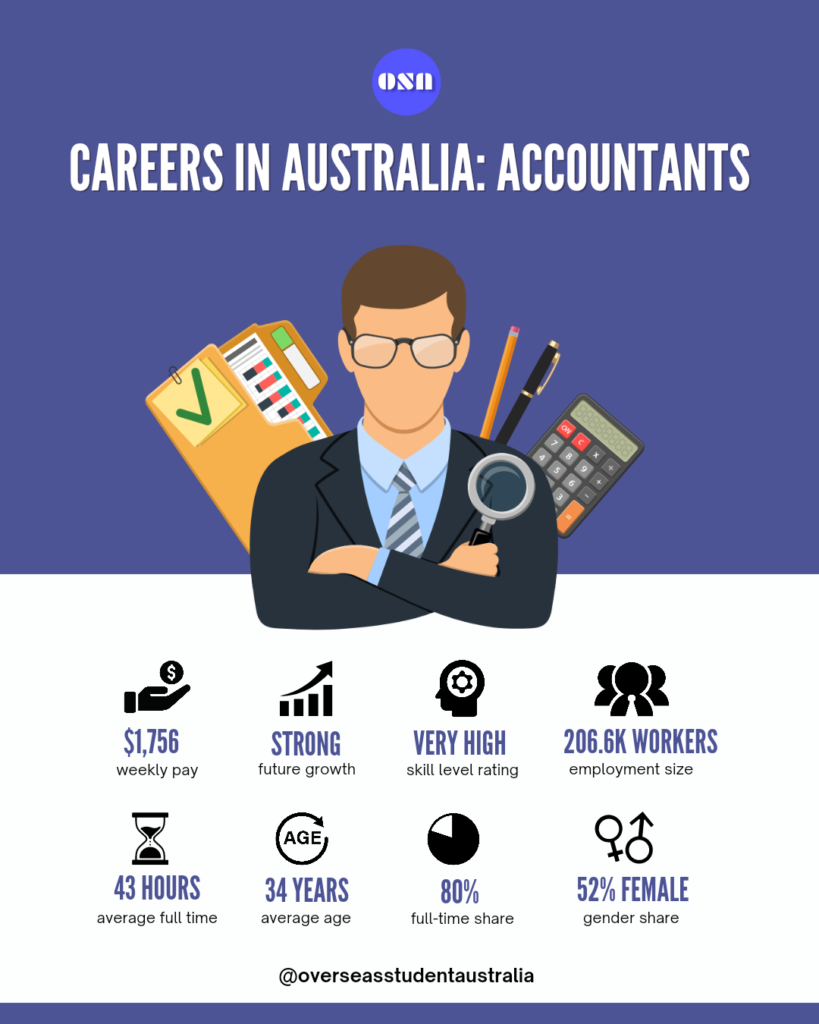
Accounting is a very popular profession in Australia. Females makes up 52% of the workforce in the accounting industry.
Studying an accounting courses in Australia can lead toward a career in finance, banking, taxation and government services.
Accounting offer a stable career with 9.2% growth expected in the profession over the coming year til 2026.
The average weekly salary for the accountants is $1756
Popular courses to become an accountant in Australia includes:
Diploma of Accounting
Bachelor of Accounting
Master of Accounting
Read our complete guide on how to become an accountant in Australia here.
Education
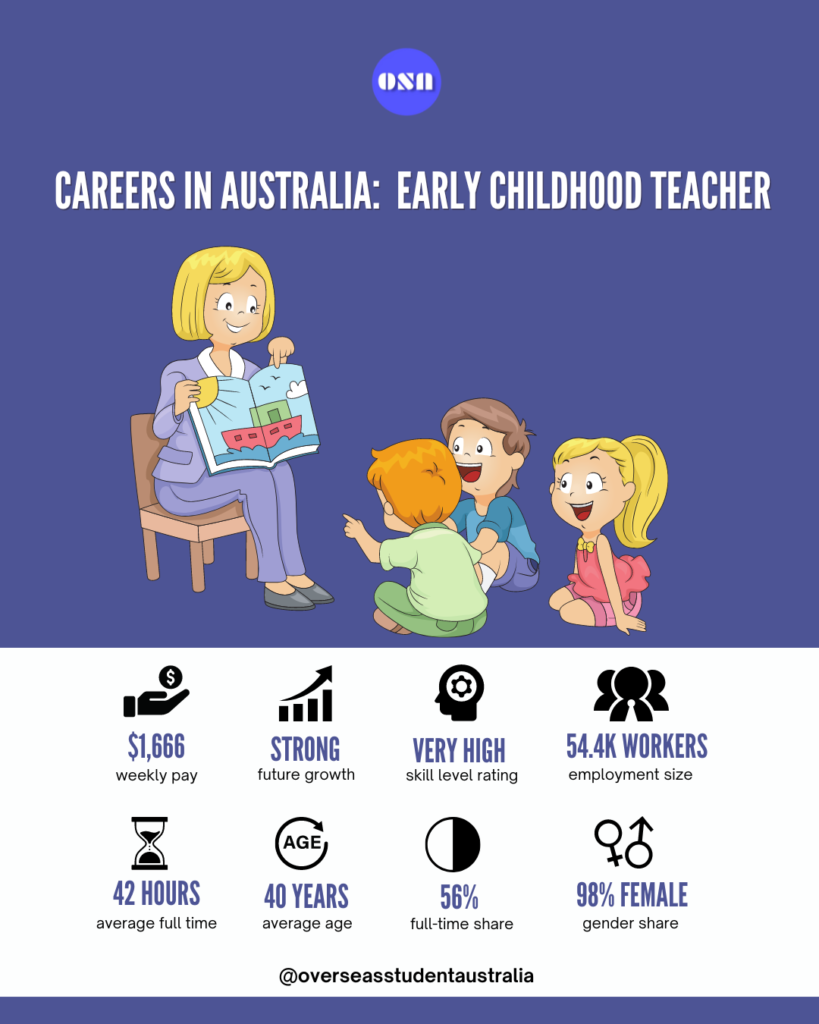
There are multiple opportunities in the education sectors that can lead to rewarding career in the field.
If you are passionate person that helps other to learn and grow, then career in education might be right fit for you.
Particularly speaking careers in Early childhood teaching and secondary school teachers are in high demand in Australia.
Another very popular and female dominant profession in Australia with 80% of the workforce being females.
Psychologist are experts in understanding the human behaviour and they can help people to change the way they thing, behave, react and feel about things.
Studying a course in psychology can lead to various field like clinical psychologist, education social work and research.
The average weekly earning is $2066 with a future growth rate of 13.3%.
Some of the popular courses to become a Psychologist in Australia includes:
Bachelor or Psychology (Honours)
Bachelor of Science (Honours) (Psychology)
Master of Clinical Psychology
Conclusion
While these are some of the courses that is based on female dominated industries in Australia, we want to emphasise that you should always do further research on other options as well as this is not an exhaustive list.
We hope you find this useful. Please share this article with a female friend who can find this information useful.
In Australia, there are a variety of high-income skills that do not require a traditional college or university degree.
These skills can be acquired through vocational training, on-the-job experience, or self-study, and they can lead to high-paying careers in different industries such as business, marketing, writing, information technology, etc.
In this article, we will explore some of the high-income skills to learn in 2023 and beyond in Australia.
Copywriting
What is Copywriting?
Copywriting is a high-income profession in Australia, with many opportunities for skilled writers to earn a substantial salary.
Copywriting involves creating persuasive and compelling written content for a variety of mediums, such as websites, advertising campaigns, and sales letters.
The profession has seen significant growth in recent years as businesses have shifted their focus to online marketing and advertising.
With the rise of digital marketing and e-commerce, the demand for skilled copywriters has increased, making it a lucrative career option.
To become a copywriter, you can undertake a short courses like Certificate IV in Professional Writing and Editing or Certificate IV in Marketing and Communications.
Copywriting job data in Australia
Copywriting in Australia is lucrative career with only 2000 employed workers in the industry. Also, about 59% of people who work as copywriters work full-time hours, in all their jobs combined.
The average age in the industry is recorded to be 36 years, having a 60% female share of the total population of copywriters.
Duties of a copywriter
Here are some of the major responsibilities of a copywriter:
Writing clear, persuasive copy for advertising and marketing materials.
Creating headlines, taglines, and other promotional text.
Developing ideas for ad campaigns and marketing strategies.
Collaborating with art directors, designers, and other creative professionals.
Researching to understand target audience and industry trends.
Revising and editing copy as needed to ensure it meets clients’ goals and guidelines.
Keeping up with industry news, trends and best practices.
Writing for various mediums, such as print, television, radio and digital.
Meeting deadlines and working within budget constraints.
Proofreading and fact-checking copy before it is published or aired.
How much does copywriter earn in Australia?
The average pay in this high-income job ranges from $65,000 to $85,000 per year. With senior copywriters can earn more than $100,000 per year.
Keep in mind that the pay in this industry is highly dependent on experience and the skill set of the person.
Social Media Management
What is a Social Media Management?
Social media management is a high-income skill profession in Australia due to the growing importance of social media in the business world.
Companies and organizations of all sizes are realizing the importance of having a strong presence on social media to reach and engage with customers, increase brand awareness, and drive sales.
According to the Labour Market Insights website, the employment of marketing and advertising professionals, including social media managers, is expected to grow strongly in the next five years.
To become a social media manager, you don’t need a degree. These days many students are doing a Diploma of Social Media marketing to become an SMM.
Here are some of the major responsibilities of a social media manager:
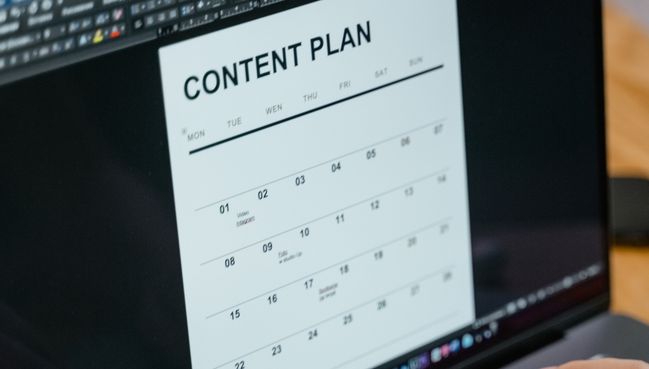
Developing a social media plan that aligns with the overall marketing and business goals of the company.
Creating and managing content for various social media platforms such as Facebook, Instagram, Twitter, LinkedIn, YouTube, and others.
Writing and editing posts, creating graphics and curating visual content to be shared on social media platforms.
Building and engaging with a community of followers, responding to comments and messages, and moderating user-generated content.
Running social media campaigns and promotions to increase brand awareness, website traffic, and sales.
Measuring and analysing the performance of social media campaigns using tools such as Google Analytics, Facebook Insights, and Hootsuite.
Collaborating with other departments such as marketing, sales, and customer service to ensure that the social media strategy is aligned with the overall goals of the company.
Keeping up-to-date with the latest social media trends, algorithms, and best practices to ensure that the company stays ahead of the competition.
Creating engaging and shareable content that will perform well on different platforms.
Social media managers in Australia typically have a background in marketing, communications, or a related field, and have a strong understanding of the various social media platforms and how they can be used for marketing and advertising purposes.
How much does a social media manager earn in Australia?
The average age in the industry is recorded to be 40 years, having 61% female share and 39% male share of the total population of social media managers. The average weekly pay for this job is $1,029 per week.
UI/UX Design
What is UI/UX Design?
UI/UX Design is a high-income profession in Australia due to the growing importance of user-centered design in the tech industry.
UI/UX Designers are responsible for designing and creating user-friendly interfaces for digital products such as websites, mobile apps, and software.
They play a critical role in the development process by ensuring that the products are easy to use, visually appealing, and provide a seamless user experience.
To become a UI/UX designer, you should consider completing a short course in graphic design, web design or UI/UX.
Duties of a UI/UX Designer
A UI/UX designer’s duties may include:
Conducting user research and analysing user feedback to understand user needs and preferences.
Creating wireframes, mockups, and interactive prototypes of digital products.
Developing and maintaining design systems and style guides.
Collaborating with development teams to ensure that designs are implemented.
Creating visual designs for digital products such as websites, mobile apps, and software.
Ensuring that designs meet accessibility and usability.
Continuously testing and iterating on designs to improve the user experience.
Staying up-to-date with the latest design trends, technologies, and best practices.
Communicating design decisions and rationale to stakeholders.
Participating in product development meetings and providing design input on new features and functionality.
Creating and delivering presentations to clients and stakeholders.
UI/UX job data in Australia
There are over 46,000 graphic and web designers in Australia, including UI/UX designers. About 66% of social media UI/UX designers work full-time hours in all their jobs.
The average age in the industry is recorded to be 35 years, having 51% female share and 49% male share of the total population of UI/UX designers.
How much does UI/UX designer earn in Australia?
The average salary of a UI/UX designer in Australia ranges from $105,000 to $120,000 per year, depending on the level of experience and the size of the employing company.
UI/UX Designers with more experience and a proven track record of creating successful designs tend to earn higher salaries.
Audio Editing
Who is an audio editor?
An audio editor is another high-income profession in Australia, due to the growing demand for audio content in various industries such as film, television, podcasting, and music production.
Audio editors are responsible for shaping audio recordings and ensuring they sound professional, clear, and polished.
They use specialised software to edit, mix and master audio tracks, remove unwanted noise, and add sound effects. As audio content becomes more prevalent, the demand for audio editors is expected to grow.
In order to become Audio editor, you can take short courses in Audio editing and build your portfolio.
Duties of an Audio Editor
The duties of an Audio Editor include:
Recording, editing, and mixing audio for film, television, podcasting, music production and other audio-based projects.
Using specialised software to manipulate and enhance audio recordings, such as Pro Tools, Adobe Audition, Logic Pro and others
Removing unwanted noise, such as background noise, hums or clicks and pops.
Synchronising audio with visual elements such as video or animation
Adding sound effects and background music to enhance the audio production
Mastering audio recordings to ensure they meet industry standards
Collaborating with other members of the production team, including directors, producers, and other audio engineers
Staying up-to-date with the latest audio technologies and industry trends
Maintaining and organising audio files and backups
Troubleshooting and solving technical issues related to audio equipment and software.
Companies are increasingly recognising the importance of audio quality to stay competitive in the market and provide a positive user experience. This makes audio editing a high-income profession in Australia.
Drone Operator
Who is a Drone Operator?
Drone operator skills are quite technical and yield a high income when employed in different fields. Although you might not need a degree to become a drone operator, you are required to have certain certifications, licenses and experience to be relevant in the industry.
In Australia, the use of drones has become increasingly popular for a wide range of applications such as aerial photography, videography, inspection, surveying, and mapping.
With this growing demand for drone services, becoming a skilled drone operator has the potential to be a high-income skill.
Also, the mining and construction industries, agriculture and emergency services are some of the sectors that rely heavily on the usage of drones for several activities, thus providing a vast number of job opportunities for drone operators.
In order to become a drone operator in Australia, you are required to be trained and certified by the Civil Aviation Safety Authority (CASA).
Duties of a Drone Operator
The duties of a drone operator can vary depending on the specific industry or application they are working in, but generally, their duties are:
Planning and preparing for flights: This includes conducting site assessments, reviewing weather conditions, and creating flight plans that adhere to safety guidelines and regulations.
Operating the drone: This involves flying the drone to perform tasks such as aerial photography, videography, inspection, surveying, and mapping.
Maintaining the drone: Performing regular maintenance and repairs on the drone, as well as ensuring that the drone is in good working condition before each flight.
Analysing data: This involves reviewing and interpreting data collected by the drone, such as images and video footage, to identify any potential issues or areas of concern.
Working closely with other members of the team, such as photographers or engineers, to ensure that the drone is used effectively and efficiently.
Adhering to safety guidelines and regulations: This includes following the guidelines set by the Civil Aviation Safety Authority (CASA) and other regulatory bodies, to ensure that the drone is operated safely and responsibly.
Keeping updated with the latest technologies and advancements in the field.
How much does a drone operator in Australia?
The average pay of a drone operator is $80,000 per year. Australia is globally recognised for drone operation and is considered to have a great prospect with a projected growth of 51.1% for drone service industry globally.
Short Form Video Editor
Who is a Short-Form Video Editor?
A short form video editor is a professional who is responsible for creating and editing short videos, typically less than 90 seconds in length.
They use various tools and techniques to craft engaging, visually appealing videos that can be used for marketing, entertainment, or educational purposes.
This includes trimming footage, adding special effects, music, and text, color correction, and more.
Examples of some popular short form video editing software include Adobe Premiere Pro, Final Cut Pro, Capcut, Inshot and so on.
In order to become a short form video editor, you will need to learn the basics of video editing software and build a portfolio by working on your own or client projects.
Duties of a Short Form Video Editor
Here are some roles of a short form video editor:
Sourcing and organising video footage: The editor is responsible for finding the best footage to use in the final video. They may be working with raw footage from a camera crew or existing video content.
Video Editing: The editor uses editing software to arrange the footage and create a cohesive video story. They will make cuts, add transitions, and adjust the sound and color to make the video look and sound professional.
Story boarding: The editor may be involved in the story boarding process, which involves creating a visual plan for the video. This involves deciding on the visual style, shots, and pacing of the video.
Sound Design: The editor may add music, sound effects, and dialogue to the video. They will also be responsible for adjusting the levels and timing of the audio to ensure it fits well with the visuals.
Special Effects: Depending on the project, the editor may need to add special effects to the video, such as animation or green screen effects.
Collaboration: The editor will often work closely with the director, producer, and other members of the production team to ensure the final video meets their vision.
Generally, the short form video editor is responsible for bringing the vision of the director, producer or employee to life, creating an engaging and visually stunning video that tells a compelling story.
How much does short-form video editor earn in Australia?
On average, a video editor can earn $60,000 to $75,000 per year in Australia. But since short-form editors are in high demand, you can scale this up fast.
At the moment, there is no specific data on how much short form video editors are earning in Australia.
AI Content Specialist
Who is an AI Content Specialist?
An AI content specialist is a professional who specializes in creating, managing and optimising marketing content using artificial intelligence (AI) systems.
AI content specialists create various content pieces for the business like blogs, social media captions, website copy, video scripts with help of AI.
Since the rise of AI softwares like ChatGPT, many jobs are evolving and one of that will be the content specialists that know how to use AI to maximise the content quantity and quality for the business.
The role of this job is not only to use AI to produce content but rather use it for making content creation process smoother, efficient and faster.
In order to become an AI content specialist, you need to know the basic of content marketing and knowledge of AI softwares. You can undertake a Diploma in Marketing and Communications to get basic marketing knowledge.
Duties of an AI Content Specialist
Here are some roles of an AI content specialist:
Content creation: Developing and producing engaging and high-quality content for businesses
Checking the AI produced content: Fact checking, citing the research sources and grammar issues for the content produced.
Doing keyword research: Finding the keywords that businesses can create content for.
SEO: Making sure that content is user and SEO friendly, which means it is not getting penalised for using AI assistance.
Stay up-to-date with the latest AI technologies and trends, and continuously improve their skills to stay at the forefront of the field.
How much does AI content specialist earn in Australia?
As AI content specialist is a fairly new job role, we found out the average earning of the content specialists is $75,000 to $95,000 per year in Australia.
Big Data Analyst
Who is a Big Data Analyst?
A Big Data Analyst is a professional who is responsible for analyzing large and complex data sets to extract insights, identify patterns, and support decision-making processes in organizations.
They use various data analysis tools and techniques such as machine learning, statistical analysis, and data mining to process and interpret big data.
The goal of a Big Data Analyst is to turn raw data into meaningful and actionable information that can drive business strategies and improve organisational performance.
While some jobs might require Big data analysts to have degree, others may not. So having a degree is not a must when working as a Big Data analyst.
In order to become a Big Data Analyst, you can get started with the Data Analyst certification courses. These courses are foundation courses to get into the industry without a degree.
Duties of a Big Data Analyst
Here are some roles of a Big Data Analyst:
Collecting and processing large and complex data sets from various sources such as databases, cloud platforms, and social media.
Cleaning, transforming, and preprocessing data to ensure its quality and accuracy.
Using various data analysis tools and techniques such as machine learning, statistical analysis, and data mining to uncover insights and patterns in the data.
Visualising data to support data-driven decision-making and communicate findings to stakeholders.
Building predictive models and forecasting trends based on historical data.
Identifying and addressing data quality issues and recommending solutions to improve data accuracy.
Developing dashboards and reports to monitor key performance indicators and provide ongoing updates to stakeholders.
Collaborating with cross-functional teams such as data engineers, software developers, and business leaders to ensure that data analysis aligns with business objectives.
Staying up-to-date with the latest advancements in big data technologies and tools, and incorporating these advancements into data analysis processes.
The general role of a Big Data Analyst is to convert vast amounts of raw data into meaningful information that can be used to make informed business decisions and drive organizational success.
How much does big data analyst earn in Australia?
According to Seek, on average, Big Data Analysts can earn $90,000 to $110,000 per year. Again, your income will vary based on expertise, qualifications and employer.
Cloud Engineer
Who is a Cloud Engineer?
A Cloud Engineer is a professional who designs, develops, implements, and manages cloud-based systems and applications.
They are responsible for implementing and maintaining cloud infrastructure, ensuring that cloud services meet business requirements, and performing ongoing administration and maintenance tasks. The cloud engineer must have a deep understanding of cloud computing and its underlying technologies, as well as experience with cloud services such as Amazon Web Services (AWS), Microsoft Azure, and Google Cloud Platform.
They must also have strong experience with virtualisation, network security, and data management.
To become a cloud engineer, you will need to undertake foundation courses like a Diploma in information technology and complete the certifications like AWS etc., and build your portfolio.
Duties of a Cloud Engineer
Here are some roles of a Cloud Engineer:
Design and implementation of cloud architecture: Cloud Engineers work with stakeholders to design, implement, and manage cloud computing systems that meet the organization’s needs.
Deployment and management of cloud infrastructure: Cloud Engineers deploy and manage cloud-based infrastructure, including virtual machines, storage, and networking, to ensure the availability and scalability of cloud services.
Automation of cloud infrastructure: Cloud Engineers automate the deployment, configuration, and management of cloud infrastructure using tools such as Terraform, Ansible, or CloudFormation.
Security and compliance: Cloud Engineers ensure the security and compliance of cloud services by implementing security controls and policies, performing regular security audits, and ensuring that all cloud deployments are in compliance with industry standards and regulations.
Performance monitoring and optimization: Cloud Engineers monitor the performance of cloud services and identify and resolve performance issues to ensure that cloud services are fast and reliable.
Technical support: Cloud Engineers provide technical support to users of cloud services, troubleshoot issues, and resolve problems to ensure the smooth operation of cloud services.
The general role of a cloud engineer is to manage and ensure cloud services are running optimally.
So these are our pick of Top high-income skills to hone in 2023 and beyond.
Although a degree isn’t necessary to explore these career options, you must have the appropriate skills and experience for these jobs to successfully enter and maintain relevance.
Also, regularly updating your knowledge in a related field or industry can help increase your chances of getting high pay.
Let alone if you decide to do it in another country.
So in this article, we are going to talk about the things you need to do when you arrive at the university for the first time in Australia as an international student.
Let’s talk about these things!
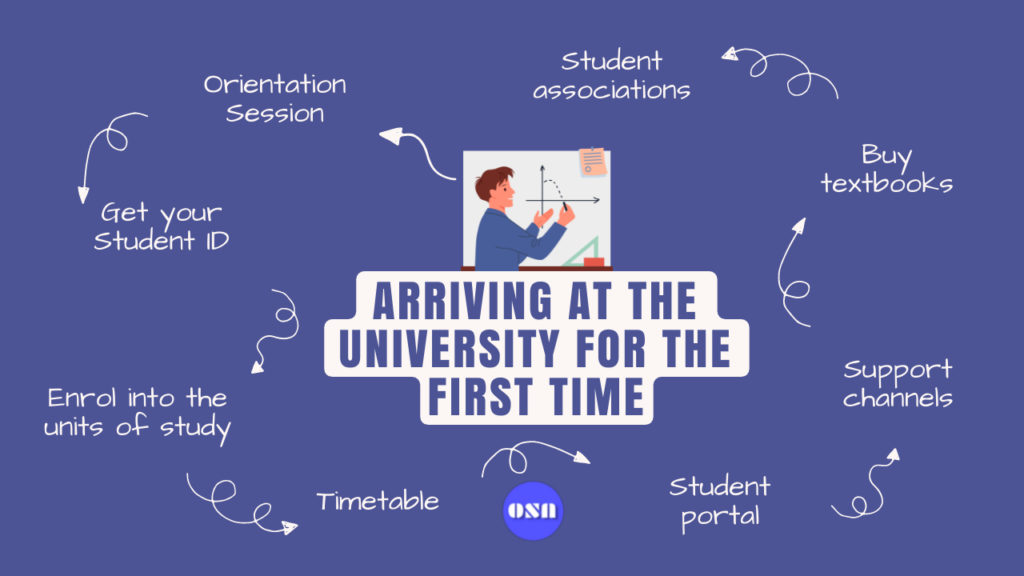
Attend Orientation
Most universities in Australia organise an orientation session for newcomers. So if you’re newly arriving in Australia, the chances are that you will need to attend this orientation.
Orientation is a great way to understand about your university, the facilities they offers and everything that you need to know about your studies.
They also give you tips about general life in Australia and the things that you need to be mindful of when studying at University.
They will also talk about some support systems they have for the students, so it’s a great way to get to know about your University.
Usually, orientation week is usually quite a fun fair at universities, and they organise some free activities, free food and information sessions.
So we highly recommend you attend your orientation session at your university.
Get Student ID
Student ID is an official number that identifies you as a student at your university.
Most of the time you need the student ID in order to enroll in your course. The admin team will usually take your photo and issue you with the physical card.
This card will have a unique number that will belong to you only. So make sure to keep that card safe and secure.
Sometimes you get the student card on the same day while other times they might ask you to collect it after few days.
Lots of universities also link services like printing, entry to labs and classes with the student card, so it is critical you get this card and secure it.
In case you lose this card, you could be charged a fee for an additional card issued.
Enrol Into Units
Once you arrive at the university, you are usually required to finalise their enrolment at the University.
This involves choosing your subjects (also known as units) for the term. However, some universities may not have lots of options for you to choose from, and you may have to enrol into the units you are allocated to.
So you will need to enroll in those units to get started with the university studies.
In case the university advises you that the units are full, then don’t panic. Speak to the administration team, and they will help you enroll in some other units.
Sign in to Student Portal
Most universities will have an online portal for your studies.
This platform or portal will provide you with information regarding your studies that includes:
study materials
lecture notes
Assignments
dues dates for the tasks
recording of previous classes
additional information regarding your studies
Activate and Check Student Email
Most universities will communicate to you through your student email ID that they will issue you when enrolling into the course.
This email ID will be only used for your communications and other information regarding your University and your studies.
So it’s very important that you access and activate this email as soon as you get access. The information regarding the sign-up for student email will usually be sent to your personal email for the first time.
Then you need to activate that student email and change the password after logging in.
Make sure to keep checking that email regularly so that you are on top of the things you need to do for your studies.
Select Your Timetable
Once you have selected the units you want to enroll in, you will also need to select your timetable.
There might be multiple options available with regard to your lectures and tutorials. So you’ll have to choose the time frame that suits your work and life the most.
We suggest you choose your timetable nice and early as a lot of times your preferred options might not be available if you are too late.
So it’s better to choose timetable quickly as soon as university allows doing so.
Lots of students who are already studying in university usually know about that, so there is a bit of competition in choosing your timetable.
Buy Textbooks
Textbooks can be an expensive affair at times in Australia.
Buying a text book can cost you anywhere from $50 to $150 for each book.
And in each term, you are required to study around 3 to 4 units. So, if you do the match, it means you can be spending anywhere from $150 to $450. (That’s a fair bit of money).
We suggest you that if you have an option to borrow the books from the library that’s great but a lot of times those books may not be available or already booked out.
So you may look up on websites like Gumtree or Facebook Marketplace or sometimes there are university websites that allow you to buy second-hand books from other students who have already completed their studies.
Join Student Bodies and Associations
Large universities tend to have many student bodies and student associations.
These student bodies and unions usually create a lot of fun activities during the year for the students.
Sometimes that includes discounts around your local areas for students.
You can also join these student bodies for some extra activities and some other events that you can attend, and you can even volunteer at some of these events with these unions and bodies.
It helps to build your resume and skills needed for jobs in Australia. A great plus.
Most of these student bodies are free to join, so our question is Why Not?
Know Your Support Channels
You can ask your University administration teams regarding what sort of support systems are available for the students.
Universities in Australia understand that it can be challenging for new international students arriving in Australia for the first time.So they provide support services for the students including:
support with your assignments
your studies in general or
finding an accommodation
your rights as a tenant in Australia
finding a job in Australia
preparing your resume and cover letter
preparing for the interview
health and wellbeing
and many other aspects of life
So there are many things that you will be doing when you arrive at the university.
Sometimes you can fit all of these things in one day and at other times it could be done over multiple days.
Please note that the sequence of these activities may vary depending upon the university and the systems they have available.
Some of the things mentioned here may be done in a different order or sequence, but when you arrive at the university in Australia for the first time, most likely you will go through with all these things.
We would like to wish you all the best with your studies here in Australia.
If you are planning to come to Australia for your studies soon, then these are the things to do before arriving in Australia.
So, consider this article as your pre-departure checklist before arriving in Australia.
Let’s go!
1. Passport and Student Visa 🛂
You will need a passport and a student visa to travel to Australia for your studies. So get your student visa sorted nice and early.
Also, make sure that you have a passport which has a validity of at least six months. It is because having a passport with less than six months of validity can cause an issue when arriving in different countries.
We suggest you print all your visa documentation as well, so you have it handy when you need it during your travel.
Tip: Get a little travel bag where you can keep all your passport and travel-related documents, including visa.
2. Student Enrolment and Other Documents 📁
Your educational institution would have issued you a confirmation of enrolment (aka CoE). They would have issued an offer letter or some other documentation as well.
It is important to print out all these student enrolment documents and bring along some other documents as well, including:
Your education certificates
IELTS/PTE test results
Driving license
Birth certificates
Proof of payments
We have a complete list of documents that you need to bring into Australia. You can check the document list here.
This insurance helps to protect students for any health issues while you are in Australia on your student visa.
So make sure you have your health cover policy arranged before you leave home.
4. Book Flights 🛫
We suggest that you book your flights to Australia nice and early after you get your student visa.
Because if you’re booking closer to your arrival date then it can be quite expensive at times.
Keep your flight details in a safe and secure place along with your passport and visa.
We also suggest that you book it through a reputable travel agent or book it directly with an airline. Especially these days due to the cancellations and rescheduling because of COVID-19.
Once you have already booked them, make sure to print out all the booking confirmations from the airlines as well. Print out your boarding pass also if you check yourself online.
5. Travel Insurance 📋
We recommend you get travel insurance, which covers things such as cancelled flights, lost documents, dental or optical care, etc.
You would have already booked your overseas student health cover, but we also suggest you that you have your travel insurance booked as well.
Travel insurance usually covers things like cancelled flights and lost or broken baggage.
Basically all the things which are usually not covered in your Overseas Student Health Cover can be covered in travel insurance.
Although it is not compulsory, we recommend taking it to avoid issues with your travel.
Tip: Check your credit card features as sometimes they offer complimentary travel insurance to their customers.
6. Contact Details ☎️
You may want to have a list of emergency contact details for family, as well as your embassy, accommodation and institution details.
It will be good idea for you to create a list of contact details before arriving in Australia.
This includes:
Emergency contact details
Your family and friends contact details
Your University contact details
Your accommodation in Australia
Your Embassy or local Consulate in Australia
When creating this list, it’s a good idea to have the details of the names, the phone numbers and their physical address as well.
7. Custom, Quarantine and COVID specific information 😷
Understand the Australian custom standards, any quarantine requirements and COVID specific requirements like testing, vaccinations, etc.
As you might be aware that Australian Customs are quite strict regarding the things that you can and can’t bring into Australia.
So we suggest you check the Australian Border Force and Department of Agriculture, Fisheries and Forestery website.
On these websites, you can check individual items that you can and can’t bring into Australia.
Apart from that, understand if there are any specific COVID-19 requirements. These requirements can change at anytime, so we suggest you check the Department of Home Affairs and Department of Health website for latest travel restrictions.
8. Airport Transfer 🛄
So after arriving in Australia, one of the first things you will need is the airport transfer.
Sometimes, your university might offer you a free pickup. If that’s the case, make sure to arrange that nice and early as you may not be able to arrange it if it’ too close to your arrival time.
If your university is not providing the airport pick up service, then you can book a taxi, or you can also get Uber or other ride-sharing services from the airport.
9. Book Accommodation 🏘️
Our suggestion for students regarding the accommodation is to book it nice and early.
Whether it’s a short-term or a long-term accommodation, search for the preferred accommodation on various platforms and book in ahead of time.
University accommodations get booked quite quickly as well, so if you are planning to stay in on-campus accommodation, you need to be quick.
Also, make sure you have the complete address of your accommodation in Australia because you will need to write this on your incoming passenger card.
Tip: Get your payment confirmation of the accommodation printed as well.
10. Australian Currency 💸
It is recommended to have some Australian currency with you prior to leaving your home country.
The common question for international students is how much money should I bring as an international student.
We would say “it depends”, there are a lot of factors that come into play when deciding how much money you need to bring. These factors include:
The city you are arriving
Your preferred lifestyle
Presence of family and friends in Australia
Availability of part-time work
But ideally, if you bring anywhere from $1000 to $2000, it can be great for your first few days.
Of course, you don’t need to bring everything in cash. You can bring it in your bank card or other travel cards.
Before you depart your home country, confirm with your local bank if the international transaction will cost you any fee. This is to avoid any surprise fees charged by the banks or other financial institutions.
Again, the money you want to bring can vary depending on your personal financial circumstances.
11. Packing Bags 🎒
Your bag packing will vary based on the climate of your destination in Australia. As Australia is a huge country, the weather varies from one side to the other.
So you will need to check the weather of your destination throughout the year.
It is important to understand the airline baggage size requirements and things you can and can’t carry while travelling.
As a student, some airlines allow additional luggage as well, so confirm that with your airline nice and early.
If you want a complete packing checklist for international students, we got you sorted with our downloadable packing checklist here.
12. Download Apps 📱
Research and download any relevant apps before you travel. We have a complete list of apps you should download on our website.
You might need to research on what sort of apps you might need when arriving in Australia. You can download some of the apps before arriving in Australia:
Google Maps
Google Translator
Public Transport Apps
Food delivery services
Ride sharing services
Bank apps
Before you leave, here is a little present for reading till now: Download our Pre-departure Checklist from here.
We hope this information helps you with your preparation before travelling to Australia.