If you are planning to do a professional year program in Australia and might be wondering how does it work, what are the entry requirements, what documents are required to get started and many more questions about it.
Luckily, you are at the right place.
As in this article, we are going to give you a complete guide about professional year program in Australia for international students.
Let’s discuss about what is professional year and how it works
What is a professional year program in Australia?
Professional year program (PYP) is a 44 to 52 week structured job readiness program for International students. It help international students to learn about Australian workplace culture and help them with a professional career growth.
It is a combination of both coursework and an internship.
Usually the coursework goes around 32 weeks and the internship can be anywhere from 10 to 12 weeks.
This program is designed for international students who have recently graduated from an Australian university.
The overall aim of this program is to help International students to become more employable in Australia.
Who can do a professional year program in Australia?
If you are a graduate of an accounting degree or an IT degree or an engineering degree then you can do a professional year program.
The professional year program is developed by the following professional organisations in Australia:
Accounting program is developed by CPA, CA and IPA Australia
IT program is developed by ACS (Australian Computer Society) and
Engineering professional year program is developed by EEA (Engineering Education Australia)
So the students from these 3 streams can do a professional year program in Australia.
What are entry requirements for a professional year program in Australia?
These are some of the basic entry requirements to get into professional year program in Australia:
You must demonstrate a English language proficiency (by scoring at least 6.0 in your IELTS test or equivalent in other tests).
You must also have a valid skills assessment from the relevant Authority. It could be either CPA or CA or IPA for accounting students, ACS for IT students or EEA for engineering students.
You must have applied or have got a temporary graduate visa (subclass 485)
Some providers will actually conduct an interview as well with the applicants
What are the documents required to get into professional year program in Australia?
In order to apply for this program, these are some of the documents you will need:
a completed application form for the Institute you’re planning to apply
a certified copy of your passport
your CV or resume with your application
a valid skills assessment result from a relevant Authority
evidence of your English proficiency level which is your English test scores
copy of your current visa
copy of your academic documents along with your application
How much it costs to do a professional year program in Australia?
The cost of completing a professional year program will vary depending upon the city or the state you are in and the Institute you are planning to do this program from and any promotions run by these institutes.
But here is rough guide about how much it might cost you to complete this program:
Accounting professional year program can start from $6000 to $13000
IT professional year can start anywhere from $10000 onwards
Engineering professional year can starts around $13000 onwards
Keep in mind that these are estimations and the numbers can vary depending upon the factors mentioned above.
What do you actually learn in the professional year program in Australia?
As we mentioned earlier, this program is a combination of both coursework and internship.
The coursework is more like a theory classes, which is usually around 32 weeks. And for those 32 weeks, you will be going to a class at least once a week.
It’s a full day which can go anywhere from 9 00 am to 5 PM.
During these 32 weeks you learn about different topics that includes
Workplace communication
Learning about working in teams
Australian work environments
Workplace Health and safety
Customer service
Personal Career Development
Preparing for employment markets
Learning about your resume and cover letters
Now the internship usually go from 10 to 12 weeks and for this internship you will be working in an Australian based business.
You’re usually required to go at least 3 times in a week for those 10 to 12 weeks of the internship placement.
You can find your own internship but if you can’t find one then your education provider will help you to find this internship.
Keep in mind that most of the time these internships are unpaid.
What are the benefits of doing a professional year program in Australia?
Let’s discuss some benefits of completing a professional year program in Australia.
One of the main benefit that many International students look forward to get from this program is 5 additional points for the migration purposes. And these 5 points can be really critical in order to get those sort of visas.
Apart from that it helps International students to become more employable in Australia.
This program also help International students to improve their their soft skills like communication leadership and teamwork.
It also helps International students to learn more about how the Australian workplaces operate and what the workplace culture is like in Australia.
As students will be working in professional work environment, it can help them expnad their professional and social network,
Internships can also become a pathway to full-time positions as well. If you show your work commitment, ethics and professionalism to your employer during the internship, then this internship can sometimes actually turn into a full-time employment as well. It can give a great start for your career in Australia.
Even if students don’t score the job through internship, it gives them a professional work experience and references that they can use for applying for jobs.
Now that’s pretty much everything you need to know about the professional year program in Australia.
We hope this guide helped you to understand better about professional year program. Let us know if you are planning to do this program as well in the comment section below.
Many international students usually have this question in their mind that
“Can I start a business in Australia as an International students?”.
Short answer to that question is Yes!
BUT.
There are requirements and other things you need to be mindful of when starting a business in Australia.
So in this blog, we are giving you detailed information about starting a business in Australia as an international student.
Requirements to start a business in Australia as an international student
In order to start a business in Australia, these are some of the basic requirements:
ABN
As most of the international students start a business in Australia as a Self-employed Person or a Sole Trader, for that you would need an ABN.
ABN stands for Australian Business Number.
It is a 11 digit number issued by Australian Business Register in order to recognise you as a business.
Basically anyone running a business in Australia must have an ABN.
You can register an ABN under your name like for example John Smith or you can register a business name as well like Overseas Students Australia.
If you want to register a separate name for your business, then you can do it via ASIC.
It’s free to get an ABN to get started with your business in Australia.
If you want to know more about how to get an ABN we got a really useful video regarding that on our channel. Check the video below for more details
If you’re still unsure after watching the video, then you can use the services of an accountant and apply for an ABN with them as well. It usually cost some money.
TFN
It is important that get a TFN as well.
TFN stands for Tax File Number.
This 9 digit number will be used for lodging your personal tax returns.
It is also free to get a TFN. You can watch the video below if you want to get a TFN.
ACN
If want to run a business as company, then you need to register a company in Australia.
For that you will need to get an ACN.
ACN stands for Australian Company Number.
As an international student you can register a company also it is important that one of the directors in the company must be an Australian resident. That person can be an Australian citizen or an Australian permanent resident.
Getting an ACN is not free as there is a fee that need to be paid when registering an ACN.
The cost of setting up a company in Australia can start from around $500 onwards.
You can read more about registering a company from the ASIC website.
Popular types of businesses for international students in Australia
There are not many limitations in regards to what type of business you can run as an international student in Australia.
It will depend upon your skill set and your interests as well.
You can also look for a gap in the market for a product or service that needs to be fulfilled.
Here are some common types of businesses that International students run in Australia.
Ride sharing services
One of the most common business type is ride sharing services.
It is about providing ride services for driving passenger from point A to point B.
There are some popular apps in Australia like Uber, where you can register yourself as a self-employed person and can choose your own hours to provide these ride sharing services.
Food delivery services
Another popular type of business is food delivery services.
One of the most popular platform for food delivery services is Uber Eats where you can work as a self-employed person to deliver food from the food outlets to the customers.
You can sign up for Uber Eats using this link here.
Cleaning
Cleaning is one of the most popular type of business that many International students run in Australia.
You can get a cleaning franchise or you can get some cleaning contracts yourselves in order to start a business as a cleaner.
You can choose to work in residential or commercial cleaning.
There are many popular apps like Airtasker in Australia for finding cleaning work as well.
Tutoring
Tutoring is another popular business among students where you can provide tutoring services to other students.
It could be providing tutoring services to high school students or for university students.
Freelancing
You can also provide services as a freelancer in Australia. Some of the popular freelancing businesses in Australia includes:
social media management,
digital marketing,
video editing
photography
Influencers
Some international students also run their businesses as an influences in Australia. Influencers provide advertising services to different brands in Australia or overseas.
Influencers promote the services use different channels like
YouTube
Instagram
TikTok
Trade services
You can also provide Trade Services as a business like
Plumbing
Painting
Carpentry
Bricklaying
Just keep in mind that when providing some of these services, you will need to have the right certification and licenses.
Selling products
You can also start selling some products as a business in Australia.
You can set up an online business or an offline business by renting a shop.
So, there are no limitations on the type of business you can run as an international student in Australia.
Want to know how you can make money online in Australia? Check more than 16 ideas here.
Work hours when running a business as an international student
Next very interesting question that get asked quite often is.
“Can I work more than 40 hours per fortnight if I’m running my own business?”.
As you know the international students are required to abide by their student visa conditions and one of that condition is regarding the work limitation.
This visa conditions requires students to work no more than 40 hours per fortnight during their study terms.
However, students are allowed to work unlimited hours during their official school holidays.
Currently, International students are allowed to work unlimited hours until 30th June 2023.
But once those unlimited work hours finishes, regardless of whether you’re working on TFN (as an employee) or an ABN (as a business) you will need to abide by the work hours conditions on your visa.
So you need to make sure that you don’t work more than 40 hours per fortnight even if you are running your own business.
As an employee, your employer have a responsibility to make sure that they give you work hours as per your visa condition
But as a business, it is your responsibility to make sure that you do not exceed the amount of hours you are legally allowed to work, especially when your study is in progress.
Read more about work hours conditions and other work hour requirements here.
Dealing with taxes when running a business in Australia
The next important question is.
“Do I need to pay taxes when I’m running my own business in Australia?”.
Like any other business owner, you will be responsible for managing your own taxes.
You will need to pay your shares of taxes depending upon your income.
In certain businesses, you are required to pay additional taxes like GST (Goods and Services Tax) as a part of meeting your tax obligations.
so it’s very important that you Lodge your tax returns within the time frame allocated
If you are unsure about taxes as a business, we suggest you speaking to an accountant as they can provide you with advice regarding that and many other things.
And that’s pretty much it in regards to starting a business in Australia as an International students.
We hope that information provided above helped you understanding the requirements for registering, taxes, work hours and some popular type of businesses among international students as well.
If you are planning to start your own business, we would love to hear about it. Let us know in the comment section below.
All the best with your journey of starting a business in Australia as an international student.
Civil engineering is a specialisation in engineering stream that delves into designing, facilitating, monitoring, maintaining and coordinating the construction of civil projects like bridges, highway roads, gas and water pipelines, air and seaports, railways and structures.
Are you thinking about what it would take you to become a civil engineer in Australia?
You are in the right place!
In this blog, you will discover all the vital information you need to know on how to become a civil engineer in Australia.
Overview of Civil Engineering in Australia
Civil engineers are vital in society; they construct infrastructure that is needed in modern society such as bridges, railways and so on.
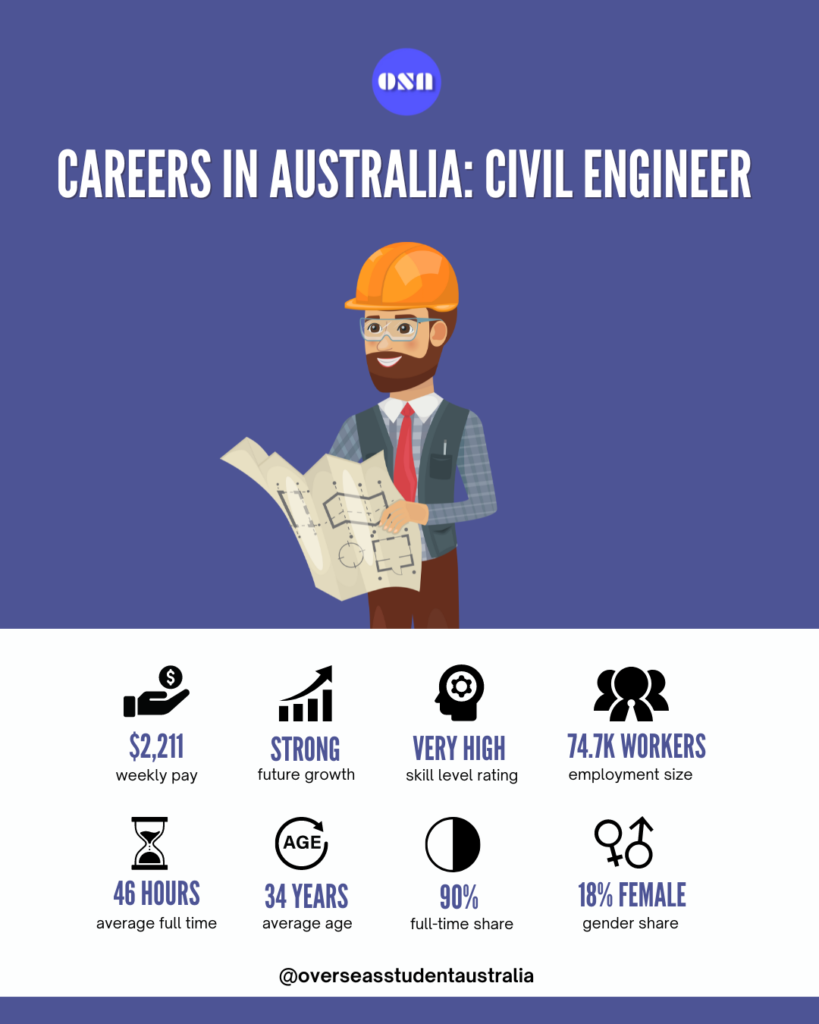
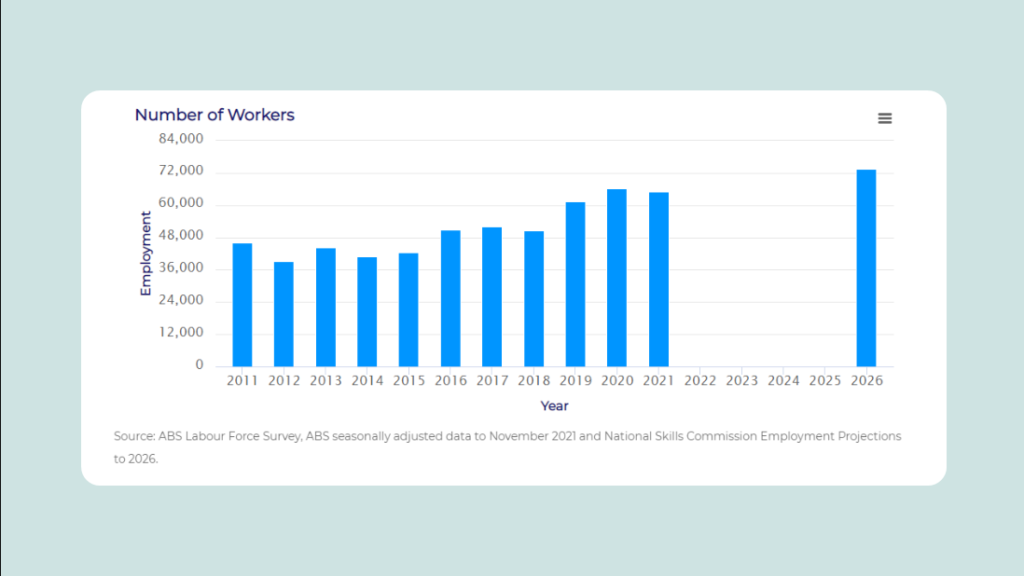
There are over 74,000 civil engineers currently employed in Australia, and there is still high demand for professionals in this sector.
This is a great career path for you if you are tactical, responsible and a critical thinker.
Size of the industry
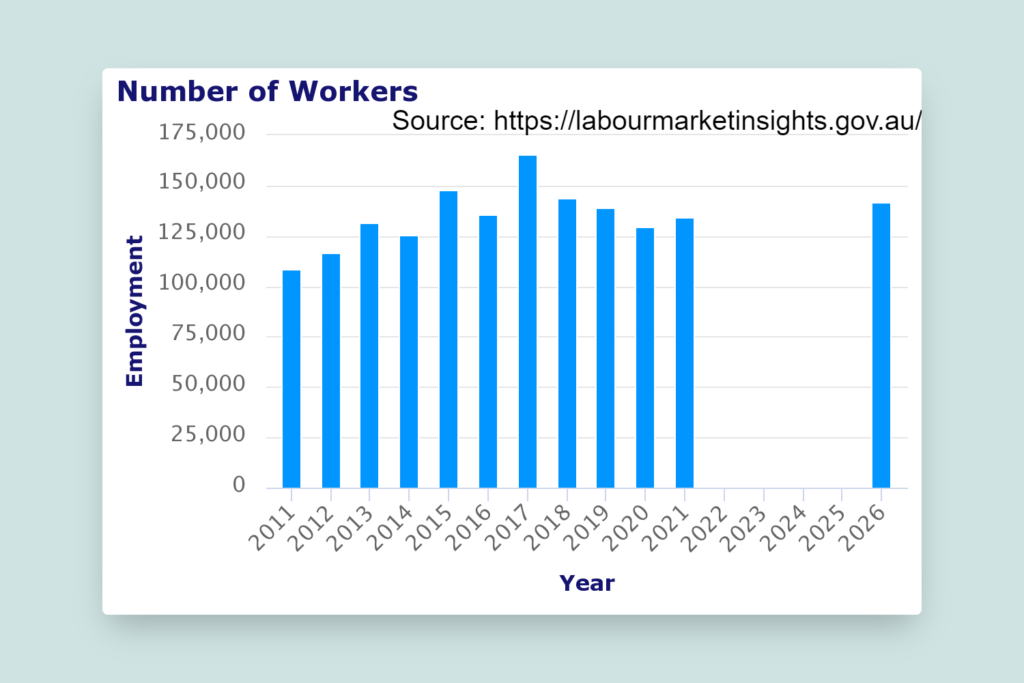
There are over 74,000 civil engineers in the Australian work force currently.
Statistics show a projected strong growth of 13.4% by 2026, making this profession a reliable career path to work in.
Popular Locations
Here below is the percentage of civil engineers in different areas of Australia by state and territory:
New South Wales 33.2%
Queensland 24.0%
Victoria 22.2%
Western Australia 12.7%
South Australia 4.8%
Northern Territory 1.3%
Tasmania 1.2%
Australian Capital Territory 1.1%
This is why it is vital to consider a potential career path when selecting a city to study.
Click here to find out how to choose a city to study in Australia.
Industries where civil engineers are needed
The Professional Scientific and Technical Services industry employs up to 43% of the civil engineers’ workforce, which is the largest share of all their employers. This industry is made up of:
Advertising and promotion researchers
Architects and Designers
Computer system specialists
Lawyers
Scientists
Other industries account for the remaining 57% of civil engineers in Australia. The industries include:
Construction 29.1%
Public Admin and Safety 11.9%
Transport, Postal and Warehousing 5.2%
Other industries 10.9%
Hours of work
In Australia, around 90% of employed Civil engineers work full-time hours in all their jobs combined.
Full-time workers work an average of 46 hours per week. This is similar to the working hours average for all jobs in Australia (44 hours per week).
About a third of workers regularly work overtime or extra hours (either paid or unpaid).
Age
The average age of civil engineers is 34 years, which is younger than the all-jobs average of 40 years.
A large share of workers (30.6%) is within the age brackets of (25 to 34) years.
Gender
With over 74,000 civil engineers in Australia, females account for 18% of the entire workforce, while males account for 82%.
This is 30% below the all-jobs average (48%) for females and 34% above the all-jobs average for males.
What are some of the skills required to become a civil engineer in Australia?
Here are some essential skills you must have to become a civil engineer in Australia:
Critical thinking
Mechanical and Technical design skills
Building and construction
Industry Software knowledge
Operation analysis
Engineering and Tech skills
Mathematical skills
Inductive and Deductive reasoning skills
Problem-finding and Problem-solving skills
Creative thinking
Proper management and supervisory skills
Time management
Analytical skills
Note that skills can be improved through training or experience.
What are the tasks and duties of a civil engineer in Australia?
Here are some of the tasks and duties performed by civil engineers:
Planning, facilitating and monitoring construction projects from start to finish.
Supervise site workers and ensure adequate supply of needed equipment and resources.
Check the necessary costs required to cover the development of a construction project.
Cooperate with other site professionals to ensure a smooth flow of work.
Develop plans, proper measurements, drawings and reports about ongoing site.
Responsibly make use of funds.
Project modelling using the latest standard software.
Helping government bodies create a detailed annual civil development schedule like bridges to build, roads to repair, railways to construct etc.
Analyse and evaluate risks of construction involving natural disasters
Investigate the standard of materials used on site
Drafting of site activity schedule
How much do civil engineers earn in Australia?
Civil engineers salaries differ depending on their level of education, skill and experience in the industry.
Average full-time earnings are $2,211 per week, this is much higher than the average pay of all other jobs in Australia ($1,593 per week).
The average hourly pay for civil engineers is $57, which is more than all jobs average pay ($41 per hour).
Essential steps to becoming a civil engineer in Australia
Civil engineering is known to be a very technical and delicate profession because it deals with massive capital projects which are most often accessible by the general public.
If construction is not completed as per the standards, it could endanger several lives and property.
The nature of this job makes it a relatively harder job than many other professions; However, the process needed to become a civil engineer is straightforward and as follows:
Step 1: Get a senior secondary certificate of education
Steps to become a civil engineer start from your high school years.
This is the first necessary qualification you need to get. Subject requirements for senior secondary education are Mathematics, English, Physics, and Chemistry.
The requirements can vary in different universities across Australia for getting entry into bachelor’s degree in civil engineering.
Step 2: Get a Bachelor’s Degree
The next step is to complete a 4-year undergraduate degree course in engineering at any accredited university you choose, offering civil engineering as a major.
The average cost of getting a bachelor’s degree in civil engineering in Australia ranges from $25,000 to $32,000 per year.
Step 3: Obtain a professional membership
As a civil engineer, you can apply for professional membership as a student, graduate, member or fellow in Australia. Some of the professional membership bodies recognised in Australia are:
The Association of Professional Engineers is a top union in Australia that supports its members concerning workplace issues, professional development, career support and various other services. The membership fee is quite relative, but on an average costs about $300 to $500 per year.
Engineering Australia is the peak body for engineering in Australia. Membership application costs about $300 to $400 per year.
While you can get a student membership with these organisations while studying engineering courses, a professional membership will be required to work as an independent engineer in Australia (Explained in next step).
Although after completing a degree, you can apply for graduate membership with these engineering bodies as well.
Step 4: Get a Professional Engineer’s License
It is necessary to have completed at least 4 years of work experience under the supervision of a Professional Engineer to be licensed as a Professional Engineer in Australia. This license will be requested by an employer before you can work independently on the jobs.
It is important to check the state or territory’s license requirements where you will be working as a civil engineer.
So, it is quite easy to say that it takes around 8 years or more to become a civil engineer in Australia.
But why stop with a Bachelor’s degree only? You can continue to upskill to move up the ladder in your career by completing a Master’s degree.
Step 5: Complete a Postgraduate degree
It is not compulsory to have a Master’s degree in civil engineering to become a civil engineer in Australia, but having one will help your career immensely. Specially, when the pay in this industry is determined by your qualifications, experience and skills.
The average cost of getting a master’s degree in civil engineering in Australia ranges from $25,000 to $40,000 per year.
Many international students who are studying engineering programs in Australia also tend to complete a professional year program as well. This program is not required for local students but international students who are keen to learn further about the Australian workplace environment and seeking extra points for migration purposes undertake this course.
We have explained about this program in a detailed video below.
Step 6: Go next level with Chartered credentials
If you are serious about your career in Engineering then you can look into
It is the highest level of credentials for an engineering professional in Australia. It recognises individuals special dedication, skills, knowledge and talent in the industry.
To become eligible for these credentials, you will need to be a member of Engineer Australia and at least 5 years of experience in the industry.
Popular universities for learning civil engineering
Here are some popular universities to complete a degree in civil engineering in Australia:
University of Melbourne
University of Sydney
University of New South Wales
University of Adelaide
Monash University
Queensland University of Technology
University of Western Australia
Curtin University
RMIT University
Swinburne University of Technology
Future growth of the civil engineering career in Australia
Civil engineering is a very lucrative field to start a career path in. With the sector growing strongly, they can work in a very wide range of specialties such as:
Structural engineer
Highway/railway engineer
Hydraulic or gas pipeline engineer
Construction designer
Environmental engineer
Construction manager
Geotechnical engineer
Civil engineers can work in different industries such as:
Transport
Mining
City planning
Construction
The government data suggests that there will be a 13.4% growth in civil engineer professionals till 2026. So this profession is expected to grow strongly in the years to come.
Aside from the technicalities of the profession, there is definitely an amazing feeling when desired images are brought into reality.
The best part of this career is knowing how your contribution will have a massive impact on society for years to come.
And that is all you need to know about becoming a civil engineer in Australia. Let us know the next career you would like us to cover in the comment section below.
Are you thinking about what it would take you to become a chef in Australia?
Are you seeking information about all the processes involved in becoming a chef?
If your answer to these questions is Yes, then you’re in the right place. In this blog, you’d discover all the vital information you need on how to become a chef in Australia.
Overview of Chef in Australia
A chef is a professional who is usually responsible for managing various aspects of the kitchen, including organising supplies, creating menus, preparing food, managing team etc.
The word ‘Chef’ comes from the French word ‘chef de cuisine’ meaning the ‘boss of the kitchen’.
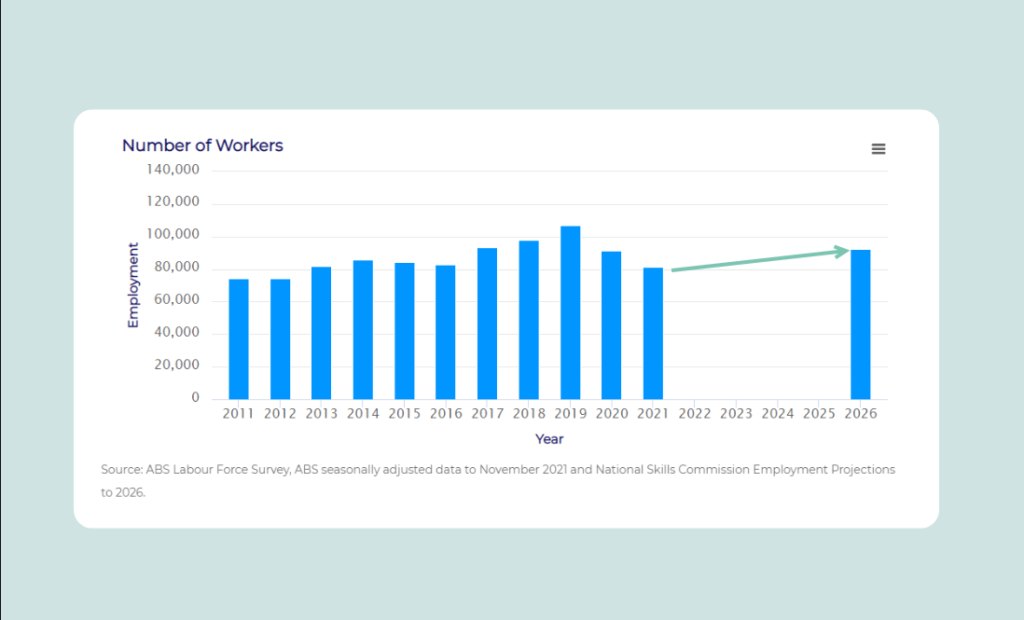
In 2021, 81,100 people were employed as chefs in Australia. It is a profession in high demand in Australia because it requires a lot of diligence and practice.
So, if you love cooking, and you want to take up this skill as a profession, you should take a course in one of the institutes in Australia offering formal studies and qualifications in it.
The latter part of this article provides a detailed guide on that.
Size of the Industry
There are over 108,000 chefs in the workforce. Although, projected statistics show an expected increase in demand for chefs by 13.9% by 2026.
Unlike other occupations, industries are looking for highly skilled professional chefs to meet their needs for an organised kitchen and food preparation and serving structure.
Certainly, getting a qualification to become a chef in Australia will be an advantage for you.
Popular Locations
Chefs are in high demand in different locations in Australia. Close to 66% of chefs live in capital cities, where most of them find employment opportunities. On the other hand, 32% live outside the capital cities.
Below is the percentage of chefs in different areas in Australia, by state and territory:
New South Wales 32.8%
Victoria 26.8%
Queensland 18.7%
Western Australia 10.5%
South Australia 6.2%
Tasmania 2.0%
Australian Capital Territory 1.9%
Northern Territory 1.0%
This is why it is vital to consider a potential career path when selecting a city to study. Click here to find out how to choose a city to study in Australia.
Industries where chefs are needed in Australia
There are different industries in Australia that use the services of a chef. The top industry to employ chefs in Australia is the Accommodation and Food Services Industry, which employs 82.9% of chefs.
Other industries where chefs work and their respective percentages include:
Healthcare and Social Assistance – 6.9%
Manufacturing – 2.0%
Arts and Recreation Services – 2.0%
Others – 6.1%
Hours of work
Chefs usually work long hours without many breaks. A professional chef oversees everything from the point where meals are prepared to when they are ready to be served.
As a result, about 72% of employed chefs are full-time employees. That’s 6 percentage points above the all-jobs average of 66%.
Age
The average age of Chefs is 35 years. This is less compared to that of other jobs in Australia, which is 40 years. But, most chefs in Australia are between 25 and 34 years old.
Gender
Females make up 25% of the workforce as a chef. This is 23 percentage points below the all-jobs average of 48%. Males account for the remaining 75% of the workforce.
Skills required to become a chef in Australia
If you want to become a chef in Australia, you’d need some important skills.
Becoming a chef is not just about cooking.
In fact, all you might need to do is to oversee how things are being done and carried out in the kitchen with staff handling different duties.
Some of the skills required to work as a chef include the following:
Organisation
Teamwork
Multitasking skills
Time management
Leadership skills
Maintenance of stamina and mental fitness
Cooking skills
These skills are essential to carrying out the duties of a chef successfully. Without a passion for the job role, it will be difficult to build these skills and handle tasks appropriately.
What are the tasks and duties of a chef in Australia?
Chefs are responsible for planning, organising, and ensuring that food is prepared nicely and ready to be served. Some of the tasks and duties of a chef include:
Planning menus, estimating food and labour costs, ordering food supplies
Monitoring the quality of dishes at all stages of preparation and presentation
Resolve food preparation issues with Managers, Dietitians, and kitchen and waiters
Demonstrating techniques and advising on cooking procedures
Food preparation and cooking
Emphasising the need for hygiene regulations
Staff selection and training
Food preservation
How much does a chef earn in Australia?
The average income of a full-time chef in Australia is $1,250 weekly.
This is quite less when compared to the average earnings for other jobs that is around $1,593 per week.
Average hourly earnings are $33, which is lower than the average of many jobs which are at $41 per hour.
Basic Steps: How to become a Chef in Australia
It will be interesting for many of you to note that there are actually no particular qualifications required to become a chef in Australia. Lots of chefs work their way up from junior positions in the kitchen.
That being said, if you really want to be up your game in the hospitality industry as a Chef, then you should definitely consider taking a formal qualification.
To make it easier, we are dividing this part in 2 sections. Steps to become a chef in Australia for:
International students
Domestic students
For International Students
If you are planning to become a chef in Australia as an international student, you will be required to undertake the following steps:
Step 1: Undertake a Certificate III Course
Most international students who are planning to become a chef usually have to complete formal studies in Australia.
This usually starts with a Certificate III course, which could be:
Certificate III in Commercial Cookery
Certificate III in Patisserie
Certificate III is a 12-month full-time course and covers basics in commercial cookery. After completing this course, you become a qualified cook.
Step 2: Undertake Certificate IV Course
After completing the Certificate III course, students usually go on to complete the Certificate IV courses. This includes
Certificate IV in Commercial Cookery
Certificate IV in Patisserie
Certificate IV in Hospitality (Catering Operations)
If you completed Certificate III, then Certificate IV will be a 6-month course; but if not, then it is an 18-month course.
And that is why the most international students tend to go for a combined package for the Certificate III and Certificate IV courses as they are more cost-effective and takes less time to complete.
Step 3: Undertake a Diploma and Advance Diploma Course
After completing certificate courses, the next level of study is Diploma and then Advance Diploma courses. These courses can be:
Diploma of Hospitality Management
Advanced Diploma of Hospitality Management
If you are going to have a direct entry into Diploma and Advanced Diploma of Hospitality courses, then it can take 1.5 years to complete each of these courses.
But as mentioned above, students who combine these courses with other certificates tend to reduce the time for studies.
The Diploma and Advance Diploma courses can be completed in 6 months each if you have already completed a Certificate III and Certificate IV programs in the same stream.
These courses are helpful for international students to upskill for management roles in the hospitality industry. It also helps them to meet their 2-year study requirements.
It is also a great pathway to the Bachelor degree in Hospitality Management.
Many institutions usually have accreditation with universities to provide credit transfers, which leads to shorter timeframes in the degree programs. Check with your institution if they have such arrangements available.
So in short, you can complete a Certificate III, Certificate IV and Diploma course in hospitality management in 2 years (24 months) if you take up a combined package for all these courses.
It costs an average of $8,000 to $15,000 per year to get a Certificate III, Certificate IV or a Diploma in Hospitality management in Australia.
An Advanced Diploma in Hospitality management costs an average of $14,000 to $20,000 per year.
Step 4: Complete your work placements
If you are considering your further options after studies, then it is important that you complete a certain number of hours of work experience.
At the moment, 360 hours of work placement are required while you complete the cookery course.
Step 5: Get your Job Ready Program
After completing your studies and minimum work placement hours, you need to complete a job-ready program.
Job Ready Program (JRP) is an employment skills assessment program for international students completing an Australian qualification. It is assessed by Trade Recognition Australia, also known as TRA.
It allows students to develop their skills and demonstrate their job readiness for Australian workplace.
Students are required to complete the 1725 hours of paid employment over a minimum of 12 months period.
To understand the complete requirements for doing a Job Ready Program, we suggest you check this website here.
For Domestic Students
As mentioned earlier, there are actually no particular qualifications required to become a chef in Australia, although it is popular among chefs to complete an apprenticeship to get a vocational qualification.
As a local student, these are the steps you need to follow to become a chef:
Step 1: Become an Apprentice in TAFE or a private college
Before commencement of your apprenticeship, you are required to have completed your Year 10 education. It is a criterion for obtaining a vocational degree such as a Certificate III or IV.
This apprenticeship lasts for about 3 years and cannot be discontinued unless the termination is a mutual agreement between the employer and the apprentice.
There are lots of courses on different specialties to choose from as an apprentice chef, some of which are:
Cook – Certificate III in Commercial Cookery
Chef – Certificate IV in Commercial Cookery
Pastry chef – Certificate III in Patisserie
Pastry chef – Certificate IV in Patisserie
Baker – Certificate III in Retail Baking
Catering operations – Certificate IV in Hospitality
Diploma of Hospitality Management
Advanced Diploma of Hospitality Management
Bachelor of Tourism and Hospitality Management
Associate Degree of Hospitality Management
Note that during your apprenticeship, you work at a restaurant for 4 days a week and attend TAFE or college classes 1 day a week.
Step 2: Gain your qualification and specialise
After three years as an apprentice, you will have earned a nationally recognised certificate or diploma and will be qualified to work as a professional chef! It is left off to you to choose which areas of hospitality you would like to specialise in. Some specialisations are:
Pastry Chef (Patissier)
Sauce Chef (Saucier, Saute Chef)
Fish Chef (Poissonier)
Vegetable Chef (Entremetier)
Step 3. Find work as a chef
After graduation, you may choose to stay at the restaurant where you were trained or apply for other positions. If you decide to continue your career as a chef, you will need to:
Find a job in a kitchen that matches your career objectives
Create a chef’s resume and cover letter that highlights your abilities and experience
Pass the interview and impress the head chef
Get a job offer
The good news is that Australia is currently experiencing a severe shortage of chefs, which should make your job search a little easier.
Where to study cookery courses in Australia for becoming a chef?
You can become a chef in Australia by taking a course in commercial cookery at any of the institutions below:
Le Cordon Bleu Australia
William Angliss Institute
Blue Mountains International Hotel Management School
Australian Professional Skills Institute
ICHM (International College of Hotel Management)
Academies Australasia
Victoria University Polytechnic
Evolution Hospitality Institute
Holmes Institute
TAFE South Australia (SA)
TAFE International Western Australia (WA)
Box Hill Institute
Please note this list is not exhaustive. You can search for more institutions and courses on our search engine here.
Future growth of a Chef career in Australia
In the last 5 years, the Australian Government data shows that there has been a rapid growth for chefs, and it’ll continue over the next 5 years.
With an estimate of over 11,000 new chefs needed by 2026, there’ll always be a demand for chefs in Australia.
This is a positive note that taking up a career as a chef in Australia is rewarding and secure for at least the foreseeable future.
So, this article has just covered everything you need to know on how to become a chef in Australia.
What occupation would you like us to cover next? Let’s have your thoughts in the comment section below.
Child carers provide love, care, emotional support and supervision for babies and young children.
Do you love working with young children and babies? Or perhaps you have a passion for caring for young people in their early stages of life? And. If so, then becoming a child carer in Australia is just the right sector for your career path.
This article will give you all the information you need to know about how to become a Childcare Worker in Australia.
Overview of Child Care Industry
Childcare workers play an important role in Australian society as they help in looking after young kids while their parents go out for work.
Usually childcare workers work at childcare centers, kindergartens, hospitals and in private homes as well in Australia.
The majority (69.9%) of couple families with dependents have both parents employed, of which 1.5 million (81.0%) have at least one child aged under 15 years.
In the September quarter of 2021, 47.7% of children aged (0-5) years and 32.5% of children aged (0-12) years used approved child care in Australia.
With most working families, the need for childcare workers in Australia is a must.
Size of the Industry
There are over 135,000 employed child carers in Australia. Projected future growth of 5.3% in the childcare industry by 2026 makes it an amazing career path.
The number of employed child carers in Australia is projected to increase to over 142,000 by 2026.
Popular Locations
Here is the percentage share of child carers in Australia by state and territory as well as their top employing cities:
• New South Wales (33.4%) – Sydney, Mosman, Newcastle
• Victoria 26.6% – Melbourne
• Queensland (20.9%) – Brisbane, Gold Coast
• Western Australia (7.5%) – Perth
• South Australia (6.5%) – Adelaide
• Tasmania (1.7%) – Hobart
• Australian Capital Territory (2.5%) – Canberra
• Northern Territory (1.0%) – Darwin
This is why it is important to consider your potential career path when selecting a city to study or relocate to. Click here to find out how to choose a city to study in Australia.
Industries where childcare workers are needed
A whopping 65.8% of the childcare workers population work in the healthcare and social assistance industry. This industry covers child care services like:
Supporting children with social and physical activities as well as the basics such as eating and drinking.
Assisting with hygiene and tasks.
Monitoring their condition by taking their temperature, pulse, and respiration and possibly helping with medication.
Supervising children’s behaviour and guiding children’s social development
Providing medical attention where needed.
Other industries account for 34.2% of registered nurses in Australia. The industries include:
Education and training 27.6%
Other services (private homes, childcare facilities etc) 3.3%
Arts and recreation services 1.1%
Other industries 2.1%
Hours of work
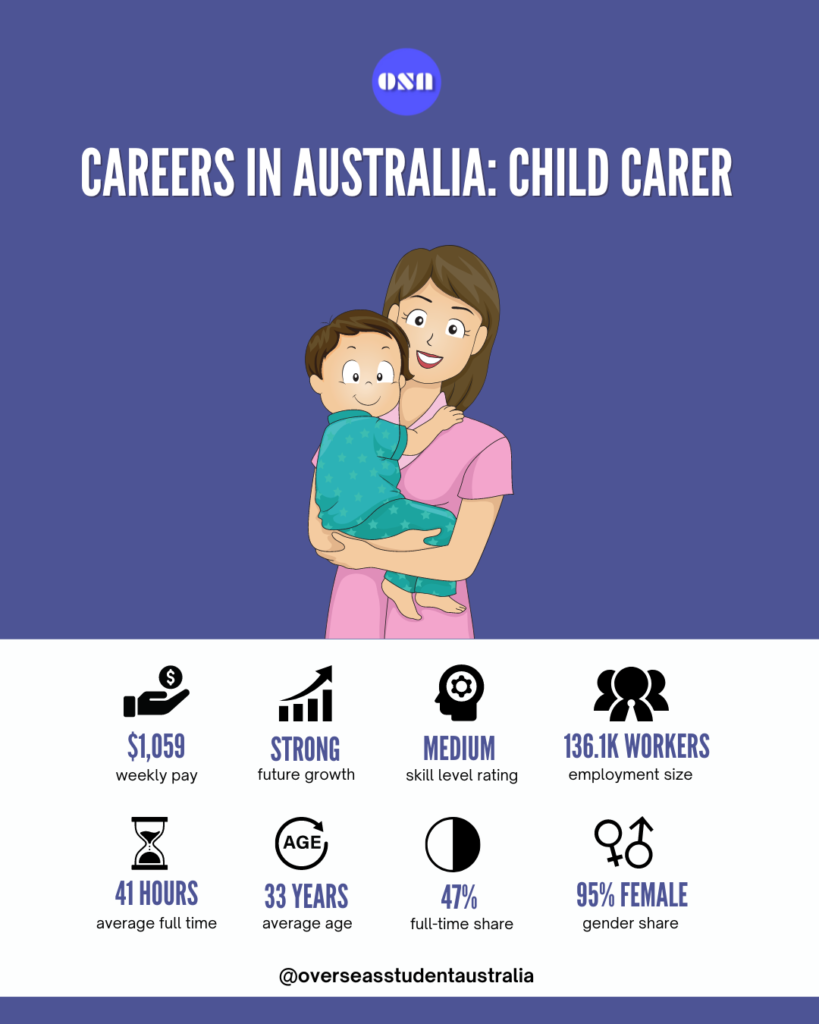
In Australia, roughly 47% of people employed as Childcare workers work full-time hours, in all their jobs combined. This is 19% below the all-jobs average of 66%.
Full-time workers work an average of 41 hours per week in their main job, similar to the all jobs average of 44 hours per week.
Age
The average Childcare worker’s age is 33 years. This is less compared to other jobs in Australia, which is 40 years. However, most childcare workers in Australia are between 25 to 34 years old.
Also, note that you must be at least 18 years old to be a childcare worker in Australia.
Gender
There are over 135,000 childcare workers in Australia. Females dominate this industry with a 95% quota share of the workforce, while males account for the remaining 5%.
This is 47% above the all-jobs average of 48% for females and 42% below the all-jobs average for males.
What are some of the skills required to become a childcare nurse in Australia?
Some key skills required to become a childcare worker in Australia include:
Care-giving skills
Excellent Communication skills
Emotional Intelligence
Child psychology
Alert and Observant
Organisation skills
Catering skills
Listening skills
Supervision skills
Multi-tasking ability
Positive Attitude
Medical skills
Professionalism
Teaching skills
Note that skills can be improved through training or experience.
How much do childcare workers earn in Australia?
The salary of a child carer is relative depending on experience and city location. Average full-time earnings are $1,059 per week, much lower than the all-jobs average ($1,593).
The average hourly earning is $28, lower than the all-jobs average of $41 per hour.
What are the tasks and duties of childcare workers in Australia?
The duties and tasks of the childcare workers can vary Here are some of the regular activities childcare workers are expected to engage in:
Monitor and positively influence the behaviour of children and guide them in their social development and interactions
Organise fun, educational, and recreational activities for the children.
Engage children in a variety of stimulating activities to promote their development, such as outdoor games, reading, basic educational programs, etc.
Entertain children through activities like playing games, musical activities and reading
Understand the meal plans specific to the children they care for
Provide healthy meals for children and feed babies
Create and maintain appropriate day-to-day routines
Supervise the daily routine of children, including sleep periods, meal times, education, and recreational activities
Apply medical skills where necessary
Ensure their safety at all the times
Supervise children for extended periods
Step By Step: How to become a child care worker in Australia
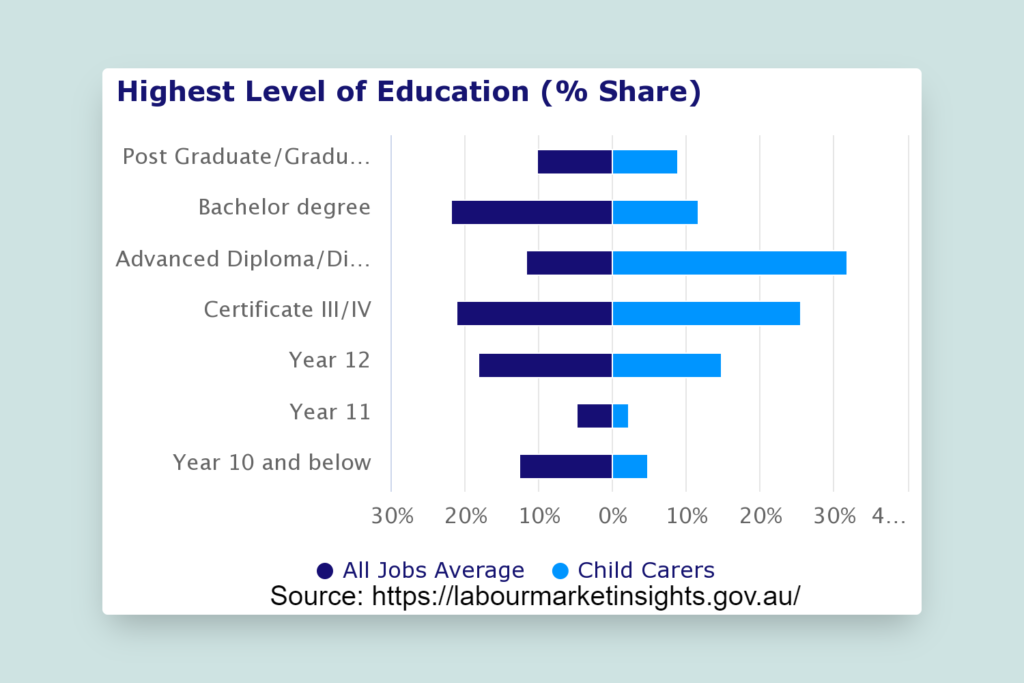
Becoming a child carer in Australia does not require a degree qualification. You can get started with vocational courses for your career in the child care industry.
Here is a step-by-step guide on how to become a childcare worker in Australia:
Step 1: Undertake relevant childcare education
In order to work as a child carer in Australia, you will usually be required to have a Certificate III in Early Childhood Education and Care.
Although completing additional relevant child care training can help you have an edge in the market and help you develop your career further in the industry.
Certificate III in Early Childhood Education and Care
The Certificate III course is a nationally approved vocational program aimed at providing a comprehensive grasp of the early years of a child’s life.
This introductory training teaches how to offer high-quality care and create suitable activities for pre-primary school pupils (aged up to 6 years).
You can expect to learn how best to develop a child’s creativity, numeracy and literacy skills. The duration of this course is 6 months and the average cost is around $4,000 to $5000.
Diploma in Early Childhood Education and Care
This is a more advanced and globally approved vocational training program. It is ideal for anyone looking to expand their childcare profession.
In order to enrol in the Diploma in Early Childhood Education and Care course, you must have completed a Certificate III in Early Childhood Education and Care.
This course qualifies you to teach children in their most critical years of development and growth.
The duration of this course is 1 year and the average costs $6,000 to $8000.
Step 2: Complete the work placements
Along with the studies, students are expected to undertake a work placement as well.
For students completing the Certificate III in Early Childhood course, they are required to complete at least 120 hours of work placements.
Diploma in Early Childhood Education and Care are expected to complete 280 hours of work placements.
Step 3: You must have up-to-date documentation
You will be required to have the up-to-date documentation when applying for becoming a child care worker in Australia.
Working With Children Check: It is a screening process to assess the individual if they are fit to work or care for children.
Police Check: This involves a national police check i.e. criminal history record check of the applicant.
Immunisation record: Employers expect child care workers to be fully immunised including Flu vaccination and COVID-19 vaccinations
First Aid Certificate: Child carers are required to complete a first aid qualification from an accredited training provider. This includes CPR, Anaphylaxis and Asthma Awareness training.
Good references
Suggested Institutions for relevant childcare training
Here are some popular institutions to study child care courses in Australia:
Swinburne University
Australian Academy
TAFE Queensland
TAFE New South Wales
TAFE South Australia
Victoria University
Western Sydney University
Melbourne Graduate School of Education
Skills Australia Institute
Australia Early Childhood College
Future growth of a child carer career in Australia
As the number of parents in the workforce increases, the demand for need for childcare has also increased. This has rendered the childcare industry a strong carer path, steadily rising in size year after year with a projected 5.9% future growth by 2026.
Also, the most recently adopted work-from-home scheme contributes to the steady demand for child care.
With only 47% of child carers working full-time, it shows an opportunity for other side jobs, which means more income. As a registered child care worker, here are some other specialties you can work in:
School Assistant
Family day-care provider
Early childhood educator
After school carer
Corporate childcare
And that is all you need to know about becoming a childcare worker in Australia. Let us know the next career you would like us to cover in the comment section below.