Apple is one of the most popular brands among students in Australia, for both domestic and international students alike.
As Apple products aren’t among the cheapest in the market, that’s why many people, specifically students, look for discounts and special offers.
In this guide, we will talk about how to get an Apple Education Savings in Australia.
What is Apple’s education pricing?
Apple has a special pricing for university going students and staff working at the university in Australia.
There is a special portal/landing page for Apple’s education pricing. You can check it here.
It gives students additional discount (up to 10%) on their normal retail pricing. As an example, New MacBook Neo which starts from $899 AUD, is priced at $749 in the education store, which is a savings of $150.
It is obviously a big deal for students as every single dollar counts in student life.
You are eligible to get this special education pricing if you are a:
Current university student aged 18 or above
New university students aged 18 or above
Parents buying for university students
Teachers
Staff in education at all levels
What can you buy under Apple’s education pricing?
There are various products that are eligible under Apple’s education pricing that include:
MacBooks
iMac
iPads
Mac Mini
Apple Accessories
There is also a limit on the quantity of each of these items you can buy under Apple’s education pricing per year as well. Here is a list of items and the quantities you are allowed to buy with education pricing each year:
iMacs: One
Mac mini: One
Notebook: One
iPad: Two
Accessories: Two
When is the best time to buy Apple’s products in Australia?
So, if you are after the best deal to buy Apple products, we say that the best time to buy is during the start of the new uni year in Australia, which runs from the end of January to the start of March.
At this time, Apple is running a very special promotion for students starting their university or just returning students, for parents buying for their children, teachers and staff in education.
This usually includes an offer of free AirPods or other headphones and other discounts in addition to the education pricing.
In 2026, Apple is offering a Free AirPods 4 with Active Noise Cancellation or other accessories when buying an eligible Mac or Free Apple Pencil or Free Apple AirPods 4 or other accessories when buying eligible iPad. The offer is valid from 06th January 2026 to 11 March 2026 at Apple stores, online or via their call centers. Check offer details here.
Here is a list of available offers with eligible product purchases:
Free Apple Airpods4
MacBook Pro
MacBook Air
iMac
Free Apple Pencil
iPad Pro
iPad Air
But if you miss out on this offer, don’t stress as there are plenty of others sales like EOFY sales, Black Friday and Boxing Day sales available throughout the year.
Steps: How to get an Apple Education Pricing in Australia?
Here is a step-by-step guide on how to get Apple Education Pricing on Apple’s website in Australia.
Step 2: Select to buy any eligible products under the education pricing.
Step 3: Customise the item as per your requirements
Step 4: Add other accessories or bonuses/ promotions (if available).
Step 5: Review your order
Step 6: Sign in with your Apple ID or do a guest checkout. Choose pick up or delivery option.
Step 7: Confirm details. Pay the money and enjoy your discount.
Can you save more on Apple’s Education Pricing in Australia?
The short answer is Yes.
There are few more ways you can save further on the education pricing.
This includes:
Discounted Gift Cards: Yes, it sounds too good to be true but from time to time various retailers launch discount on the Apple Gift Cards. You can get discounted gift cards from supermarkets, online retailers or through partner programs of various organisations in Australia. These discounts are not available on a daily basis. So we suggest you stack up these gift cards as soon as you see the deal for them. (Of course only if you are planning to buy Apple products)
Cashback Offers: Many cashback retailers also usually offer cashback on Apple products. Sometimes it can be as low as 1% cashback while at other times, it can be up to 10%. Usually, there is a maximum cap on how much money you can claim under the cashback scheme. Also, sometimes, you can’t use gift cards for payments to be eligible for cashback. So make sure to check the terms and conditions clearly.
P.S – If you signed up for these cashback services, you could get some referral sign-up bonus as well (and we too ;))
What if I am not eligible to get Apple’s education pricing?
Tried hard but still didn’t get the discount?
No stress. We have you covered too.
There are many other ways to score a deal for Apple products.
Check other retailers: Many retailers usually run a special promotion for Apple products. That usually includes 10% to 15% on various Apple’s products. Some of the popular retailers include Officeworks, JB Hi-Fi, Harvey Norman, The Good Guys, Bing Lee and Amazon.
Stack up gift cards and cash back offers: As mentioned in the previous section, you can buy those discounted gift cards and use the cash back offers from online cashback platforms like Cashrewards and Shopback.
Go for refurbished products: Did you know that Apple actually has an official store for refurbished products? You can get up to 40% off on Apple certified refurbished products to sweeten up savings. Refurbished products are usually pre-owned devices that were returned for any reason. These products are tested thoroughly before selling, and they are usually backed by the warranty as well.
We hope you find this quick guide on how to get an Apple student discount in Australia useful. If you liked this article, then you might find information for other students discount in Australia useful as well. Check it out here.
This article contains affiliate links. If you buy the products using these links, we might get compensated – but there’s no additional cost to you.
Productivity apps can be a valuable tool to help you organize schedules, prioritize tasks, and stay on track with your studies. It can allow you to create to-do lists, set reminders for assignments and exams, and even track your progress over time.
Some apps even offer features like time tracking, which can help make group projects easier to manage, and collaboration tools, which can help you better allocate your time.
Using a productivity app can help in organisation and focus, which will eventually lead to increased productivity and better grades. It can also be a great way to reduce stress, as it helps keep you on top of your responsibilities and avoid last-minute cramming or procrastination.
Here are free productivity apps for students that can be helpful for your day-to-day study activities.
Bonus
Ok!
Realistically, the bonus should be at the end. But we are putting it first as we love using this app ourselves.
This app is known as Notion.
A mix of productivity and note-taking apps include various features like project tracking, task management, to-do lists, bookmarking, and many more.
They have generous free student plan as well. As avid user ourselves, we love using this app for all work productivity etc.
This is a task management tool that allows you to create to-do lists, set deadlines, and track your progress on tasks.
It has a feature called “Karma” which tracks how many tasks you complete in a week, giving a sense of accomplishment as you progress through your assignments.
This is a Chrome extension that allows you to block distracting websites on your computer.
You can set up a schedule to block certain sites during certain times of day, or block them indefinitely. This is based on the concept of Pomodoro technique.
StayFocusd is a great option for students who want to stay focused and get more work done.
Productivity apps can be a great way for you to stay organized, manage your time, and get more done as a student. By using these types of apps, you can streamline your workflows, reduce stress, and achieve better academic success
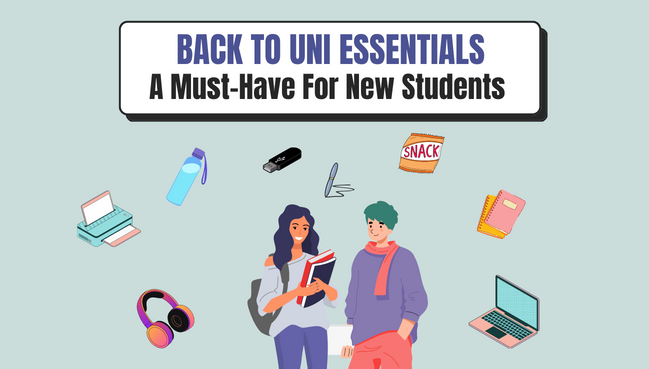
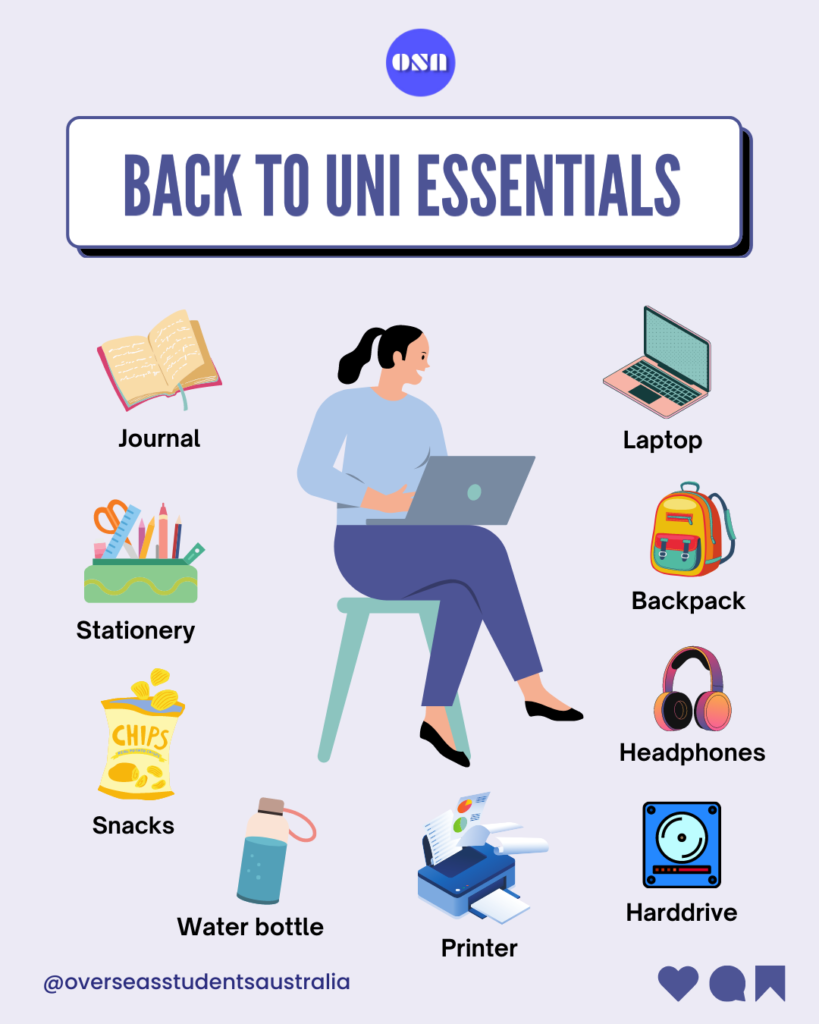
Hopefully, this article will help in reducing stress for one of the thing on your list: Back to Uni Essentials
So, let’s get started with our items
1. Laptop or Tablet
A must have items on the list. Choosing a laptop or an Tablet can be hard work. But let’s make it simple.
If you need to do ton of stuff for your university assignment and have to use some software’s that need power, then go for a laptop. If you need to just take notes, do some web browsing and usual office programs, then (a good) tablet might be sufficient.
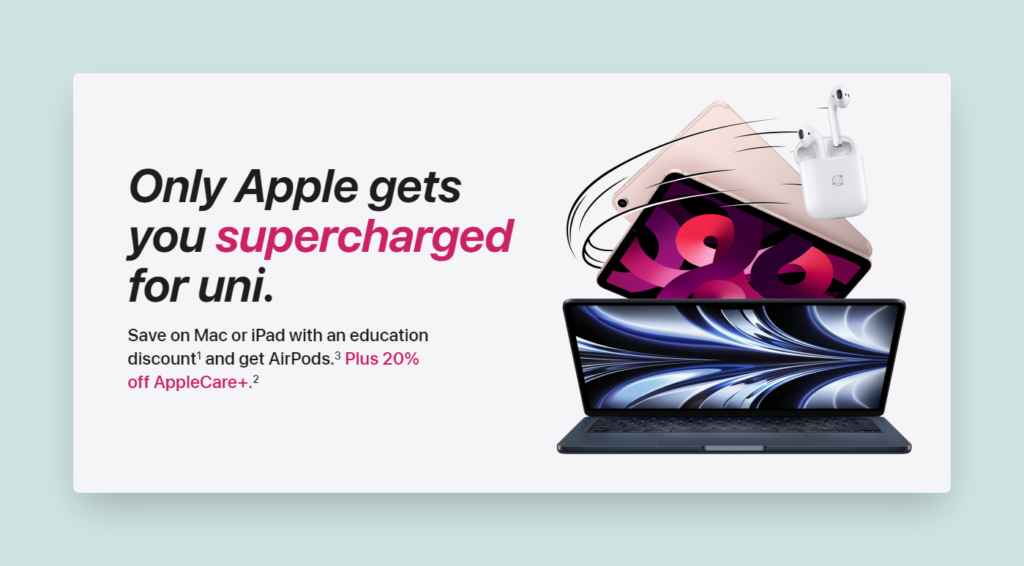
Many students usually consider getting a Apple MacBook’s or Apple iPads as their main device to take to unit. And luckily, at the start of the uni each year (usually end of January), Apple brings “Back to Uni” deals for students. So it is worthwhile waiting for this deal to come before buying any Apple device.
From 18 January 2023 to 13 March 2023, buying an iPad or Macbook will get you Free airpods and 20% off apple care. The starting prices are from A$1,349 (with education pricing) for Macbook Airs.
If this sounds too much and you still want Mac, no issues.
Getting a refurbished Mac might be your next best option. You can check it directly with Apple or Amazon or website like Reeblo which sells refurbished technology.
If you are not a Mac person or need Windows computer, then you can look into checking with Microsoft Windows Surface computers or tablets. You can check retailers like JB Hi-Fi, Good Guys, Harvey Norman or official Microsoft for some deals on the Microsoft computers.
Want to save some more $$$ on Microsoft computers or tablets? Check their eBay store and look up for a discount code. Usually, you can save more via their eBay store.
There are many other deals from other providers like Dell, Lenovo, Asus, etc. So depending on your budget and needs, there are multiple options.
2. Backpack
Next essential uni item will be the Backpack.
You can go for some cheap ones from K-Mart or Target.
But if you want a really good bag that does not break the bank and is very comfortable to use, then this Dell bag might be the one you need.
It is sturdy, looks decent and can carry your laptop up to 15”, umbrella, water bottle and other stuff.
If are looking for something fancy, then you can check bagsmart or other popular bag websites.
3. Headphones/Earphones
Looking for some cool looks for the uni year? or just like listening to music on the go?
You got it! We are talking about the headphones or if you want you can choose to have earpods.
There are ton of options when choosing headphone/earpods.
Every is different and so their needs for the head gear.
If you want to have that cool uni look, then you might want to go for over the earheadphones or if you want to have it discreetly, then earpods might be the way to go for you.
Luckily, with Apple’s current promotions, you can get an Airpods for free when you buy an iPad or Macbook. Sweet!
But if you are after something else, then you can check Samsung’s earphones Buds Live. They are not overly priced and most of them you can find a decent deal for it. Just google that my friend!
When it comes to Over the ear headphones, if you don’t want to break the bank, then check this Plantronics headphones. They aren’t overly priced and have decent reviews and they are bluetooth (another win).
But if you are that stubborn kid, you want to break the bank, then you should check the top of the range products like Bose, Sony and Sennheiser.
4. Hard Drive/USB
USBs and Hard Drives are life savers in uni.
Sharing good lecture notes (no no not assignments) with your friends is easy through the hard drives or USB’s especially if you don’t have an access to internet.
Also, as the cost of cloud storage rises, having a backup in the harddrive or usb is a must.
You can pick one from you local stationery shop or electronic stores.
A good 32 GB USB can starts from $10 onwards on special. But as storage needs increase, you can getter a USB with larger storage.
If you need even more storage then a 1TB Hard Drive starts from $59 in Officeworks.
5. Journal/Planner
Staying organised is a key to success in life (and more importantly in uni)!
Start the uni year on a right foot by having a Journal or Planner.
It can help you plan out your whole term or even the year.
You can track your progress, take note of the timetables, assignment due dates and everything in between life and study.
6. Stationery
Cool Notebook! Checked
Nice Sparkling Pens! Checked
Water bottle! Checked
Nearly forgot about the Textbooks 😂!
Don’t underestimate the power of having stationery in your bag.
Our tip is “Always carry spares and make new friends”. Someone would have forgotten their pen at home for sure. (We are looking at you, John).
Yes, we don’t print as much as we used to. (Which we agree that is really good for the environment).
But still at times, you might want to print your lecture notes to understand things better or you are just kind of person who likes to highlight every single important line, then printer can be a handy thing.
A good printer can save you trips to the local Officeworks and time too.
8. Water bottle
Luckily in Australia tap water is safe to drink.
So bringing your own water bottle to uni is a must. And it costs lots of money if you are going to buy water bottles outside every single day.
9. Snacks
Look we understand that studying can be hard work. It’s ok!
And bringing a snack in the backpack is must specially if you have a long day at uni.
You can always look at the last chocolate left in the cupboard and bring it along.
But we highly recommend looking for healthier alternatives:
Nuts
Granola Bars
Yoghurt
Dried fruits
Crackers
Fruits
10. Apps
Apps are like lifeline these days in the student life. (No we are not talking about ChatGPT).
There are ton of apps you need to download before heading to uni this year.
Our pick includes:
Notion: For note taking and collaboration
Microsoft Office: For everyday assignment use
Canva: For cool graphics and presentation templates
Grammarly: For checking your grammar
Google Drive: For storage and online collaboration
University Apps: For study resources and maps
Banking Apps: For your everyday banking needs
Public Transport Apps: For check timetables
But you might need to download other apps as well. In case your uni doesn’t provide with free Microsoft office, then we suggest checking these free 10 Microsoft Office alternatives.
Bonus Uni Essentials
11. Meal Kits
Too busy to head to supermarkets during semester (or just hate supermarket trips anyways) and don’t want to order unhealthy food everyday either, then Meal kits bit be the answer for you.
Meal kit companies offer a no brainer solution for students and busy professionals as they send you your grocery and meal planning instructions along with them.
Long story short, you order these meal kits (based on your preferences), they deliver pre-portioned ingredients and step by step recipe instructions to cook, then you cook and eat. Easy!
These days meal kit companies can cater to dietary requirements like Vegan, Vegetarian etc. as well.
So if this sounds something that you need then you are in luck as we have scored an amazing offer from HelloFresh and EveryPlate for you.
Get $210 off on your first 5 boxes via HelloFresh here.
Get up to $180 off your first six boxes via EveryPlate here.
12. Academic Support
No we are not talking about those shady companies offering help to write your essays!
This is genuine academic support in academic and business writing.
Our partners at Abydos Academy offer courses that provide a comprehensive learning experience to help improve your writing skills for your academic essays, assignments etc.
They also help you to understand the concepts of plagiarism and referencing.
Luckily, their Back to Uni deal is offering 80% off on all courses. With individual courses starting from $15.99 only. Check their special offer here.
By having all these essential items, you’ll be well-prepared to tackle the challenges of university life. Good luck!
Comprehensive Back to Uni Checklist
Here is a comprehensive checklist for students starting university in Australia. Download this back to uni checklist in PDF format below.
Disclaimer: This page may contain links from our affiliates, sponsors, and partners. If you use these products, we will get compensated – but there’s no additional cost to you.
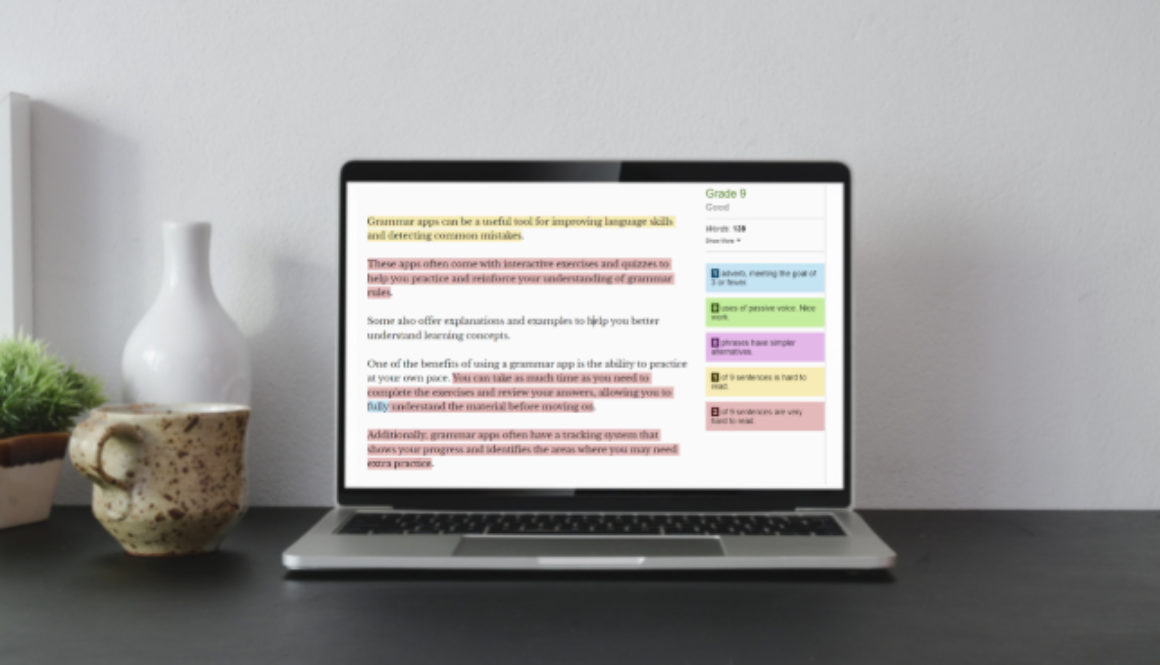
Grammar apps can be a useful tool for improving language skills and detecting common mistakes.
These apps often come with interactive exercises and quizzes to help you practice and reinforce your understanding of grammar rules.
Some also offer explanations and examples to help you better understand learning concepts.
One of the benefits of using a grammar app is the ability to practice at your own pace. You can take as much time as you need to complete the exercises and review your answers, allowing you to fully understand the material before moving on.
Additionally, grammar apps often have a tracking system that shows your progress and identifies the areas where you may need extra practice.
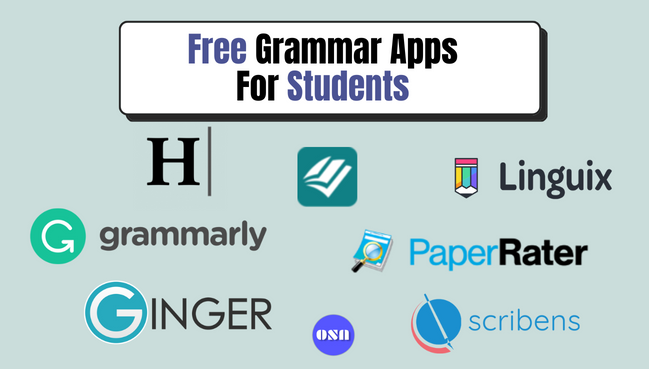
Here are our pick of top 10 free Grammar apps for students
Grammarly is one of the most popular grammar checkers available and offers real-time grammar and spelling checks for a variety of writing styles.
It also offers suggestions for alternative word choices and helps with punctuation and sentence structure.
You can use a web based app or download a browser plugin from Grammarly website. If you are a phone nerd, then Grammarly have an iOS and Android app as well.
Their free plan is quite generous but if you want to take the things to the next level including plagiarism checker, then you might consider getting their paid plan too.
Hemingway helps you improve your writing by highlighting complex sentences, passive voice, and other areas that may be difficult for readers to understand.
It also suggests alternative word choices and offers a readability score to help you improve the clarity of your writing.
It is a web based app where you can simply paste your text and get suggestion on your work. You can also download their desktop for Mac or Windows as well but they don’t have extension plugins or mobile app.
This web app is completely free to use but the desktop app requires a one time payment of $19.90.
If you need to check long articles or assignments then ProrWritingAid is the grammar checking app you need.
This app offers a variety of writing tools, including a grammar checker, a style editor, and a thesaurus.
It also offers a plagiarism checker and a readability score to help you improve the clarity of your writing.
To get started you need to sign up on the website and download free browser extensions from the website. With free plan, you can check up to 500 words in a document.
They do have a web app as well but they don’t no mobile apps.
Students can get 20% on their already cheap pricing tiers.
Language Tool is great for students as it support multiple languages, making it a useful tool when you are learning a new language or doing work in language other than English.
This grammar checker app offers real-time grammar and spelling checks and helps with punctuation and sentence structure.
The free plan include up to 20,000 characters limit, which is quite generous and don’t need to login to get the document checked.
Alternatively, you can also download their browser extension to get started.
We love using Linguix app here at Overseas Students Australia. It is one of our go to app for checking grammar.
This grammar checking app offers online correction and provides writing assistance for better writing.
The app is quite useful too when using google docs too. You can try their online grammar checker or download the chrome extension. The paid plans starts from $10 per month.
They also give score on writing to let you know if you content is good enough to publish or not.
Slick Write offers a variety of writing tools, including a grammar checker, a style editor, and a thesaurus.
The web app is very fast and offers feedback on your grammar fairly quick. It can do the word count, sentences and other useful stuff about your writing.
Their web app is great for students as it is quite generous with no specific word limits to check your work. You can also get their free browser extensions to get started.
PaperRater offers a grammar checker, a plagiarism checker, and a style editor to help you improve your work.
It also offers a readability score to help ensure that your work is easy to understand. To get started, you can copy and paste your information in their free web browser app. They also detect plagiarism in the documents too.
The free web app plan is decent for us but the premium plan also starts from $3.48 per month.
Australia is a diverse country with a rich cultural heritage, and its public holidays reflect this diversity.
The country observes a number of national holidays as well as state-specific holidays, giving citizens and visitors alike plenty of opportunities to celebrate and reflect on important events and figures in Australian history.
In this guide, we will provide an overview of the public holidays observed in the different regions of Australia, including the date and significance of each holiday. We will also provide information on how the holidays are celebrated and any special traditions or customs associated with them.
This guide will help you plan your travels and activities in Australia and make the most of your time in this beautiful country.
National Public Holidays in Australia
These national public holidays are celebrated across all states and territories in Australia:
New Year’s Day: January 1st
New Year’s Day is a public holiday in the ACT, and it is celebrated on January 1st every year. The holiday marks the start of the New Year, and it is a day for people to reflect on the past year and make new resolutions for the year ahead. Many people celebrate the holiday by attending fireworks displays, having barbecues, and spending time with friends and family.
Australia Day: January 26th
Australia Day is a national public holiday that marks the arrival of the First Fleet of British ships at Port Jackson, New South Wales, in 1788. It is a time for Australians to celebrate their national identity and reflect on the country’s history and achievements. The day is marked by ceremonies, parades, and community events, as well as the presentation of the Australian of the Year awards. This public holiday is also controversial and there is a push to move this holiday to another date due to sensitive issues for this day to the Indigenous Australians.
Good Friday: April 3rd
Good Friday is a national public holiday that marks the Christian observance of the crucifixion of Jesus Christ. It is a time for reflection, prayer, and mourning.
Easter Monday: April 6th
Easter Monday is a national public holiday that is the day following Easter Sunday. It is a time for family and friends to come together and continue the celebrations of Easter Sunday. Many people take the day off to enjoy a long weekend and participate in Easter-themed activities.
ANZAC Day: April 25th
ANZAC Day is a national public holiday that marks the anniversary of the landing of Australian and New Zealand soldiers, known as Anzacs, on the Gallipoli Peninsula in Turkey during World War I. It is a time for Australians to remember and honour the sacrifices of those who have served in the country’s armed forces. The day is marked by ceremonies, parades, and the laying of wreaths at war memorials.
Christmas Day: December 25th
Christmas Day is a national public holiday, and it is celebrated on December 25th every year. The holiday is a Christian festival that commemorates the birth of Jesus Christ. The day is marked by church services, family gatherings, and the exchange of gifts.
Boxing Day: December 26th
Boxing Day is a national public holiday that is celebrated on December 26th. It is a day of rest and relaxation that follows Christmas Day. Many people take advantage of the day to spend time with family and friends and recover from the Christmas celebrations.
The holiday is traditionally a day for giving gifts to people in need, and for visiting with friends and family. Many people also participate in charitable activities, such as volunteering at shelters or donating to food banks.
Here is a quick glance on the key public holidays during the year 2026:
Date
Holiday
State / Territory
1 January
New Year’s Day
All states and territories
26 January
Australia Day
All states and territories
9 February
Royal Hobart Regatta
Tasmania (selected areas)
2 March
Labour Day
Western Australia
9 March
Canberra Day
Australian Capital Territory
9 March
Adelaide Cup Day
South Australia
9 March
Labour Day
Victoria
9 March
Eight Hours Day
Tasmania
3 April
Good Friday
All states and territories
4 April
Easter Saturday / Day after Good Friday
ACT, NSW, NT, QLD, SA, VIC
5 April
Easter Sunday
ACT, NSW, NT, QLD, SA, VIC, WA
6 April
Easter Monday
All states and territories
7 April
Easter Tuesday
Tasmania (generally public service only)
25 April
Anzac Day
All states and territories (except ACT)
27 April
Additional public holiday for Anzac Day
Western Australia
27 April
Anzac Day
Australian Capital Territory
4 May
May Day
Northern Territory
4 May
Labour Day
Queensland
1 June
Reconciliation Day
Australian Capital Territory
1 June
Western Australia Day
Western Australia
8 June
King’s Birthday
ACT, NSW, NT, SA, TAS, VIC
28 September
King’s Birthday
Western Australia (some regional variations)
5 October
Labour Day
ACT, NSW, SA
5 October
King’s Birthday
Queensland
12 August
Royal Queensland Show
Queensland (Brisbane area only)
3 August
Picnic Day
Northern Territory
Friday before AFL Grand Final (TBC)
AFL Grand Final Eve
Victoria
22 October
Royal Hobart Show
Tasmania (selected areas)
2 November
Recreation Day
Tasmania (areas not observing Regatta)
3 November
Melbourne Cup
Victoria (some regional variation)
24 December (evening)
Christmas Eve
NT, QLD, SA
25 December
Christmas Day
All states and territories
26 December
Boxing Day / Proclamation Day
All states and territories
28 December
Additional public holiday for Boxing Day / Proclamation Day
ACT, NSW, NT, QLD, SA, VIC, WA
31 December (evening)
New Year’s Eve
NT, SA
Australian Capital Territory Public Holidays
The Australian Capital Territory (ACT) is the smallest mainland state and territory of Australia and its capital city is Canberra. Apart from the above-mentioned National Holidays, ACT has a unique set of public holidays that are different from the other states and territories of Australia. These holidays are:
Canberra Day: March 9th
Canberra Day is a public holiday in the ACT, and it is celebrated on the second Monday in March every year. The holiday is celebrated to commemorate the naming of Canberra as the capital of Australia in 1913. This day is celebrated with parades, festivals, and events that showcase the city’s culture and history.
Easter Saturday: April 4th
Part of the Easter celebrations, Easter Saturday is observed as a public holiday in Australian Capital Territory.
Easter Sunday: April 5th
Easter Sunday is also a public holiday celebrated in Australia Capital Territory that marks the Christian observance of the resurrection of Jesus Christ. It is a time for celebration, prayer, and the exchange of gifts.
Reconciliation Day: June 1st
Reconciliation Day is a public holiday in ACT will be celebrated on the 1st June. It is also known as National Sorry Day and is a day to commemorate the mistreatment of Indigenous Australians and to promote reconciliation between Indigenous and non-Indigenous Australians.
King’s Birthday: June 8th
King’s Birthday is a public holiday in the ACT, and it will be celebrated on the 8th of June in 2026. The holiday is celebrated to mark the birthday of the reigning monarch of Australia, currently King Charles III. The day is marked by ceremonies, parades, and events that celebrate the history and achievements of the Australian monarchy.
Labour Day: October 5th
Labor Day is a public holiday in the ACT, and it is celebrated on the first Monday of October every year. The holiday is celebrated to commemorate the achievements of the trade union movement, which played a significant role in the establishment of fair working conditions and rights for workers in Australia. The day is marked by parades, rallies, and events that celebrate the contributions of workers to Australian society.
In summary, the Australian Capital Territory has the following public holidays in 2026:
Date
Public Holiday
Thursday 1 January
New Year’s Day
Monday 26 January
Australia Day
Monday 9 March
Canberra Day
Friday 3 April
Good Friday
Saturday 4 April
Easter Saturday – the day after Good Friday
Sunday 5 April
Easter Sunday
Monday 6 April
Easter Monday
Monday 27 April
Anzac Day
Monday 1 June
Reconciliation Day
Monday 8 June
King’s Birthday
Monday 5 October
Labour Day
Friday 25 December
Christmas Day
Saturday 26 December
Boxing Day
Monday 28 December
Additional public holiday for Boxing Day
New South Wales Public Holidays
New South Wales (NSW) is the most populous state in Australia and is home to many of the country’s iconic landmarks and tourist destinations. The state also has a diverse and rich cultural heritage, which is reflected in its public holidays.
King’s Birthday: 8th June
The King’s Birthday will be celebrated on the 8th of June in the Northern Territory. It marks the birthday of the reigning monarch, King Charles III. The day is marked by official celebrations, parades, and community events.
Labor Day: October 5th
This holiday is a public holiday in New South Wales and is marked to celebrate the achievements of workers. The day is marked with parades, speeches, and other events to recognize the contributions of workers to the state’s economy and society.
In addition to these holidays, there are also a number of regional holidays and special days that are celebrated in New South Wales.
In summary, New South Wales has the following public holidays in 2026:
Date
Public Holiday
Thursday 1 January
New Year’s Day
Monday 26 January
Australia Day
Friday 3 April
Good Friday
Saturday 4 April
Easter Saturday
Sunday 5 April
Easter Sunday
Monday 6 April
Easter Monday
Saturday 25 April
Anzac Day
Monday 8 June
King’s Birthday
Monday 5 October
Labour Day
Friday 25 December
Christmas Day
Saturday 26 December
Boxing Day
Monday 28 December
Additional public holiday for Boxing Day
Northern Territory Public Holidays
The Northern Territory is a unique and fascinating region of Australia, known for its rugged beauty, diverse wildlife, and Indigenous culture. The region also has its own set of public holidays, which reflect the unique history and culture of the Northern Territory.
May Day: May 4th
May Day also known as Labour Day holiday is celebrated on the first Monday in May in Northern Rerritory. It marks the achievement of the eight-hour working day for the state’s workers and is a day to celebrate the contributions and rights of workers. The day is marked by parades and community events.
King’s Birthday Public Holiday: June 8th
King’s Birthday is a public holiday that is celebrated on the 8th of June in the Northern Territory. It marks the birthday of the reigning monarch, King Charles III. The day is marked by official celebrations, parades, and community events.
Picnic Day: August 3rd
Picnic Day will be celebrated on the 3rd August in the Northern Territory. It was originally established as a holiday to allow residents of Darwin to take a day off to go on picnics and enjoy the city’s parks and gardens. Today, the day is marked by community events, parades, and festivals that celebrate the region’s cultural heritage.
Christmas Eve: December 24th
It is a part public holiday and is observed only between 7pm to midnight on Christmas Eve in the Northern Territory.
New Year’s Eve: December 31st
Just like Christmas Eve public holiday, New Year’s Eve is a part public holiday from 7pm to midnight.
In summary, the Northern Territory observe the following public holidays in 2026:
Date
Public Holiday
Thursday 1 January
New Year’s Day
Monday 26 January
Australia Day
Friday 3 April
Good Friday
Saturday 4 April
Easter Saturday
Sunday 5 April
Easter Sunday
Monday 6 April
Easter Monday
Saturday 25 April
Anzac Day
Monday 4 May
May Day
Monday 8 June
King’s Birthday
Monday 3 August
Picnic Day
Thursday 24 December
Christmas Eve (from 7 pm to midnight)
Friday 25 December
Christmas Day
Saturday 26 December
Boxing Day
Monday 28 December
Additional public holiday for Boxing Day
Thursday 31 December
New Year’s Eve (from 7 pm to midnight)
Queensland Public Holidays
Queensland is the second-largest state (by size) in Australia. Queensland is also known for its beautiful beaches, warm climate and stunning tourist attractions.
The state observes a number of public holidays throughout the year. This includes national holidays and some regional holidays that include:
Labour Day: May 4th
Labour Day is a public holiday that is celebrated on the first Monday in May in Queensland. It marks the achievement of the eight-hour working day for the state’s workers and is a day to celebrate the contributions and rights of workers.
Royal Queensland Show: 12th August
The Royal Queensland Show, commonly known as the Ekka, is an annual agricultural show that takes place in the Brisbane area of Queensland, Australia. The show is held at the Brisbane Showgrounds and typically runs for 10 days in August. It is also known as Ekka People’s Day and Brisbane Show Day
The Ekka is one of the oldest and most popular events in Queensland, attracting over 400,000 visitors each year. The show features a wide range of exhibits and competitions, including horse shows, agricultural and horticultural displays, and cooking and craft competitions. The showground also features carnival rides and games, live music and entertainment, and food and drink vendors.
King’s Birthday: October 5th
The King’s Birthday will be celebrated on the 5th of October in Queensland. It marks the birthday of the reigning monarch, King Charles III.
Christmas Eve: December 24th
It is a part public holiday and is observed only between 6pm to midnight on Christmas Eve in the Queensland.
In summary, Queensland will observe the following public holidays in 2026:
Date
Public Holiday
Thursday 1 January
New Year’s Day
Monday 26 January
Australia Day
Friday 3 April
Good Friday
Saturday 4 April
The day after Good Friday
Sunday 5 April
Easter Sunday
Monday 6 April
Easter Monday
Saturday 25 April
Anzac Day
Monday 4 May
Labour Day
Wednesday 12 August
Royal Queensland Show (Brisbane area only)
Monday 5 October
King’s Birthday
Thursday 24 December
Christmas Eve (from 6 pm to midnight)
Friday 25 December
Christmas Day
Saturday 26 December
Boxing Day
Monday 28 December
Additional public holiday for Boxing Day
South Australia Public Holidays
South Australia is a state located in the southern region of Australia, known for its diverse landscapes, rich cultural heritage, and strong agricultural and mining industries.
Apart from the above-mentioned national public holidays, these are some of the other public holidays celebrated in South Australia:
Adelaide Cup Day: March 9th
Adelaide Cup Day is a public holiday that is celebrated on the second Monday in March in South Australia. It marks the Adelaide Cup, an annual horse racing event that takes place at the Morphettville Racecourse in Adelaide. The day is marked by horse racing and other sporting events, as well as live music and food and drink vendors.
Easter Saturday: April 4th
Part of the Easter celebrations, Easter Saturday is observed as a public holiday in South Australia.
King’s Birthday: June 8th
The King’s Birthday is a public holiday that is celebrated on the second Monday in June in South Australia. It marks the birthday of the reigning monarch, King Charles III.
Labour Day: October 5th
Labour Day is a public holiday that is celebrated on the first Monday in March in South Australia. It marks the achievement of the eight-hour working day for the state’s workers and is a day to celebrate the contributions and rights of workers.
Christmas Eve: December 24th
It is a part public holiday and is observed only between 7pm to midnight on Christmas Eve in the South Australia.
New Year’s Eve: December 31st
Just like Christmas Eve public holiday, New Year’s Eve is a part public holiday from 7pm to midnight.
In summary, South Australia have the following public holidays in 2026:
Date
Public Holiday
Thursday 1 January
New Year’s Day
Monday 26 January
Australia Day
Monday 9 March
Adelaide Cup Day
Friday 3 April
Good Friday
Saturday 4 April
Easter Saturday
Sunday 5 April
Easter Sunday
Monday 6 April
Easter Monday
Saturday 25 April
Anzac Day
Monday 8 June
King’s Birthday
Monday 5 October
Labour Day
Thursday 24 December
Christmas Eve (from 7 pm to midnight)
Friday 25 December
Christmas Day
Saturday 26 December
Proclamation Day holiday
Monday 28 December
Additional public holiday for Proclamation Day holiday
Thursday 31 December
New Year’s Eve (from 7 pm to midnight)
Tasmania Public Holidays
Tasmania is an island state located south of the mainland of Australia. It is the 26th largest island in the world and the smallest state in Australia.
The island is known for its rugged wilderness, beautiful landscapes, and unique wildlife. These are additional public holidays that state observes in 2026 apart from the national public holidays:
Royal Hobart Reggatta: February 9th
Royal Hobart Reggatta is usually celebrated for 3 days in the second week of February each year. This year it will be celebrated from 9th February. It is a series of water sports competitions held in the capital city of Hobart. The public holiday is only for the southern part of Tasmania
Eight-Hour Day: March 9th
The Eight Hour Day is a public holiday that is celebrated on the third Monday in March in Tasmania. It marks the achievement of the eight-hour working day for Tasmania’s workers and is a day to celebrate the contributions and rights of workers. The day is marked by parades and community events.
King’s Birthday: June 8th
The King’s Birthday is a public holiday that is celebrated on the second Monday in June in Tasmania. It marks the birthday of the reigning monarch, King Charles III.
Recreation Day: November 2nd
Recreation Day holiday is observed in the norther part of Tasmania. It usually falls on the first Monday of November each year, It is an offset holiday for people living in norther parts as they miss out public holiday for Royal Hobart Reggatta.
In summary, Tasmania will observe the following public holidays in 2026:
Date
Public Holiday
Thursday 1 January
New Year’s Day
Monday 26 January
Australia Day
Monday 9 February
Royal Hobart Regatta (only observed in certain areas of the state, including Hobart)
Monday 9 March
Eight Hours Day
Friday 3 April
Good Friday
Monday 6 April
Easter Monday
Tuesday 7 April
Easter Tuesday (generally Tasmanian Public Service only)
Saturday 25 April
Anzac Day
Monday 8 June
King’s Birthday
Thursday 22 October
Royal Hobart Show (only observed in certain areas of the state, including Hobart)
Monday 2 November
Recreation Day (areas of the state that don’t observe Royal Hobart Regatta)
Friday 25 December
Christmas Day
Monday 28 December
Boxing Day
Victoria Public Holidays
Victoria is a state located in the southeastern region of Australia. It is the second most populated state in Australia and is home to the city of Melbourne, which is the state capital and the second-largest city in Australia.
The state observes a number of public holidays throughout the year. They include:
Labour Day: March 9th
Labour Day is a public holiday that is celebrated on the second Monday of March in Victoria. It marks the achievement of the eight-hour working day for the state’s workers and is a day to celebrate the contributions and rights of workers.
Easter Saturday: April 4th
Part of the Easter celebrations, Easter Saturday is observed as a public holiday in Victoria.
Easter Sunday: April 5th
Easter Sunday is also a public holiday celebrated in Victoria that marks the Christian observance of the resurrection of Jesus Christ.
King’s Birthday: June 8th
The King’s Birthday is a public holiday that will be celebrated on the 8th June in Victoria. It marks the birthday of the reigning monarch, King Charles III.
AFL Grand Final Holiday: To Be Confirmed
This public holiday is the newest holiday in the list for Victoria. This public holiday is usually observed on the Friday before the AFL finals (Australian Football League). It usually falls on the last Friday of September, but it is subject to the AFL schedule.
Melbourne Cup Day: November 3rd
Melbourne Cup Day is a public holiday that is celebrated on the 3rd November in Victoria. It marks the running of the Melbourne Cup, a famous horse race that is considered the “race that stops the nation”. The day is marked by horse-racing events, fashion parades, and parties.
In summary, Victoria will observe the following public holidays in 2026:
Date
Public Holiday
Thursday 1 January
New Year’s Day
Monday 26 January
Australia Day
Monday 9 March
Labour Day
Friday 3 April
Good Friday
Saturday 4 April
Saturday before Easter Sunday
Sunday 5 April
Easter Sunday
Monday 6 April
Easter Monday
Saturday 25 April
Anzac Day
Monday 8 June
King’s Birthday
Subject to AFL schedule (date TBC)
Friday before the AFL Grand Final
Tuesday 3 November
Melbourne Cup (some regional areas in Victoria hold the Melbourne Cup public holiday on a different date)
Friday 25 December
Christmas Day
Saturday 26 December
Boxing Day
Monday 28 December
Additional public holiday for Boxing Day
Western Australia Public Holidays
Western Australia is the largest state (by size) in Australia, located in the western part of the country. It is known for its diverse landscapes, including deserts, tropical forests, and rugged coastline.
The state’s capital is Perth, which is the largest city in Western Australia and the fourth-largest city in Australia.
These are some regional public holidays that state observe, apart from the national holidays:
Labour Day: March 2nd
Labour Day is a public holiday that is celebrated on the first Monday in March in Western Australia. It marks the achievement of the eight-hour working day for the state’s workers and is a day to celebrate the contributions and rights of workers.
Western Australia Day: June 1st
Western Australia Day is a public holiday will be celebrated on June 1st in the state of Western Australia. It marks the founding of the state in 1829 and is a time for Western Australians to celebrate their state’s history and achievements. There are many official ceremonies, parades, and community events to celebrate this day.
King’s Birthday: 28th September
The King’s Birthday is a public holiday that will be celebrated on 28th September. It marks the birthday of the reigning monarch, King Charles III. Some regional areas in Western Australia celebrate the King’s birthday public holiday on different date.
In summary, Western Australia will observe the following public holidays in 2026:
Date
Public Holiday
Thursday 1 January
New Year’s Day
Monday 26 January
Australia Day
Monday 2 March
Labour Day
Friday 3 April
Good Friday
Sunday 5 April
Easter Sunday
Monday 6 April
Easter Monday
Saturday 25 April
Anzac Day
Monday 27 April
Additional public holiday for Anzac Day
Monday 1 June
Western Australia Day
Monday 28 September
King’s Birthday (some regional areas in WA hold the King’s Birthday public holiday on a different date)
Friday 25 December
Christmas Day
Saturday 26 December
Boxing Day
Monday 28 December
Additional public holiday for Boxing Day
What happens on a public holiday in Australia?
On a public holiday in Australia, most businesses, government offices, and schools will be closed. Public transportation schedules may also be altered to reflect the holiday.
Many people use the day off work or school to spend time with family and friends and may participate in special events or activities.
Some popular activities on public holidays include attending parades or community events, such as festivals or fairs, visiting family and friends, and participating in outdoor recreational activities. Many people also use the day as an opportunity to travel and explore different parts of the country.
Those that work in retail, hospitality, and other customer-facing industries may have to work on public holidays and receive additional pay or time off in lieu.
In terms of religious holidays, such as Christmas and Easter, many people attend church services or participate in religious traditions and customs. For ANZAC Day, dawn services are held to commemorate the sacrifices of soldiers who have served in the country’s armed forces.
Working on public holidays in Australia
In Australia, some employees may be required to work on public holidays due to the nature of their job.
Retail, hospitality, and other customer-facing industries, for example, may need to be open on public holidays to meet the needs of customers. Emergency services and healthcare workers may also be required to work on public holidays to ensure that essential services are provided.
Employees who are required to work on public holidays are typically entitled to receive additional pay or time off in lieu.
The specific entitlements vary depending on the employee’s award, position, nature of employment or enterprise agreement. In general, employees are entitled to receive public holiday rates (up to 250% or 2.5x of normal wage rates) for hours worked on a public holiday, or an additional day off with pay at a later date.
Employers are also required to provide employees with reasonable notice if they are required to work on a public holiday. This means that employers should give employees as much notice as possible to allow them to make arrangements for their time off.
It’s important to note that some states and territories in Australia have different rules regarding public holidays and the entitlements of employees.
Therefore, it’s always best to check with your employer or with the relevant employer body in your state or territory for more information about working on public holidays in Australia.
You can check more details about working on public holidays in Australia here.
Which state has the highest number of Public Holidays in Australia?
As per Fairwork Australia, both Australian Capital Territory (ACT) and Victoria (VIC) have the highest number of public holidays in Australia in 2026 with the residents of both areas enjoying 13 full days of public holidays in 2026.
Is there any replacement holiday if a public holiday falls over the weekend in Australia?
Yes, in Australia, if a public holiday falls over the weekend (Saturday or Sunday), then a state or territory can declare a substitute for that public holiday. Usually a replacement holiday is on the Monday following the weekend.
Final Thoughts
In conclusion, public holidays in Australia are a time for people to celebrate and commemorate important events and cultural traditions.
The number of public holidays varies between states and territories, with some states having more holidays than others due to regional and local holidays.
We hope you enjoyed reading this article.
Disclaimer: While every effort has been made to ensure the dates are accurate. We suggest that you check with official state and territory websites about the public holidays. Overseas Students Australia is not responsible for any inaccuracies or errors in the data provided.
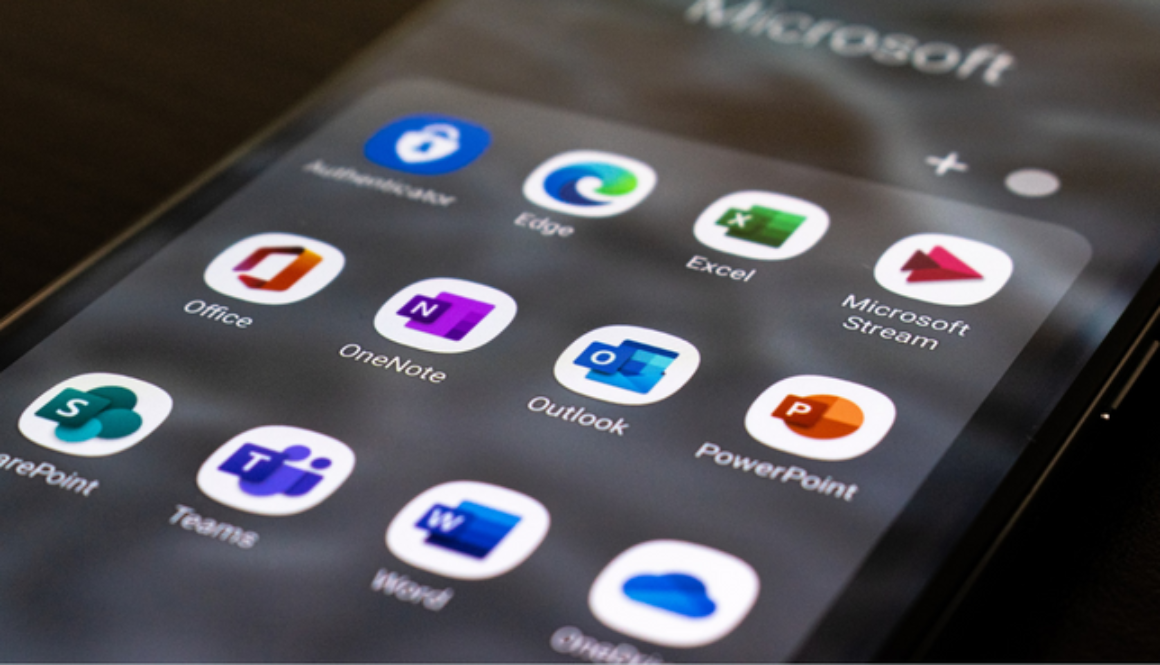
Microsoft Office is a suite of productivity tools that is widely used by students around the world.
It includes programs such as Word, Excel, PowerPoint, and Outlook, all of which are essential for completing various academic tasks.
You can use Word to create and edit documents, such as essays, research papers, and lab reports.
Excel is great for organizing and analyzing data, whether it’s for a math assignment or a business project.
PowerPoint is useful for creating presentations, either for a class or a group presentation.
And Outlook can help you manage your emails and schedule, facilitating your organization and putting you on top of your assignments.
In addition to these core programs, Microsoft Office also includes other useful tools such as OneNote, which is great for taking notes and organizing information, and OneDrive, which allows you to store and access their files from any device.
Before we get started with the Free Microsoft Office alternatives for students, it is important to note that students from some eligible institutions can download Microsoft 365 for free.
It gives students access to Word, Excel, PowerPoint, Teams and OneNote for free. You will need a valid school address for it. Speak to your school or university if you are eligible for this free.
But not everyone is eligible (and some students just want an alternative), so let’s get back to the topic.
Here are substitutes to Microsoft Office which offer equal or better features for your productivity activities:
1. Microsoft Online
Let’s get started talking about free Microsoft Office alternatives with Microsoft itself (What an irony!).
Well, Microsoft has an online version of the Microsoft Office for free for everyone (for real).
It means you can access all the Microsoft Office goodies on the web. The only downside is that you need to be connected with internet at all times to use it.
And it has limited features compared to the full version (We kinda suspect that). But it is still quite a useful alternative and if you need basic Microsoft Office features then it sure ticks the box.
This is the most popular alternative to Microsoft Office programs that is free to use and can be accessed through your Google account.
It has an alternative to the whole Microsoft Office suite for students that includes Google Docs (Microsoft Word alternative), Google Slides (Microsoft Presentation alternative) and Google Sheets (Microsoft Excel alternative).
It offers many of the same features as Word, including the ability to create and edit documents, insert images and tables, and collaborate with others in real time. I
One advantage of Google Docs is it allows you to integrate other Google apps, such as Google Drive, for storage. You can download all the documents from these apps in Microsoft formats too.
The only downside is that you need an internet connection to run this program.
Apple does have a free alternative to Microsoft Office programs as well. (You read that right, a freebie from Apple).
The thing with the Apple suite of software is that they do offer word processing, spreadsheets and presentations (aka Pages, Numbers, and Keynote) for free, but the Apple devices cost arm and leg to buy for students.
The software is indeed free for Mac users and has some really good-looking templates and features to go head on with Microsoft 365.
Although at times, you might miss certain features from Microsoft’s office, but it is still a very useful free alternative nonetheless.
Very few people know about the power of Zoho software.
They offer very smart cloud-based alternative to all Microsoft Office programs including Zoho Writer (for word processing), Zoho Sheets (for excel spreadsheets) and Zoho Show (for presentation).
The software allows you to create and edit documents, insert images and tables, and collaborate with others in real-time.
It also offers a range of formatting options and the ability to save documents in multiple formats.
This office suite includes a word processing program, spreadsheet program, and presentation program.
It is compatible with Microsoft Office documents and offers you a range of features, including the ability to insert images and tables, use templates, and work with others in real-time.
It is available for Windows, Mac, and Linux operating systems.
The generous free tier provides enough horsepower for the student needs, but you can upgrade to get premium features, products and get rid of the ads too.
SoftMaker is an office suite that includes a word processing program, spreadsheet program, and presentation program. It is free for both personal and business use as well.
The suite also provides a free PDF document editor software as well. (Sweet!)
It is compatible with Microsoft Office documents and offers a range of features, including the ability to insert images and tables, use templates, and collaborate with others in real-time.
It is available for Windows, Mac, and Linux operating systems.
Now there are many more free alternatives to Microsoft Office for students but that one that you really need to keep an eye on (and use it too) is Canva.
Canva is hands down one of the best graphic softwares out there in the market.
It has a very generous plan and with the recent update to the docs, it is getting very close to becoming an amazing free alternative to Microsoft Office (they do need to bring on the excel capabilities too).
We do love Canva for our designs as well. (all the graphics on this page are made in Canva too!)
There are many free alternatives to Microsoft Office that offer a range of features and are suitable for different types of document creation and editing.
Some are cloud-based and offer real-time collaboration, while others are lightweight programs that are suitable for basic document creation and editing.
Regardless of the program chosen, these alternatives can be a useful resource for you to create and edit documents without the need to purchase a paid subscription package for Microsoft 365.