Research conducted by Pearson Education on more than 3000 PTE test takers reveal compelling insights into experiences and outcomes of individuals pursuing their dreams in Australia.
The Pearson Australian Dreams White Paper also provides details of the significant contributions of skilled migrants and international students to Australia’s economic and social landscape.
Here are some of the key findings of the contributions made by skilled migrants and international students in Australia:
91% of respondents were employed.
72% of PTE migrants on skilled visas reported working in skilled professions, showcasing their valuable contributions to the workforce.
The median income of these migrants on skilled visas was $93,000, surpassing the national average median income of $67,600.
50% of workers aspire to start their own business in Australia, indicating a strong entrepreneurial spirit among migrants.
More than 1 out of 10 are volunteering in the community.
Additionally, the survey finds out:
9 out of 10 migrants reported feeling welcomed in Australia.
81% of migrants have built community connections, indicating a sense of belonging and integration.
89% of respondents have experienced acts of kindness, reflecting positive interactions and support from the local community.
64% of respondents chose Australia due to the high quality of education.
Additionally, the research highlights the positive experiences and opportunities encountered by migrants in Australia, with 81% having access to opportunities not available in their home countries.
The study highlights specific instances where migrants felt welcomed, such as being referred to as ‘mate’ by Australians or receiving support from the healthcare sector after an accident.
The white paper showcases many stories of these skilled migrants and international students in Australia who, rather than giving up on their dreams, chose to get out of their comfort zones, move to Australia and now contribute to the Australian workforce and culture.
The study also highlights the importance of learning English with 97% of migrants recognising the importance of English for communication, employment opportunities, and social integration.
Despite the availability of English language support services, only around a quarter of student visa holders utilised these resources, indicating a potential area for improvement.
The study underscores the importance of English language proficiency for international students and migrants, with the PTE being preferred by 87% of respondents for its fast results, test format, and ease of preparation.
In conclusion, the Pearson Australian Dreams White Paper showcases the transformative impact of skilled migrants and international students on Australia’s prosperity, emphasising the value they bring to the country’s workforce, communities, and national identity.
With a Christian population of over 43.9% in Australia, Easter is a very popular and public holiday period filled with a festive atmosphere.
The Easter season is also generally enjoyed by people of various faiths, beliefs and cultures in Australia as it connotes a time for family, community and festivity.
So in this article, we are going to give you a guide to celebrate Easter in Australia.
What is Easter?
Easter is a world-wide yearly observed holiday and festive season that celebrates religious and cultural significance, which is the day of the resurrection of Jesus Christ after crucifixion.
Easter usually starts and ends with a series of events through the holy week such as Palm Sunday, Holy Wednesday, Maundy Thursday and Good Friday leading up to Easter Saturday.
Who celebrates Easter?
Easter is rooted in Christianity and prominently celebrated by Christians all over the world, including Australia, but has also become a widely celebrated season by many other religions across board.
Why is it celebrated? (History and Significance)
The historical significance of Easter stems from the resurrection of Jesus Christ three days after his death by crucifixion.
As per Christian faith, it is recorded that Jesus died for the sins of the world, conquered death, resurrected and redeemed the whole world from sin.
This act has been a major foundation of the Christian faith which signifies God’s plan to redeem the world and offer believers the promise of eternal life.
Easter serves as a reminder of this message of hope and transformation in honour of what Jesus did for the world.
How is Easter celebrated in Australia?
Easter in Australia is a time of festivity, celebration and also a solemn reflection in honour of the season.
Many Australians attend church services through the holy week up until Easter Sunday which marks the resurrection of Jesus.
Aside from the church gatherings, there are also various other festivals and cultural events that take place during the easter season like the Sydney Easter Royal Show, National Folk Festival, the Australian Gospel Festival, Byron Bay Blues and Roots Festival and many more.
Some families during this period also spend time outdoors for picnics at the park, camping, pitching tents or going to the beach. These occasions mostly always consist of a wide variety of amazing food.
Another way Aussies enjoy the Easter season is to celebrate Easter Bilby.
In contrast to the Easter bunny known worldwide, the bilby is a small endangered species in Australia celebrated instead as the easter icon because the Easter bunny is believed to be a bad omen, especially by farmers who experience rabbit infestations.
However, the Easter bunny is still a popular icon among Australian families and many families do Easter egg hunting activities with kids.
When is Easter in 2024?
Easter Sunday for 2024 falls on the 31st of March, preceded by Good Friday which is on the 29th of March, after which is Easter Monday on the 1st of April. These dates are the ending days of the holy week for the season.
Here is a quick guide to Easter in 2024:
Good Friday – 29th March
Easter Saturday – 30th March
Easter Sunday – 31st March
Easter Monday – 1st April
What’s open on Easter in Australia?
Most of the supermarkets (Woolworths, Coles, Aldi) and liquor stores will be closed on Good Friday.
However, they remain open for the rest of the Easter weekend with changed trading hours. Please refer to your local supermarket and liquor store trading hours for more details.
There are varying restrictions on selling alcohol over Easter weekend in most Australian states and territories. Most states have restrictions on selling alcohol on Good Friday. However, they might vary on Easter Sunday.
Some IGA’s (Supermarket) are expected to remain open on Good Friday.
Kmart, Bunnings, Big W and other major retailers & shopping centers remain closed on Good Friday and will reopen for the rest of the Easter weekend except some stores might be closed on Easter Sunday.
7-Eleven stores and most major petrol stations like Shell, BP, Ampol, EG will remain open every day during the Easter long weekend.
Fast food restaurants like McDonald’s, Hungry Jacks, KFC, Guzman y Gomez are likely to remain open over the Easter weekend. Check trading hours for your local restaurant.
Australia Post usually remains closed on national public holidays, so it is expected they will remain closed during Easter long weekend.
Cinemas are usually open on Easter weekend, including Good Friday and Easter Sunday.
It is advisable to call or check online the trading hours of your local businesses before a visit during the holiday season to avoid disappointment.
List of Easter Events Around Australia
The season of Easter goes far beyond chocolate eggs and bunnies; it’s a time of family, fellowship, community and celebration in diverse ways across the country.
Here are some popular Easter events around Australia:
New South Wales
1. Fairfield Easter Fair
📍 Location: 443 Smithfield Road, Prairiewood, New South Wales
Sydney is packed with a lot of events for the Easter season bringing exciting fun activities to the people, and the Sydney Royal Easter Show and Fairfield Easter Fair are two amazing events for the Easter holiday period. Both events offer amazing park activities, and entertainment like rides, food trucks, firework shows and many more. The Fairfield Easter fair runs from the 28th March to 2 April and the Sydney Royal Easter Show runs from 22 March to 2 April.
A popular Easter event that celebrates the vibrant art and culture scene of Bendigo, Victoria. You get to watch a range of performances, workshops, exhibitions as it attracts both local and foreign tourists alike. It will be held from March 29 to April 1.
Queen Victoria Market is one of the most popular places to visit during Easter. Lot of people do their Easter shopping and there are many activities for family and kids with Easter bunny visits, Easter Tea Party and Kids Passport that will keep your family busy during Easter weekend.
From 29th March to April 1, get ready to immerse yourself in this family fun-filled adventure at Victoria Park. There will be a range of activities from crafts, meeting bunny, outdoor cinema and more.
The Fremantle International Streets Arts Festival is a global awe, an event that turns the streets of Fremantle into a stage of varieties of theater. A series of performances from musicians, dancers, artists, and performers will fill the streets with so much colour and bubble over the Easter period from the 29th of March till the 1st of April.
South Australia
7. Farmers’ Market Easter Fun
📍 Location: Showgrounds, Adelaide, South Australia
Take part in a fun Easter trail from 8:30 am to 11:30 am on March 31st at Adelaide Showground Farmers’ Market. Enjoy face painting, fresh food and a visit from Easter bunny. A truly fun-filled event for all.
The National Folk Festival is happening from March 28th to April 1 during the Easter weekend. You can experience a wide range of traditional music, dance, crafts, and food. It’s a great opportunity to immerse yourself in the rich tapestry of folk culture.
Annual Easter egg hunt is back again at AMAZE Richmond. There are fun and entertaining activities for kids and accompanying adults like Easter egg hunt, Easter bunny visit and more.
Northern Territory
10. Easter Eggstravaganza
📍 Location: 7 Kitchener Drive, Darwin, Northern Territory.
In the city of Darwin, the Easter Eggstravaganza event happens at the waterfront where there are lots of exciting activities for the festive atmosphere like the sack races, bunny bowling, Easter egg scavenger hunt, egg and spoon races and more.
Conclusion
As much as the Easter season is a time of sober reflection, it also unfolds as a significant time observed by many for community and family.
A period of festivity, celebration and an array of exciting activities. So whether you’re a chocolate lover, sweet tooth or an outdoor person, the easter period has just the best offerings for you.
Ramadan is a very popular Islamic festival celebrated by millions of people all over the world, even in Australia. It is a sacred month filled with reflection, spirituality and community.
There are several cultural and religious diversities in Australia, including close to a million Muslims, which is why this celebration is a very important one in the country.
There are several activities and religious practices that take place during the Ramadan month and celebrations during Eid ul Fitr.
So, let’s give you a quick guide to celebrate Ramadan and Eid in Australia.
What is Ramadan and Eid ul Fitr?
Ramadan is the ninth month of the Islamic lunar calendar, also known as the Hijri calendar, observed by Muslims all round the world as a month of fasting, prayer, worship, service, community and reflection.
During Ramadan, Muslims engage in a daily fast without any food and drink from dawn until sunset.
This act of fasting not only drives a physical discipline but is also a means of spiritual purification, inward reflection, and empathy for the less privileged.
After a month-long fasting and sacrifice of Ramadan, the ‘Eid ul Fitr’ is celebrated. It is usually a 1 to 3 days celebrations.
Eid is an arabic word which means feast or festival.
Who celebrates Ramadan and Eid?
Ramadan and Eid is celebrated all over the world by Muslims.
All individuals from different cultures, traditions and countries who are Muslim celebrate the month of Ramadan and observe the requirements during the period.
Even non-muslims also value the Ramadan month and celebrate what it stands for. People participate by giving to Muslim communities, practicing self-reflection, listening to teachings and giving to the less privileged.
Why is it Celebrated?
Ramadan is a very deep part of the Islamic tradition. It symbolises a time in history, the 7th century, when the Quran was sent down to Prophet Muhammad from heaven to be revealed to men and women as a guide and means of salvation.
The celebration period focuses on spiritual meditation, reflection, fasting, seeking forgiveness, and strengthening connection with God.
Ramadan is also celebrated to boost community bonding through family time and community gatherings during iftar. It is the time when food is shared to break the fast and prayers are done collectively.
Ramadan reminds people to be empathetic and compassionate by being kind and generous to others.
How is Ramadan and Eid Celebrated in Australia?
Australia, a center of cultural diversity, embraces Ramadan with open arms. The celebration period is highly recognised in schools, workplaces, homes and communities.
The Ramadan month is often characterised by different activities that reflect the essence and key parts of the period. Usually the Muslim communities gather during Iftar which is the evening meal to break the fast.
There is often an array of diverse foods for everyone to partake of. There are also night prayer times at the mosques during the month called Tarawih. These prayers are held after the iftar meal, creating a sense of unity.
Muslims also carry out charitable activities to celebrate during this period such as food drives, donations and initiatives to support the less privileged.
Eid ul Fitr marks the end of the fasting month of Ramadan. In Australia, many events are organised by the local muslim communities and mosques to celebrate Eid ul Fitr.
Cleaning house, preparing sweet dishes, buying new clothes, gifts are common activities to celebrate Eid.
Families and friends come together to enjoy the festival in community spirits.
When is Ramadan and Eid in 2026?
In 2026, Ramadan will begin on Saturday, 18th February and conclude on Saturday, 20th March. It’s a month-long journey of fasting from dawn to sunset.
And the Eid ul Fitr is likely to be celebrated on 20th or 21st March 2026, depending on the new moon sighting.
The Islamic calendar follows the lunar cycle, as a result the dates for Ramadan and Eid ul Fitr can vary.
Foods to try during Ramadan
Regardless of whether you are celebrating Ramadan or not, you can try some of these popular food items like:
Dates
Lentil soups
Kebabs
Rice dishes like Biryani, Mandi rice, Jollof rice, Nasi goreng
Samosa or Sambusa
Falafel
Desserts like Baklava, Turkish Delights, Kunafa, Falooda
Drinks like: Sugarcane juice, Watermelon juice, Teh tarik, Lemonade
List of Ramadan and Eid Events around Australia
1. New South Wales (NSW):
Event Name: Ramadan Nights Lakemba (Sydney)
Date: 19th February – 15th March (every Thursday to Sunday)
Location: Lakemba
Timing: 6pm – 2am
Details: A market showcasing diverse cuisines, crafts, and entertainment to mark the festive season.
Australia has a good public transportation system.
But because the country is so huge and spread out, it can sometimes be tricky to travel from one place to another.
Apart from that, there are some jobs or gig work that require a car.
As a result, many international students in Australia opt to buy their own cars.
If you are thinking of buying a car in Australia, this guide on how to buy a car in Australia will give you all the necessary information.
Let’s go!
Why Buy a Car in Australia as a Student?
As a student, buying a car can be a smart move for several reasons:
Getting around daily: Having a car makes it easier to go to school, sports, or fun places whenever you want.
No More Public Transport Stress: You won’t have to worry about train/tram/bus schedules anymore.
Adventures and Social Life: Australia has so many amazing places to visit. You can explore beaches, national parks, and mountains with your friends using your car.
Job Opportunities: As a student, you might want to work part-time. Having a car means you can take jobs that are far away and not easy to reach by public transport. You could even work part-time with companies like Uber or DoorDash.
Easy Shopping: Getting groceries and other things you need for your home is much easier with a car. You don’t have to carry heavy bags on the public transport.
Factors To Consider Before Buying A Car In Australia
Getting a car has its advantages as shown above, but there are some important factors to consider before buying one. Some of the factors include:
Purpose and Usage: Before you get a car, think about why you want one. Is it for going to school every day, having fun trips sometimes, or driving around Australia for adventures?
Fuel Costs: Fuel can cost a lot. So, it’s smart to pick a car that doesn’t use too much fuel and has a higher fuel efficiency.
Insurance Costs: Having insurance for your car is a big deal. Different cars can have different insurance costs. So, it’s a good idea to check and find the best insurance for the type of car you want. The cost can depend on things like what kind of car it is, how old it is, and where you live.
Maintenance and Repairs: Some cars are easier to fix and maintain than others. It’s important to choose a car that doesn’t break down often and has parts that are easy to find. Different car brands have different reputations for being easy to maintain.
Size and Features: Think about how big your car needs to be. If you want to work as a driver for a delivery company, your car needs to meet certain requirements. Also, consider how many people it can carry and some essential features like air conditioning and safety.
What Are the Costs Involved in Buying a Car in Australia?
Buying a car isn’t just about the price you pay upfront.
There are other expenses you need to think about for the future and to keep the car running.
Here are some of those costs:
Purchase Price: First, you have to pay for the car itself. You need to find one that fits your budget, and that means looking at different types of cars and their prices.
Registration and Transfer Fees: In Australia, when you get a car, you have to pay some fees to the government. These fees can be different depending on which state you live in. You will also need to factor in yearly registration fees as well. It’s a good idea to know about these fees, so you don’t get surprised by them later
Insurance Premiums: Insurance premiums are required to pay for your insurance policy. It’s important to have this protection in case something bad happens, like if your car gets damaged or stolen. The price you pay for insurance depends on things like what kind of coverage you want, how you’ve driven in the past, the type of car you have, and where you live. You should always do research on different insurance types and costs from different providers.
Depreciation and Taxes: Depreciation is how much your car loses value over time. It’s important because it affects how much money you can get if you sell your car later. Some cars lose value faster than others. Taxes can also depend on your car, like luxury cars can have higher tax costs.
Loan Interest: If you’re taking a loan to buy a car in Australia, you have to think about the interest you’ll have to pay back. How much interest you pay depends on the interest rate and how long it takes to repay the loan. Also, consider that international students may not be able to access loan options when getting a car. So you may have to find alternative funding arrangements.
Maintenance and Repairs: Owning a car means you have to spend money to keep it running smoothly. This includes things like getting regular check-ups, changing the oil, and fixing any problems that come up. Different cars can have different costs for these things, so it’s a good idea to find out how much they might cost for the car you want. Want to know more about the service costs of a car in Australia? Check this article out.
What Are The Most Affordable and Popular Cars in Australia?
Here is a list of affordable and popular cars in Australia:
Toyota Corolla
Mazda 2
Hyundai i30
Honda Civic
Toyota Yaris
Suzuki Swift
Kia Cerato
Mazda 3
Toyota RAV4
Kia Rio
You can find used cars for some of these brands under $5000. But if you are looking for a newer used car, then you should be ready to spend around $10,000 or more.
Brand-new cars from these brands can start from $24,000 onwards.
How Much Do You Need to Budget for Buying a Car in Australia?
Budgeting for a car in Australia can be a bit tricky because it depends on so many things. If you want a new car, it can cost a lot more than a used one. The type of car you choose also affects the price.
On average, people in Australia spend around $40,916 for a new car. But if you go for a small car, it’s about $26,346, while sedans are around $45,728, and SUVs are about $40,453. So, you need to think about what kind of car you want and how much you’re willing to spend.
When budgeting for a car, you should think about two main types of costs:
1. Purchase Price: This is how much you’ll pay to buy the car. It’s important to research and find a car model that fits your budget. Make sure it’s something you can comfortably afford without straining your finances.
2. Additional Costs: These are the expenses that come after you buy the car. They include things like registration fees, insurance premiums, taxes, and ongoing maintenance costs. These additional costs are essential to consider because they add to the overall price of owning and operating the car.
So, when planning to buy a car, you should not only focus on the purchase price but also factor in these additional costs to ensure you have a clear and realistic budget.
Steps Involved In Buying a Car in Australia
Buying a car requires proper planning to ensure you get the best value for your money. Here are the steps involved in buying a car in Australia.
Step 1: Determine Your Car Needs
When you want to buy a car, it’s important to think about what you really need the car for. This will help you pick the right car for you.
For example, if you want a car for ride-sharing service like Uber or food delivery, consider getting a Toyota. Two good choices from Toyota are the Camry or Corolla. These cars are great because they are comfortable, use fuel efficiently, and are economical to maintain. So, they’re a good match for what you want!
But consider your personal needs and decide which car might suit your needs better.
Some questions to ask yourself are:
Budget for the Car
Short term or Long term Car
Fuel efficiency
Car features
Residence or Workplace or School Landscape
Personal Car or Family Car
Step 2: Do your Research
Once you know what kind of car you need, there might be a few different cars that could work for you. So, it’s time to do some research to find out more about these cars. Here are some things you should look into:
Dealerships vs Private Sellers
Used vs New Car
Financing options
Insurance costs
Taxes and other government fees
Availability of parts
Customer reviews
Step 3: Find a Good Dealership or Look for Private Sellers
Now that you know which car you want to buy, it’s super important to find a good and trustworthy place to buy it from.
Buying from a trusted dealership reduces the risk of fraud or stolen cars, comes with a warranty and the final price includes taxes or transfer fees. But it also means a higher purchase price.
These days, you can actually buy a car without leaving your home! You can do it online through trusted dealership websites. They’ll help you pick the car you want, and then they’ll deliver it right to your doorstep.
Buying from a private seller usually means a cheaper price, but you need to consider taxes and roadworthy certification expenses. Some private sellers may provide you with a roadworthy certificate, but some may not. It’s best to ask the seller for a roadworthy certificate. This will give you peace of mind that the car is safe to drive.
Here are some trusted websites for looking for cars in Australia:
After selecting the car of your choice, conduct an inspection and test drive to get the feel of the car. If the performance is satisfactory, you can move on to the next phase. Here are some things to look out for during vehicle inspection:
Exterior and Interior Condition
Tires and Wheels
Undercarriage
Engine Compartment
Fluid Levels
Battery
Odometer Reading
Service History
Vehicle Identification Number (VIN)
Suspension and Steering
Brakes
Safety Features
Ownership Documents
Roadworthy Certificate
If you are unsure about inspecting the car, you can hire the service of specialised mechanics. It can cost you $200 to $300, depending on your location, but it is money well spent to understand any issues with the car.
You can always negotiate the price of the car with the seller.
Step 5: Get the Paperwork Ready
If you’re happy with how the car looks and drives, and it ticks the inspection box, then it’s time to start dealing with the paperwork. The paperwork process can vary depending on which state you’re in. It’s important to follow the rules and regulations of your location.
Here are some of the documents you need for processing:
Proof of Identity and Address
Proof of Income and Financial Information (If applicable)
Insurance Documents
Roadworthy Certificate
Pre-approval Documents (If applicable)
Things to Be Mindful of When Buying a Car in Australia
When you’re buying a car, there are some really important things to be careful about:
1. Vehicle History: Get a report that tells you about the car’s past. This can show if it’s been in any accidents or had problems before. It helps you make sure you’re not buying a car with hidden issues. Here is a useful website on how you can check the vehicle history for free.
2. Warranty: Look into what kind of warranty the seller or manufacturer offers. This is like a promise that they’ll fix any unexpected problems for a certain amount of time. Knowing the details of the warranty can save you trouble later on.
3. Ownership Transfer: When you buy a car, you need to make sure all the necessary formalities are done right. This means filling out the right paperwork and following the rules for transferring ownership. It’s super important to make sure you officially own the car. You will get in touch with the local transport authority within 14 days of purchasing.
4. Roadworthy Certificate: Also known as a pink slip sometimes, it is important to get this certificate when buying a car in Australia. This certificate ensures the car meets the standard requirements to drive on public roads in Australia. We suggest not buying a car without a roadworthy certificate.
How To Transfer A Car Ownership In Australia?
Transferring a car ownership in Australia is an important step when buying a car.
Each state has its own specific steps and rules regarding the transfer. To find out exactly what you need to do, you can go to your state or territory’s transportation website. They will have all the details and instructions you need to register your car properly.
Make sure to visit the transport authority office within the required timeframes after the purchase of the car to avoid late fees or penalties.
Usually you will be required to have the following when transferring the ownership of the car in Australia:
Vehicle
Proof of Purchase
Your driving licence
Roadworthy certificate
Transfer of Ownership form
Local government transfer fee
Here are the websites for each of the states transport authority to know more:
Lunar New Year, also known as Chinese New Year, is a major cultural celebration around the globe.
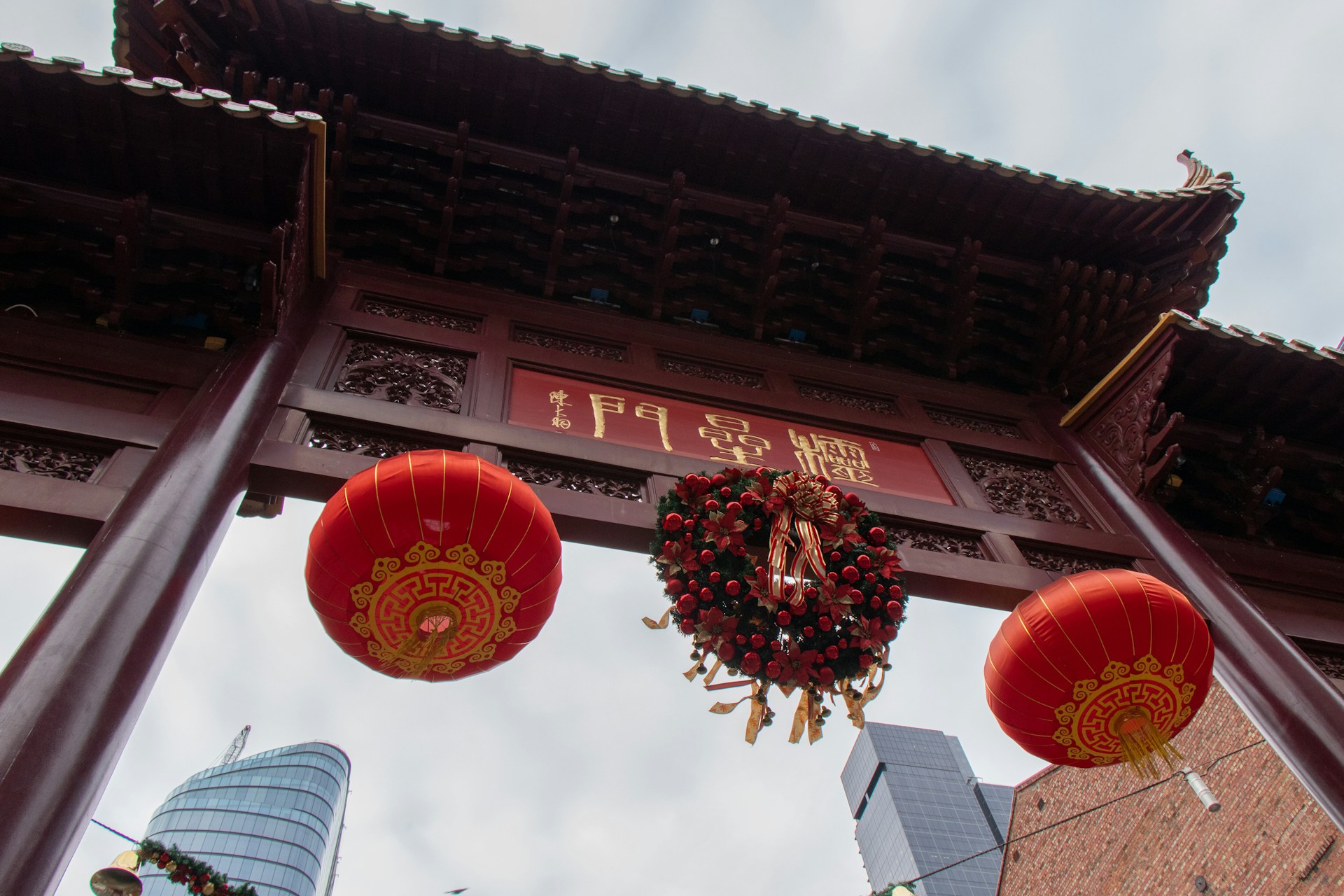
In Australia, there are many events happening at this time of Lunar New Year that you can’t afford to miss. From the well-known Sydney landmarks to Melbourne’s famous Chinatown and other cities, there is a lot to see and do.
So, in this guide, we are covering details on celebrations for the Lunar New Year in Australia.
What is a Lunar New Year?
Lunar New Year is a traditional festival celebrated in Asian cultures to welcome the new year as per the lunar calendar.
The festival is celebrated with joy, pride and reflection by millions around the world each year.
Each lunar year is characterised by the animal of that year which is part of the Chinese Zodiac.
2026 is the year of the Horse (Fire Horse), which symbolises vitality, strength and perseverance.
Who celebrates the Lunar New Year?
As mentioned previously, the Lunar New Year is mainly celebrated by Asian communities, but in Australia, many people from different backgrounds also join the festivities.
Here is a list of the countries where Lunar New Year is celebrated:
China
Hong Kong
Korea
Malaysia
Japan
Vietnam
Singapore
Phillippines
Indonesia
Thailand
Mongolia
Tibet
Taiwan
Cambodia
Keep in mind that celebrations for the Lunar New Year may vary among different cultures.
When is the Lunar New Year?
In 2026, Lunar New Year will be celebrated on Tuesday, 17th February.
Please note that the date for the Lunar New Year changes each year as it is based on the lunar calendar. However, it usually falls between January 21 and February 20 as per the Greogian calendar.
The Lunar calendar is based on the monthly cycle of the moon’s phases.
The festivities for the Lunar New Year typically run for 15 days.
How is the Lunar New Year celebrated in Australia?
Lunar New Year festivities include various events such as parades, food, dragon dances, and traditional customs.
Some of these events are listed in the next section.
Lunar New Year festivities usually start with house cleanings and decorations (usually red colour) prior to the festival.
Many people visit temples on the day to pray for good health, wealth and prosperity for the year ahead.
Most of the families celebrating will have a reunion dinner with some symbolic dishes like fish, dumplings and noodles.
It is common to give red envelopes (usually money inside), to younger family members and visiting friends. This tradition symbolises good luck for the year.
Giving other gifts as a token of goodwill is also a part of the celebrations.
Here is a list of gifts commonly exchanged during Lunar New Year:
Money (In Red Envelope)
Clothes
Food hampers
Fruits
Tea
Alcohol
One of the most common greeting to wish someone a Lunar New Year is Gōng xǐ fā cái, which means wishing you happiness and prosperity.
Depending on the events, there could be fireworks or firecrackers being lit in the late evening to welcome the new year.
List of Lunar New Year events around Australia
Here is a list of popular Lunar New Year events across Australia:
Sydney
🧧 Event: Sydney Lunar Festival 📅 Date: 14th February to 1st March 2026 📍 Location: Haymarket ⏰ Timing: 6pm – 6.45pm
For a complete list of events in Sydney, click here.
Melbourne
🧧 Event: Melbourne Chinese Lunar New Year Festival 📅 Date: 22nd February 2026 📍 Location: Chinatown ⏰ Timing: 9am – 10pm
For a complete list of events in Melbourne, click here.
Brisbane
🧧 Event: BrisAsia 📅 Date: 13th – 22nd February 2026 📍 Location: Brisbane City ⏰ Timing: Varies
For a complete list of events in Brisbane, click here.
Perth
🧧 Event: Lunar New Year in the Square
📅 Date: 21st February 2026 📍 Location: Corner Wellington Street and William Street, Perth ⏰ Timing: 4.30pm – 6.30pm
For a complete list of events in Perth, click here.
Adelaide
🧧 Event: Chinatown Adelaide Lunar New Year Street Party 📅 Date: 21st February 2026 📍 Location: Gouger Street and Moonta Street, Adelaide SA ⏰ Timing: 12pm – 9pm
For a complete list of events in Adelaide, click here.
Gold Coast
🧧 Event: Lunar New Year 📅 Date: 21st February 2026 📍 Location: Chinatown, Southport ⏰ Timing: 3pm – 7.30pm
For a complete list of events in Gold Coast, click here.
Hobart
🧧 Event: Lunar New Year Festival 📅 Date: 22nd February 2026 📍 Location: Parliament Lawns, 1 Salamanca Place, Hobart, 7000 ⏰ Timing: 10am – 4pm
For a complete list of events in Hobart, click here.
Canberra
🧧 Event: Canberra Lunar New Year 📅 Date: 21st February 2026 📍 Location: Woolley Street, Dickson ⏰ Timing: 10am – 10pm
For a complete list of events in Canberra, click here.
Darwin
🧧 Event: Darwin Chinese New Year Festival 2026 📅 Date: 14th February 2026 📍 Location: Novotel Darwin CBD ⏰ Timing: 11am – 6pm
For a complete list of events in Darwin, click here.
We hope you found the guide useful and wishing you all a very Happy Lunar New Year.
When it comes to navigating your way around the vibrant streets of Melbourne in Australia, public transport is undoubtedly your best friend.
This cosmopolitan city is known for its great transport network that offers a variety of options to help you get around comfortably and efficiently.
As a local resident, international student or a tourist exploring the city, understanding Melbourne’s public transport system is very essential.
In this article, we give you a guide to public transport in Melbourne, including different modes of public transport, the ticketing system, travel costs, student concessions and more.
Ready? Buckle up.
Mode of Public Transport
Melbourne’s public transport system has different travelling modes to help you get around including:
Trains:
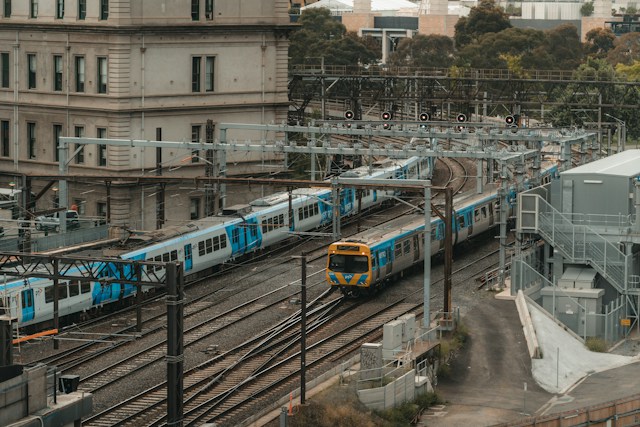
Melbourne’s train network spans through the metropolitan area, connecting the Central Business District (commercial and economic heart of a city, concentrated with businesses, offices, financial institutions, and commercial activities) to the outer suburbs (residential areas located on the outskirts of the city).
The train system operates on a strict schedule, so you must familiarise yourself with the train timetables through the Public Transport Victoria (PTV) website or the smartphone app to plan your journeys and get information about any service disruptions or changes in schedules.
During peak hours, you can expect trains arriving every 5 to 10 minutes, while during off-peak you can expect them running every 20 to 30 minutes.
Trams:
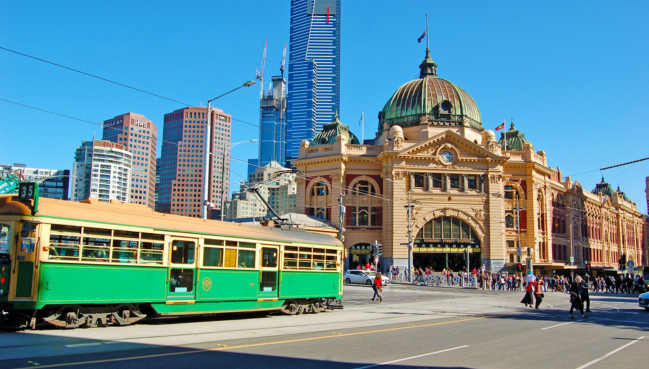
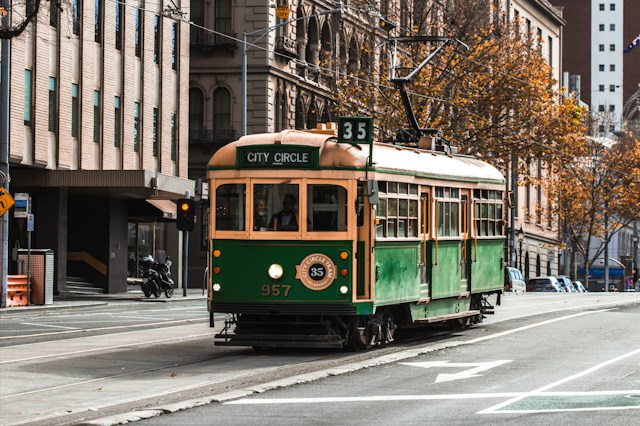
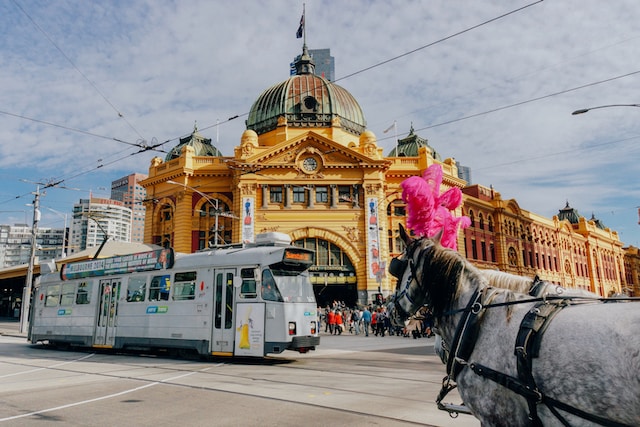
Melbourne is known for its tram network, and it has the largest operational tram in the world.
Tram is a very convenient and environment-friendly mode of transportation popular among both residents and tourists.
Use of trams within the CBD (Central Business District) is completely free , and you don’t even need a myki card for travelling in that area.
Trams also offer seamless scenic travel, giving you a comfortable tour to explore Melbourne’s unique neighbourhoods.
Trams usually run every 10 minutes during peak hours and 20 minutes during off-peak peak.
Buses:
Buses in Melbourne provide transport to places or locations that are not directly accessible or covered by trams or trains.
While trams and trains are the primary modes of transport for many public transport users, buses help bridge the gaps, ensuring that even the most remote neighbourhoods are accessible and connected to the larger public transport network.
There are various types of buses, each with their specifications tailored to meet the requirements of the routes they cover. Some bus types are standard buses, articulated buses, low-floor buses etc.
Peak time buses usually arrive every 10 to 15 minutes, while 20 to 30 minutes during off-peak hours.
Ticketing System Used in Melbourne
The Melbourne public transportation system operates on a unified ticketing system called the ‘myki’– a contactless smart card-based ticketing system.
It is often viewed that the word ‘myki’ is a play on the words ‘my key’ which signifies that the card is your pass to accessing various modes of public transportation in Melbourne.
This card lets you add money and pay for rides by tapping on and off the myki machine when you get on and off a tram, bus, or train.
Here are some rules regarding the touch on and touch of the myki card around Melbourne:
Trains: You need to touch on the card before boarding the train and touch off on the exit.
Trams: No touch on/off required in Free Tram Zone. Only touch on is required if you are travelling in Zone 1 and 2. Both touch on and touch off are required when travelling in Zone 2 only.
Buses: Touch on your card when entering and touch off while existing.
The fare is automatically calculated based on the zones travelled, ticket type, and concessions. This makes it convenient and efficient to use.
The public transport in Melbourne is divided into 3 main zones:
Free Tram Zone
Zone 1
Zone 2
You can purchase and top-up your myki card at several locations, including train stations, tram stops, retail outlets, convenience stores or even top-up with the Public Transport Victoria (PTV) app.
Cost of Travel in Melbourne
As mentioned earlier, the cost of your travel in Melbourne is dependent on certain factors like the number of zones you are travelling through, type of ticket or if you have access to concessions or not.
There are two ways to pay for your travel using the myki smartcard and the fares are calculated differently.
Myki Money: Myki money is a pay-as-you-go method that allows you to load specific credit on your card and the fare for a journey is calculated based on the where you travelled. This is a good option if you don’t use public transport regularly, so you can just top up the credit you need and use it whenever you like.
Myki Pass: This particular package is a prepaid option that offers unlimited travel within selected fare zones for a fixed duration. This is a great offer for commuters who regularly travel with public transport, like students and workers. This pass can be prepaid for 7 days, 28 days or 365 days depending on which suits your regular travel needs.
Both options can be managed through your myki card and you can easily switch as your travel needs change.
As per the Public Transport Victoria website, the fares for 2 hours start from $5.30 (concession $2.65) and $10.60 (concession $5.30) for daily fare. For up-to-date fares, we suggest checking the PTV website here.
Want to save money on Public Transport in Melbourne? Try Early Bird Train Travel. Travel on metropolitan trains and touch off before 7:00 AM (with 15 additional minutes buffer) on weekdays to enjoy free rides.
Concession for international students
Eligible international students can save up to 50% on public transport with an International Student Travel Pass.
This travel pass comes in three options: 90-day, 180-day, and 365-day. They offer savings of $270, $540, and $975, respectively.
You can use this pass for all your travel needs whether school, work or just going out for leisure time.
Here are the eligibility requirements to participate in the International Student Travel Pass:
A full-time international student
Enrolled in a bachelor’s or associate degree, diploma or advanced diploma
Studying at an educational institute that is signed up for the International Student Travel Pass program.
Note that mobile myki is not available for the International Student Travel Pass.
How does the Public Transport Concession Work for International Students?
According to the official website of Public Transport Victoria, here are the steps to follow to get started:
Look into the International Student Travel Pass program to determine if your institution is a participant.
If so, find out how to get an International Student Travel Passcode from your institution.
Go to the website for the International Student Travel Pass after you have gotten your code from your institution.
Purchase an international student travel pass, register your information and make an account.
Submit your picture and current postal address.
You will receive your international student travel pass in three weeks.
With your international student travel pass collected, you can start travelling immediately.
Getting from the Airport to the City
The closest airport to the city of Melbourne is the Tullamarine Airport also known as the Melbourne Airport, which handles most of Melbourne’s domestic and international flights.
There is no train or tram link from the airport to the city at the moment, but there is provision for bus transport. You can take a bus route number 901 from the airport to the nearest train station Broadmeadows. Other buses routes 478, 479 and 482 are also available. You can take these buses from Terminal 4.
Although the most popular bus service, SkyBus Express Bus Service runs a regular express service from Tullamarine Airport to the City Centre (and vice versa) every 10 minutes all through the day.
The SkyBus also operates at other airports like the Avalon Airport. At the airport, other buses operate from the airport to areas throughout the Victoria region. Once in the city center, you can easily find trams and trains to reach your final destination.
Other Transport Options
In addition to public transport in Melbourne, there are other options available, such as ride-sharing, biking, renting a car, and taking taxis.
Bicycles:
Cycling is very much encouraged in Melbourne as it’s a sustainable and healthy mode of transportation. The city has a good network of cycling paths that make it easy to get around. If you are interested, you can either do:
Bike sharing: You can always rent a bike from the rental system with stations located around the city. This mode is great for short and quick trips. You can explore the city or reach your destination and then return it to any docking station.
Personal bike: You can get your own bike if you would likely be going on short trips from time to time. There are also designated spaces around Melbourne where you can park your bike.
Ride-Sharing Services:
Car ride-sharing service companies like Uber, DiDi and Ola offer transportation services if you prefer convenient on-demand rides. Their services are usually accessible through apps that allow you to order and pay for the rides electronically.
Taxis:
There are also traditional taxis available in Melbourne. You can hail a mobile taxi on the street or book one in advance.
Car rentals:
In Melbourne, you can also access car rental services. This mode of transportation is best for trips outside the city or for day trips. The rental agencies are located at the Melbourne airport and throughout the city.
Other Useful Information
There are some necessary information you need to be aware of when travelling using the public transport system. This cuts across timetables and routes, accessibility, safety and technological updates amongst others which enhance your general travel experience.
Timetables and Routes: You need to familiarise yourself with the timetables and routes of the public transport systems that you will be making use of. You can find this information on the Public Transport Victoria website or app. It will help you plan your trips and stay updated on any changes.
Accessibility: Public transport in Melbourne has inclusive facilities for individuals with disabilities, making it easy for their mobility on Trams, Trains and Buses.
Safety: Public transport in Melbourne is generally safe, but it is important that you stay alert and be conscious of your surroundings and with your personal items, especially at night.
Apps: There are multiple smartphone apps like PTV, metroNotify, tramTRACKER, etc. available to travel on public transport. They also provide you with real-time information regarding the operations of particular transport modes.
Understanding how Melbourne’s public transportation system works is essential for a smooth city experience for students, tourists, and locals.
Hope this guide helped you understand the public transport in Melbourne.
Want to know more about Melbourne? We have a complete city guide. Check it out here.